

The Winter Solstice: Finding Wonder & Light with Nancy Marie Brown
The winter solstice is a threshold — the longest night of the year, holding both stillness and promise. In this special 50th episode of Tree Speech, we linger in that in-between space where darkness is not something to fear, but a place of listening, wonder, and quiet presence.
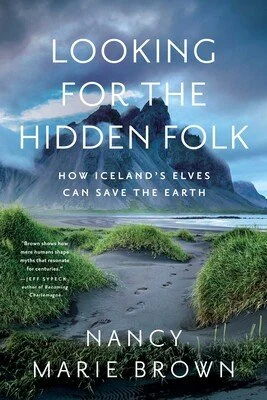
We begin in the solstice hush, where forests shimmer with unseen life and ancient stories gather close. From there, we travel to Iceland through myth, landscape, and lived experience, speaking with author Nancy Marie Brown about her book Looking for the Hidden Folk: How Iceland’s Elves Can Save the Earth. Together, we explore what it means to treat land as alive and attentive — and how belief in the hidden folk is less about superstition than about perception, reverence, and care.
As the episode unfolds, we reflect on winter woods, candlelight in windows, and the long human tradition of lighting small flames against great darkness. From miners’ homes in Germany to Irish windows of quiet resistance, from Hanukkah candles to Lucia crowns, butter lamps, and oil lamps across cultures, light becomes a shared language of hope, welcome, and courage.
Marking both the winter solstice and our 50th episode, this gathering invites us to slow down, breathe, and remember that time is not only something that rushes past us — it is also something we can meet with attention and care.
May this episode offer warmth, companionship, and reassurance in the quiet mystery of winter. Even now, beneath the surface, something is glowing. Something is growing. And the light is returning.
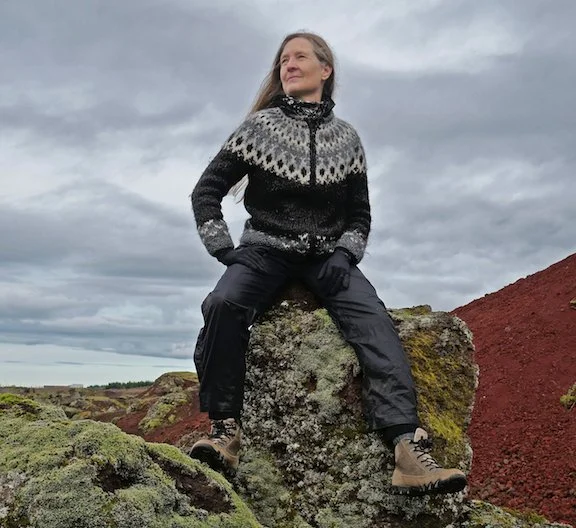
Nancy Marie Brown is the author of nine books--eight of them about Iceland and the Viking Age. She is attracted to extremes: medieval literature and modern archaeology, myths and facts. Her work asks, What have we overlooked? What have we assumed? What have we forgotten? Whose history must not be lost?
Most of her books are nonfiction, one is a young adult novel. They have been favorably reviewed in The New Yorker, The New York Times, The Economist, The Times Literary Supplement, Die Welt, The Wall Street Journal, The Boston Globe,and many other publications, as well as on National Public Radio. As readers have noted, they “change how you think about the so-called Dark Ages” and “charm even readers who didn’t know they were interested.”
This week’s episode was recorded and produced in Massachusetts on the native lands of the Wabanaki Confederacy, Pennacook, Massa-adchu-es-et (Massachusett), Nauset, and Pawtucket, and in Wisconsin on the lands of the Ho-chunk, Patawatomi and Menomonee people.
Find us on Instagram @treespeechpodcast or treespeechpodcast.com. This is also where you can find our show notes and learn more about our featured trees. And thank you for joining tree speech today.
Episode Transcript
00:00:00
Dori: The winter solstice is a quiet turning, a moment when the world seems to hold its breath. It's the longest night of the year, and yet hidden within it is the promise of returning light. For centuries, people have understood this threshold not as something to fear, but as a place of wonder and reassurance. Stories gather here. Forests shimmer with unseen life. Presences move softly at the edges of our vision, reminding us that even in stillness, the world is awake. These are the moments that invite us to listen more closely and to find comfort in mystery. In Iceland, the hidden folk being said to live among stones, roots and moss covered hills are keepers of these in-between places. They offer a way of seeing the natural world as alive, attentive, and quietly enchanted. My name is Dori Robinson, and this is tree Speech. In this solstice episode, we explore the beauty of in-betweenness between light and dark, myth and landscape, the human world and the more than human one. We will speak with author Nancy Marie Brown about her book, looking for the Hidden Folk, and how Iceland's long relationship with elves reveals a deeper truth that mystery is not emptiness, but presence that may save the earth. Through winter, woods, candlelight and poetry will reflect on what is still growing, glowing, and guiding us beneath the surface during the darkest days of the year. From elves to evergreens. We hope this episode offers a sense of warmth, wonder, and companionship right here in the quiet mystery of winter. Winter Solstice by David Gates. The darkest day is no reason to be afraid. We can let the moon have her moment and welcome. Silence. Under the cover of starlight. Tonight I light the candles earlier than any other night. There are lessons in the dark. And a deeper hope to discover. Than merely the promise of brighter days.
00:02:48
Jonathan: Happy winter solstice. I'm Jonathan Zautner. Long before elves appeared on mantels and in holiday books. They walked among us not in body, but in the land itself. In Norse and Celtic traditions, the hidden folk were liminal beings, neither gods nor humans, but spirits bound to place. They lived in groves beneath ancient trees, inside stones, and within burial mounds. They shaped how people listened to the world, which forests were left standing, which streams were approached with reverence? Which corners of the land demanded silence? As Christianity and modernity reshaped the world, these spirits were slowly diminished, folded into folklore, softened into fairy tales, and eventually transformed into charming, controllable figures. Yet even today, they whisper through our stories. The modern elf on the shelf is not just a toy. It is a distant echo of an older truth that the world is alive, watchful, and responsive to human behavior. To explore what remains of that connection and what the hidden folk might still ask of us, I'm joined by Nancy Marie Brown, author of looking for the Hidden Folk How Icelands Elves Can Save the Earth. Nancy has written nine books, eight of them on Iceland and the Viking Age. She moves between extremes medieval literature and modern archaeology. Myths and facts. The visible and the hidden. Her books have been reviewed in The New Yorker, The New York Times, The Economist, and The Times Literary Supplement, to name a few. And she lives on a farm in Vermont with a small herd of Icelandic horses in an Icelandic sheepdog. I loved our conversation and can't wait to share her wise, humorous and thoughtful words. Let's listen.
Well, hello Nancy, thank you so much for joining us on Tree Speech today.
00:05:14 Nancy : Thank you for inviting me, Jonathan.
00:05:16 Jonathan: Your book, looking for the Hidden Folk, which I just loved. I loved every story, every chapter, every anecdote. I thought it was just so wonderful and so magical and enchanting. And the book invites us to listen for what might be whispering just beyond our ordinary senses, as we approach the darkest night of the year, the winter solstice. I wonder what first called you to listen for the stories of Icelands elves and hidden folk?
00:05:52 Nancy: I think, um, just the experience of being in Iceland itself. I've gone, um, maybe thirty five times now. The first time was in, uh, mid nineteen eighties, and I remember walking through a lava field, uh, it's a great open space. And there's just you and the sky and these amazing black rocks that are all strange shapes, and they seem like they are moving. They seem like they are in spirited. So as we're walking across this little tiny path, I mean, it's a path that you can almost not see. It was made by sheep. And so sometimes it just disappears into the blackness of the rock, and you have to stand there and think about it. But as I'm walking along here and there's there's nothing protecting me between the rock and the sky. And I feel things behind me. And I'm thinking, okay, something is coming up behind me and I turn around. Of course, there's nothing there. It could easily have been a fox. It could easily have been an eagle. There's lots of birds that live in these lava fields. This was in the summer. You know, I shouldn't have felt threatened, but there was something watching me. And it's. It's a feeling that I feel every time that I go back on this particular path, uh, which I try to visit as often as I can. And I'm accepting of it now. Back then, I was a little bit afraid, but now I'm saying I'm here again. Is it okay if I come visit? And whatever it is in the lava field has now accepted me and makes me comfortable. And I have certain rocks, or at least a rock cairn, which is was put up long ago by shepherds so they could find the path that I go and visit, and I talk to and I sit there and I have a cup of tea and I say, I'm back. Is it okay that I come to visit? So it's this sort of sense that there is something in the place. There is something in the rock. There is something beyond what I can see and hear that I just feel when I'm at that place. And my Icelandic friends, who never used to talk about this until I wrote this book, and now they talk about it all the time, they say you are sensing elves, and in the past they would never admit to feeling or seeing elves themselves because I'm an American and I wouldn't understand. But now that I have made it clear to them that I feel this too, they say, oh yeah, that's what we feel. That's what we feel when we're out in nature.
00:08:45 Jonathan: You write about how stories shape what we believe to be real. And and as you just mentioned, I think they also give us power to express what we believe to be real. Since you first started going to Iceland then and have made the trip many times, how have these Icelandic tales reshaped the world you see around you, in the stones that you mentioned in trees, or the spaces between the edges that you write about in in your book?
00:09:21 Nancy: Well, I think the most important experience for me was the very first time I went to Iceland. And actually I was I was searching for a story. I was a graduate student at Penn State University. I was studying medieval literature, and I was just falling in love with the Icelandic sagas. These are a collection of forty or one hundred, depending on how many you you want to include into the genre of tales of ordinary people living in Iceland during the Middle Ages, and there was one in particular, a man named Snorri, who was a bit of a trickster, a bit of a con man, a bit of a, you know, crazy guy. Uh, not your Viking hero. He was the smart one. Not the the strong one. But his saga just really appealed to me. And I wanted to see the farm where he had lived. So I walked down from the town about three miles away, carrying my backpack, and I go up to the farmhouse door and I say in essentially Old Norse, uh, Snorri Goethe lived here. And the farmer looks at me like I'm insane. This is the nineteen eighties. And he says, yes, a thousand years ago. And he brought his son out of the cow barn, and they invited me inside. They served me coffee. They called up the, uh, the local English teacher to come and talk to me and my husband because we were not making sense in Old Norse, and they started telling me stories. And one of the stories was of the hill behind the farm, which was called the Holy Mountain. And the story that the farmer told me then was one of the ones from the sagas that was written down in about twelve hundred. It's about a person who lived there in eight hundred seventy, and it was how the whole north side of the hill opened up like doors, and the shepherd could see the god Thor inside, holding a feast and welcoming new visitors into the feast. And among the visitors was the farmer from that farm, who they learned later that day had drowned when he was out fishing. So this is a story being told to me about a place about a settler from the eighteen seventies or the eighteen nineties being told to me by a dairy farmer who lived there in the nineteen eighties, and I was just absolutely blown away. These people have this sense of story of place that they know why this place is holy and they feel it's holiness. And so now every time I go to Iceland, I have to climb to the top of this hill and sit there and feel the holiness and look out at the surrounding scenery and think about what does it mean if the god Thor is living in this hill? And what does it mean if people go into this hill to live the afterlife? Now, of course, this holy mountain was taken over by a Christian monastery in the Middle Ages, and so it has an additional layer of holiness on it. There's a, a, a ruin on the top of the hill that might have been where the monks went to meditate. So there's, you know, there's generations of different kinds of spiritual feeling attached to this hill. But it's just a hill. It's. It's really not big or exotic or strange. It's a hill on a farm. And yet it has this presence. It has this importance because of the story.
00:13:02 Jonathan: It's profound and and probably hard to explain. In your book, you also write about how certain construction projects and certain places were either changed or or moved, or the deadlines changed, or certain things had to happen before that they could occur because of the presence of elves living within the areas or the perceived presence. I wonder then, if we could go a little bit further. What do you think it means in our modern world, to live as if the land is inhabited or even sacred?
00:13:40 Nancy: Well, it's funny that you brought that up, because just this week, there was another elf construction story out of Iceland that I shared on my Facebook page. There was a wonderful little video from the Icelandic Road administration. They are building a bridge across a river in the south of Iceland, and one of the bridge abutments will be on an island in the middle of the river. And this island actually has trees. It's one of the places in Iceland that really does have a little birch forest. And many of these trees have been planted. And they were they were loved, beloved by the local people. So as the road construction crew is starting to build on this island, an old man who came from one of the farms on either side of the river has himself ferried over. And he says, you have to be concerned about the ghost who lives on this island, and you must make sure that he is happy with where you are putting your bridge abutment or the bridge will fall down. Now, as you said, the the road administration, the road crews in Iceland get this periodically and they know what to do now. They call in a seer, a woman who can speak with the unseen people, the hidden folk. And she said, well, actually, it's not a ghost. It's not a ghost of a human. It is a colony of elves. And that's that's also a common, um, feature. Yes. And they are willing to let the bridge construction go through because they understand this is an important road connecting, you know, villages. And there had been a bridge there that had been washed out, so it needed to be replaced. They they understand that they will cooperate, but you have to move the trees. You have to preserve as many of the trees as you can and find new places for them to live. So there's this video of the road construction crew digging up each of these birches with a huge root ball, putting them in the bay of a dump truck, taking them over to one of the other banks of the river and replanting them and completely straight faced. The man from the Road Construction Authority, who was being interviewed by the filmmaker, says there's a lot of things out in the world that we can't see, but we can cooperate with them and we can live with nature. We can do our best, you know? And and he just says, you know, there's there's not a big deal. It's if this tree is important to somebody, we can move it. You know, if this tree is important to an elf or to a person, it doesn't make any difference. We can cooperate with nature. So there's there's sort of this sense in Iceland that we do what we can. We go as far as we can to treat the earth as if it matters, and we all feel better for it.
00:16:53 Jonathan: And that's such a beautiful story. I wonder, then, do you think that believing in The Hidden Folk is less about superstition and more about ways of paying attention of of honoring what we can't fully explain or would never be able to?
00:17:10 Nancy: I think that's exactly the point, because the word elf is one of these very changeable words. It means different things at different times in Icelandic history and Icelandic literature, sometimes the word elf is identical to troll, sometimes it's more like what we would think of as a fairy, a flower fairy. Sometimes it's a mountain spirit that is huge. It depends on who is telling you the story. What time period? What time frame we are in, what other cultures they've been in influenced by. But deep down, when anyone in Iceland talks about the elves or the trolls, they are talking about some sense that there is something alive within the earth, within parts of the earth that modern science tells us is inanimate. These are things like mountains in Iceland. Mountains come alive, they erupt, they bring new rock out of the ground. And you have these absolutely phenomenally beautiful streams of, of red and and orange and pink molten rock that, you know, tourists love to flock to the top of the nearest mountain to watch this happen. But this is the earth being born. This is the earth being shaped. And how can you say that's not alive? This is the earth making itself. And so our definition of what is alive and what matters kind of has to change when you're faced with a volcanic eruption. Doing this beautiful thing that sometimes inconveniences you, uh, sometimes frightens you, but you still see the beauty of. So it's this, this different way of interacting with nature, with the Earth, not just applying our definitions of what is alive and what is important and what is valuable and what should be preserved. But seeing what is out there, paying attention to what is out there and letting it affect us.
00:19:21 Jonathan: And unfortunately, that sort of way of living and maneuvering within the world is not something that is practiced in a widespread way. When I think about your book, one of the most striking threads to me is the idea that seeing The Hidden Folk isn't about eyesight, it's about perception. How would you say we can practice seeing the world and its inhabitants with that deeper kind of attention, seeing it, seeing the world, as you said, as alive as a partner with us. Not something to be overcome, but something to live with, to respect and to take care of.
00:20:04 Nancy: Well, I think the first thing you have to do is turn off your podcast. You have to go outside and not have the phone in your ears. Um, people are so used to being entertained or so used to being, uh, social. Uh, in order to appreciate nature, you have to be antisocial. So you need to be outside. You need to be quiet. You need to be not talking. Not listening to somebody else, talking in your ears, not thinking of all the things you're supposed to be doing that day, or getting in your ten thousand steps or whatever it is. Go out. Find a rock. Find a tree stump. Sit down, be quiet. Clear your mind and see what happens. See what comes. Start checking in with your other senses, you know. Are you cold? Are you warm? Do you feel breeze? Do you smell something? Do you smell flowers? Do you smell trees? Do you smell rot? You know, if you smell the ocean. Uh. Do you hear birds? It doesn't matter what kind of bird they are. Do not open up your phone and try to do with your seek app to figure out what kind of bird it is. You just want the individual bird again. Animals. If you if you sit quietly anywhere, sometimes these birds and animals come to you and you can watch them because they're no longer afraid of you. You're just a stump. You're just a rock. You're not marching through their habitat, but you really. You just have to get outside of yourself and pay attention to what is there. A lot of people in the cities don't have an opportunity to do this. They they can never get anywhere where they can't hear car noise. They can never get anywhere where they can't, where they can see stars or northern lights. So, you know, sometimes it takes some effort of getting yourself someplace. Sometimes it just means getting up early, you know, going out before everything gets busy in your neighborhood. But even in a, you know, a public park in the middle of a city, you can go find a tree and stand there and look at it. Even if you can't, you know, if there's all kinds of noise around you or whatever, but even just looking at the bark of a tree, you know, you see all these patterns and colors that you don't notice if you're just walking by. It just sort of have to stop and pay attention.
00:22:44 Jonathan: In your book, you've said that stories like these can save the Earth. What might that salvation look like? Not as an abstract idea, but in the way we live, act and imagine our places in this world.
00:23:00 Nancy: Well, I think one of the things, having written this book and really thought about it, that I have changed, uh, in the last couple of years, is that every time I do something, I try to think, first, how does this affect the Earth? I have stopped going to Iceland twice a year because I couldn't handle the carbon footprint of flying twice. Now I go for longer each time. Okay, um, I can't stop going altogether, but I realize that flying twice a year just did not make sense. That I was doing more harm than good. I don't buy bottled water. I don't understand why we got to accept the concept of all of these plastic bottles that are ending up in the ocean, when it is so easy just to refill a metal bottle and to carry that around with you. There are other things that I think you know, before I buy something. Do I need this? Can I get it? Not in plastic. Is there any way to get it? Not in plastic. You know, I think about these sorts of things. I, I wear wool, I don't wear fleece because wool is actually warmer than fleece. And it's a natural fiber, and it's not bad for the earth. I do wear stretch pants. I'm not giving up my stretch pants. But, you know, it's it's like you have to think about things and say, okay, what can I give up? What can I do easily? And of course, we all recycle. But now we know that our recycled objects are not really being reused. They're just being thrown out somewhere else. So that's not helping, you know, use less. Think about it. Uh, use anything if it's biodegradable, you know, try to get that. So I think if every person thinks about the earth first now, even down to the point of dental floss, I went to a great deal of trouble to find silk dental floss that is packaged in cardboard. Yes. And before that, I could not bring myself to buy dental floss because it's this little plastic package. It was driving me nuts, and my dentist kept saying, you have to floss, you have to floss, right? And I kept thinking, well, what does that do to the earth? Well, there's all these boxes of dental floss everywhere.
00:25:27 Jonathan: Right?
00:25:27 Nancy: You start thinking weird things like that. You know how many packages of dental floss are there in landfills around the world? But I think if people start thinking about the Earth before they think about their own convenience, things will change.
00:25:44 Jonathan: All of these little things, this this new way of perceiving, this awareness that really do add up, especially on a larger scale as more and more people are thinking like this. Has your relationship to the unseen also changed since writing this book? Do you find yourself noticing other things you might have once overlooked?
00:26:07 Nancy: Well, I think the one thing that has changed is I'm no longer embarrassed by it. Um, I realize ever since I was a kid, I've had favorite trees. You know, there was a tree in my backyard. It was this scrawny little, uh, sassafras tree that my dad decided to cut down one year because he wanted to expand the azalea garden or something like that. And I remember running outside and saying, no, no, no, no, no, no, no, you can't cut down that tree. And now I realize that all my life I've had these trees, you know, even though I live in a very forested area of Vermont, you know, I have I have one hundred acres of forest on my farm that I walk through every day. There are certain trees that I have to say hello to, you know, every day, and that I notice every day. And the other day, when I was on my walk with my dog, I came back and said to my husband, I just found the absolute most beautiful tree in our forest, and I have never seen it before. And he said, Will you take me there to see it? So we went back the next day to try to find that same tree in the forest. And I did find it. And maybe it wasn't the absolute most beautiful tree that day, because the sun wasn't hitting it quite the same way, and the and the colored leaves had fallen off and it wasn't quite, you know, but it was still a beautiful tree. And I realized that, you know, for many, many years I was conditioned to not tell people that I was having these supernatural experiences in the woods where trees were actually talking to me and saying, look at me, look at me. And now I say, no, this tree is phenomenal. And rocks too, you know, and I'm in Iceland. Certain rocks that just you can't move that rock. You simply cannot do anything to that rock because it is so special. And let's not even go into mountains, you know. But I, I don't mind talking about it now that these parts of nature speak to me, and whether they're speaking in English or it's just a feeling or it's just makes me feel better to go there or makes me wonder about things. And I think it's important that we we share that we are affected by nature and that we are in love with nature, and then other people will realize, hey, it's okay. It's okay to say, wow, I really love that tree. Let's not cut it down, okay?
00:28:33 Jonathan: Right, right. Well, I'm so happy to be living in this time where people are feeling more free to express express their innate connection to the earth. That's basically what it is and the way that they see and perceive it. You write about artistry and imagination in your book, and it's really a way of being able to express these creative things, these different forms of communication. And I think books like, like the book that you wrote, looking for the Hidden Folk, liberate other people as well to do the same. Thinking about the winter solstice as we cross through the season of darkness to the returning light. Are there other stories or practices that help you stay grounded and open to this wonder?
00:29:21 Nancy: Well, I love winter. I don't have any problem with the the cold and the dark. There's a there's a saying in Iceland that there's no bad weather. There's only poor clothing. Yes. And, uh, I, I believe that very, you know, very strongly. And I go outside every day and spend, you know, at least an hour outside, enjoying the snow, enjoying the cold, enjoying the the crispness of the air and how you can see the clouds or the stars or, or whatever. I don't think it's it's a time of year where you have to shut yourself out from nature. It's just a different way of interacting with nature. And it's it's beautiful in many, many ways. Again, if you pay attention, I mean, every every time it snows, it's a different snow. It's a different quality of snow. It's a different type of crystal. I think about it and the way different snow sounds on the window, you know, outside my office, you know, that's also a, you know, a way of appreciating the season.
00:30:24 Jonathan: Right. There's a stillness and a sort of internal beauty to winter, which you you can't find in any other season.
00:30:33 Nancy: I think go outside when there's a full moon on the snow. Yes, that is amazing. It's just otherworldly.
00:30:41 Jonathan: Well, thank you so much for joining us here today. Your book, looking for the Hidden Folk How Icelands Elves Can Save the Earth, has enticed us with wonder and beauty and imagination, and I can't recommend it enough. So thank you so much for your work, for this and your other books, and for being with us here today.
00:31:02 Nancy: Thank you Jonathan. It was fun.
00:31:09 Jonathan: As we step back from the world of the hidden folk, we carry with us their quiet reminder that the land is alive, watching and shaped by our attention, Asking only that we notice, respect, and honor the spaces around us in these longest nights of the year. Humans have responded in much the same way by kindling light candles in windows, lanterns on doorsteps, fires in hearths. They are more than decoration. They are gestures of care. Invitations to the unseen and a way of marking our place in the turning of the seasons. Perhaps if we pause and watch closely. The hidden folk are there too, glimpsed in the glow and reminding us that even in darkness there is connection, warmth, and great hope. Next, we'll explore the history of candles in the window, the story of light in the season, and why we have always sought to shine in the dark.
00:32:23 Dori: Before Winter learned the language of switches and bulbs. Light arrived more deliberately. It came in the form of the coveted candle. Struck, tended and placed where it mattered most the windowsill. Across cultures and centuries, candles and winter have served as guides not only for the body moving through snow or darkness, but for the spirit navigating uncertainty in Germany. Wooden candle arches glow in windows, quietly announcing the arrival of the Christmas season. Intricately carved and rich with story. They are a reminder of a tradition tracing back to the Ore Mountains of Saxony, where miners once worked long days underground and emerged into darkness, often struggling to find their way home. Candles placed in windows became beacons to help them return safely. The act of lighting a candle has often been understood as a kind of spiritual housekeeping. Flame clears the air. It steadies the breath. It marks a pause for reflection in winter rituals across the world, candles hold the promise that darkness is not an ending, but a passage. One such practice was the advent tree, possibly originating in northern Europe. Initially, this was a tree decorated with twenty eight candles as well as seven candles, symbolizing the days of the week. Though there have been many variations since, in Ireland, the candle in the window carries another layer of meaning, one shaped by danger and quiet courage. During the seventeenth and eighteenth centuries, when Catholic worship was outlawed, priests traveled in secret families, placed a candle in their window to signal that their home was safe, a welcome place to stay and practice their faith. When questioned by British authorities, Irish families said that the candle symbolically welcomed Mary, Joseph and Jesus in their search for shelter when Irish immigrants crossed the Atlantic. They carried this practice with them in early America. Candles and windows marked births or guided travelers across long distances between homes. Inns used them to signal available rooms, and during the era of the Underground Railroad, a candle or lantern sometimes meant sanctuary, an unspoken promise of help. Across Sweden. On Lucia Day, children dress in white and carry candles, one wearing a crown of light as they move through the early morning dark, singing songs of hope in Tibetan Buddhist homes and monasteries. Butter lamps made from clarified yak butter are lit as acts of compassion, their steady glow believed to dispel darkness and ignorance while making space for wisdom and prayer in the United States. Kwanzaa unfolds candle by candle, as the seven lights of the Kinara are kindled to honor shared values such as unity, creativity, and faith, inviting reflection and communal belonging during the year's turning. And in India, small oil lamps called dias brighten winter festivals like Laurie and Makar Sankranti. Their light offered to the sun and to the hope of prosperity ahead. In Jewish tradition, the Hanukkah, sometimes called a menorah, are lit and placed on windowsills, a quiet symbol of endurance and resiliency. I am recording this on the first night of Hanukkah, after learning about the shooting at a synagogue in Sydney, Australia, claiming several lives. Those who had simply gone to light candles and celebrate the holiday. It is tempting in moments like these to believe that light is fragile, that it is brief. But we all know that even one candle can change how we experience a dark room. There is a photograph that comes to mind taken in nineteen thirty one, in Kiel, Germany. On a window sill sits a hanukkiah, its eight flames burning brightly and across the street, visible in the same frame, is a building draped in Nazi flags. The photograph was taken by Rachel Posner, the wife of Rabbi Akiva Posner. Soon after, the family fled Germany and survived. Eighty years later, the Posner's grandchildren still celebrate the holiday with the same candelabra. Sometimes a small action is enormously courageous. Sometimes all it takes is one small spark. Candles have survived empires. They have crossed oceans. They have flickered in windows during plagues and wars and long winters when the future felt uncertain. They are lit to remember those departed, the newly born, and for wayfarers soon to come. There's something quite powerful in sharing. A small symbol of hope. Somewhere visible for all to see. And that, perhaps, is how we make it through the dark. And somewhere just beyond the glass. The sun begins its slow return.
00:37:53 Jonathan: Winter has plans of its own by Alex Klingenberg. As we enter into a time of winter, we can feel the stillness beckoning. Even as we celebrate and decorate and sing. Even as we wrap presents or light candles or dark halls. Even if we are mourning or lonely or bereft. The darkness is ours to rest in. The winter has plans of its own. Our Autumnal Equinox episode, released just three months ago, featured many of Alex Klingenberg's poems. And yet it feels impossible that September was so recent. Time seems to be hurtling forward, carrying us through space and season without a chance to catch our breath. This Winter solstice episode marks our fiftieth episode, and that too, feels hard to believe. As we mark the turning of the year, light our candles and listen for the hidden folk. We are reminding ourselves to pause, to breathe, to look to the trees, the land, and the quiet wisdom that surrounds us. In doing so, we remember that time is not only something that rushes past us, but something we can meet with attention, presence, and care. We wish you all a warm and peaceful solstice, a merry Yuletide and happy Yule. May your candles burn bright and your windows glow with welcome. And if something catches your eye at the edge of the light. Don't worry, it's probably nothing. Probably.