

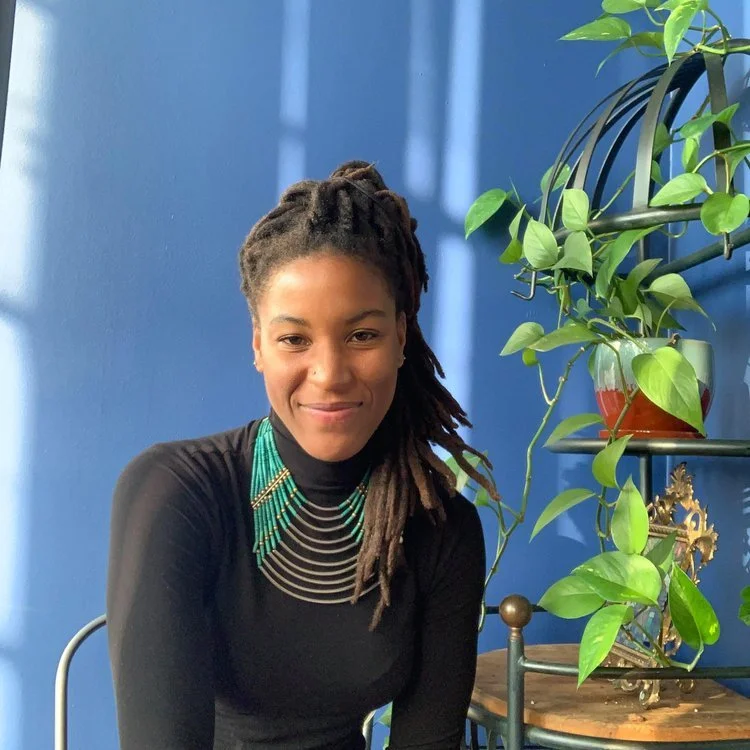
Join us as we explore the fascinating world beneath our feet, uncovering the critical role of soil management in agriculture and its far-reaching environmental consequences. Through a historical lens, we reflect on the Dust Bowl era and how mechanized tilling and synthetic fertilizers have compromised soil health over time. We distinguish between soil and dirt, emphasizing the life-sustaining qualities of healthy soil rich in microbes, worms, and organic matter. Listen in as we discuss the benefits of composting as a sustainable practice that enriches soil, conserves moisture, and minimizes dependence on chemical fertilizers. We are honored to have Kesiah Bascom join us, sharing her journey with Offbeat Compost, a mission-driven company advocating for composting as an eco-friendly waste management solution that supports local agriculture and enhances soil fertility.
We also venture into the world of urban agriculture, tracing Kesiah's inspiring path from a personal gardening hobby to the founding of Offbeat Compost. Discover how a serendipitous encounter with the Food Project sparked a passion that led to a socially responsible composting initiative addressing job creation and environmental sustainability. Through the transformation of an industrial site into a thriving garden, we witness nature's resilience and the cycle of food and soil.
As Kesiah transitions leadership of Offbeat Compost to Bootstrap Compost, we celebrate her achievements and the impact of sustainable practices on our communities and economy. Together, we emphasize the importance of sustainable soil practices for food security, environmental health, and empowering communities through equitable access to resources.
What Lies Beneath
EPISODE TRANSCRIPT
00:09 - Dori (Host)
The nation that destroys its soil destroys itself. This powerful statement for effective soil management was made in 1937 by President Franklin Delano Roosevelt. After viewing the devastated Great Plains region of the United States during a catastrophe known as the Dust Bowl, a recession after World War, I had led farmers to try new mechanized tillers in hopes of increasing crops and thus profits. The practice of tilling, the agricultural preparation of soil through digging, stirring and overturning had previously been done mostly through hand tools such as hoes, rakes or shovels. At this time, however, more than 5 million acres of previously unfarmed land of the US prairies were plowed using industrialized mechanical equipment, and by 1931, there were indeed record crops. However, overtilling the soil broke up the earth so much that it killed the essential microbes living there, which had helped retain water and carbon. Without these life forces, the once fertile topsoil soon dried up and blew away in the winds. Even worse, during a drought in 1932, no water in the ground meant that there was no humidity, and well over 40 devastating dust storms caused millions of people to flee the region. While we here at Tree Speech often speak of trees that tower over our heads, in this episode we will examine what lies beneath to understand soil and how human interaction can affect the way we live on and with our land. We will also speak with Kisaya Bascom, who founded a mission-driven food scrap collection and composting program in the Merrimack Valley region of Massachusetts.
02:04
This is Tree Speech, a podcast where we strive to listen to the forest through the trees. I'm your host, Dori Robinson. This week's episode was written and recorded in Massachusetts, on the native lands of the Wabanaki Confederacy, Penicuk, Massachusetts and Pawtucket people, and in New York on the lands of the Lenape tribes. Tree Speech is co-written and produced by Jonathan Zautner. Each spring, before planting in my garden, I mix compost into my small plot so that the tomatoes, lavender, peonies and sage will all have a wonderful environment in which to grow. We'll all have a wonderful environment in which to grow, but why add anything at all? It's the earth. If it's all natural, can't it simply grow? Isn't that how it works? Well, maybe, but adding compost with all its enriching nutrients and microbes, could be the difference between planting in rich, active soil or, potentially, planting in plain old dirt, and the results of both may differ drastically.
03:10
Dirt and soil seem similar, but are not the same. Soil is alive with living organisms worms, fungi, insects, bacteria and organic matter that supports life with its naturally occurring nutrients and minerals. Beneficial soil microbes perform fundamental functions such as nutrient cycling, breaking down crop residues and stimulating plant growth. Dirt, on the other hand, does not have the minerals, nutrients or living organisms found in soil, as it is made up of sand, silt and clay, and maybe rocky, it cannot contain water or carbon, elements vital for life. While soil is alive, dirt is well dead. There's a beautiful cycle that happens naturally when soil is healthy. It absorbs carbon and water and transforms them into food for plant life, trees, perennials and crops. Even more water comes back up through plants in a process called transpiration, where the plants exhale water vapor, facilitating rain cycles. It all sounds like a wonderful, well-balanced system, right Well.
04:22
Unfortunately, with the aim of growing more crops faster, some farmers, over time, have turned to several practices which initially seemed to increase their production. However, it is now clear that these methods work against the land and do far more harm than good. The Dust Bowl had been bad enough, but after World War II, there were farmers who again hoped to maximize the return on their crops and turn to synthetic fertilizers and pesticides. All of these chemicals killed billions of essential microorganisms in the soil. Microscopic bacterial and fungal elements break down organic matter from dead plants and animals and incorporate them into the soil, increasing its organic content and helping plants thrive. No-transcript. Many synthetic fertilizers and pesticides are still being used today. It's a self-destructive cycle which depletes sustainable food systems and food security. Scientists and environmentalists advocate for us to save our soil, which seems like a huge mission, but there's some friendly organic matter ready to help Meet compost. Friendly organic matter ready to help Meet compost.
05:43
Composting is a biological process in which organic matter, including yard trimmings and food scraps, decompose into humus, a dark brown crumbly mass which is rich in nutrients and retains moisture. The work of decomposition is done by bacteria, fungi and other microorganisms, assisted by earthworms, insects and a variety of small creatures. There are countless benefits to composting. When added to soil, compost improves plant growth and water retention. It balances pH levels, cuts chemical fertilizer use and stems stormwater runoff and soil erosion. Compost reduces methane emissions from landfills by cutting the amount of biodegradable materials disposed. And for trees, compost mimics the forest floor, helping the soil around their roots retain water and nutrients, which is especially critical in urban settings where trees can be exposed to very stressful growing conditions. Lastly, when soil loses nutrients, the crops and plants do as well. Adding compost into soil can provide the essential nutrients needed to make our food healthier and more nutrient-dense.
07:01
So how does one begin? Once you've gathered the coffee grinds and banana peels, what do you do next? Meet Kisaya Bascom. She started the grassroots waste management company Offbeat Compost in April 2017 and has led its growth for five and a half years. Offbeat provided an environmentally conscious alternative to traditional waste facilities such as landfills and incinerators by collecting waste from local households, restaurants and businesses of Greater Lowell, massachusetts, converting their food scraps into eco-friendly fertilizer for local farmers and landscapers. I first met Kisaya in 2020 when visiting the Offbeat Compost Facility on a busy Saturday afternoon. People were moving buckets, shoveling organic material and teaching one another about the composting process. Kisaya was at the heart of it all, showing support and giving guidance, all while finding time to connect with me a new face. Support and giving guidance, all while finding time to connect with me a new face. Let's listen to our conversation together, where Kisaya and I speak about compost, community and, of course, trees. So first, kisaya, thank you so much for being here today.
08:25 - Kesiah (Guest)
Thank you for having me. I feel honored. I love trees.
08:29 - Dori (Host)
That's perfect. You've had experience gardening from a very young age. How did that begin?
08:35 - Kesiah (Guest)
I am fortunate with the family I grew up in. I call my mom the original homesteader. She was always pickling. I remember at a young age we were shucking the corn from the cob on our porch, so it was always kind of a family, communal thing that we did. My dad comes from a farming background so I think he actually honestly influenced my mother and then my mom took the whole gardening thing and ran with it. So we grew up with a huge backyard garden. We always composted. We always had to take trips to the woods to throw the compost in the bin, so it was just a natural part of my life.
09:14
There was something about it for me that just resonated being outside in nature and doing that physical work. I was also influenced by the books I was reading. Most of them had to do with these strong women who were witches and had apothecaries and were growing food, and I thought that was so cool and I wanted to be like them. So my freshman year in high school is when I started my own little garden and it was a mess. I didn't know what I was doing, but my parents were happy to give me some extra seeds to plant for myself. And from there on out, I feel like I've always been growing something.
09:54 - Dori (Host)
How did it develop from gardening to urban agriculture?
09:59 - Kesiah (Guest)
Yeah, I definitely had no idea that I could make a living in that realm. It was just a, it was a hobby and I had thought I was going to go into social work, maybe foster and adoption care, and I did a lot of youth development work. So I, when I graduated, I didn't totally know what I was going to do, but I remember just looking into sort of youth development type of jobs and also adoption, foster care, and I found the food project, which was doing youth development and growing food in an urban space, and I was like, wow, I can, I can do two of the things that I love at once and I think I just knew that I had to work there and that just really launched me on this career path, so that there's a great community of folks who are in this space doing food access work, urban agriculture and food justice work and it all just doing it in some capacity sense, I guess.
11:03 - Dori (Host)
I'm so happy for that moment of synchronicity for you. So what inspired you down the path to begin Offbeat Compost?
11:11 - Kesiah (Guest)
In my later 20s I ended up coming up to the Lowell area for a job at Mill City Grows and they sent me through a leadership program and the leadership program actually required you at the end to come up with some kind of socially responsible project. They sort of sent me there and then I ended up leaving Mill City Grows because the leadership program that inspired me enough to create Offbeat Compost. Yeah so and.
11:42
But they supported me through that yeah, so that that leadership program really focused on social issues from incarceration to climate justice, to the race and wealth gap and so I think it made me do a lot of deeper thinking around what, what we could do in the Merrimack Valley to address a couple of things, and I thought, okay, composting can potentially create jobs. We live in a place where the soil here has been seriously contaminated over the years because it's a post-industrial city. Climate change is this thing that's ever-present. That's just hurting all of us. So what's something we can collectively do? What's something that will help people feel more empowered, because sometimes you feel powerless over it.
12:38
And yeah, somehow I landed on composting. I'd seen businesses like it before. There was one in Boston called Bootstrap Compost, and I had just seen their buckets around in the past and it never occurred to me that I would start something like that, but it definitely. I think I've always just loved compost and so that stuck with me. There were just a couple of things, I think, along my path that I didn't know, but were silently messaging that eventually I would become a composter.
13:12 - Dori (Host)
Thank goodness for those silent messages and for all those organizations along the path. So your company mission states we are committed to creating a resilient green economy in the Merrimack Valley that generates local green jobs, empowers community members to be land stewards and contributes to an environmentally sustainable and just landscape. What does a just landscape look like to you?
13:39 - Kesiah (Guest)
A lot of it is around accessibility.
13:43
I just there's so many folks who don't have access to fresh, affordable, culturally appropriate food, don't have the access that they deserve to healthcare, to a roof over their heads, and a lot of that is because of the systems that, over time, have been created in this country due to all types of things, from, you know, white supremacy to capitalism.
14:12
So I think, first and foremost, I think of it as people having equitable access to basic needs, and I see them as having the power to make the choices that helps them achieve their best selves, I guess, which is why I put the word empower in there. I think I've been working a lot in these service type of roles and I really wanted to create something where it felt like people had a stronger voice and a stronger say in what they were doing and how they were shaping their communities. So we're not a nonprofit organization, but I feel like when members sign up with us, they're investing in our mission in a way and entrusting us to do this work. But we're also collectively doing it, because folks are every week, maybe they're putting out a bucket of 10 pounds of food scraps, which might not seem like a lot for one household, but when you put that together with hundreds of households it adds up and it feels like we're really making some kind of change and that feels. That feels really good.
15:23 - Dori (Host)
We all know the phrase think globally, act locally. And that's what I really think of when I think of Offbeat Compost is that you're really doing such a good job of making that impact in the Merrimack Valley and also educating people in the Merrimack Valley because you have a youth program or you hire high school students, do you not? We did last summer.
15:43 - Kesiah (Guest)
we piloted a little a youth program or you hire high school students, do you not? We did last summer we piloted a little a youth program. So we worked with mass hire and it was essentially having two paid interns and they worked with us and learned about composting. And they did. They learned about some larger social issues as well and we tried to connect that into the food system and composting and create a whole cycle around that. And then we do go into schools and talk about composting and we'll bring our worms and show all the kids the worms they must love the worms.
16:18
It's a mixed bag. Either people receive them and are so excited, or they're terrified and don't want to be anywhere near them.
16:28 - Dori (Host)
Sort of on the other end of all this. As your job and livelihood is directly connected to being surrounded in natural environments, do you feel a connection to nature and your work beyond the physical?
16:43 - Kesiah (Guest)
Yeah, I do. That's such an interesting question. Also, kind of going back to the just thing too, is thinking about composting and the diversity of actors in a little compost pile for it to exist, for it to turn from a banana peel into what we call black gold if you're a compost nerd and it takes all these little microorganisms, it takes us a little, it takes worms, it just takes all of these little critters under our feet that we totally take for granted in order to help this process along. And I just like to think of ourselves as as part of that ecosystem, not separate from it, but just as, as as a blending of, of helping with what nature, nature does, and so I, I don't. That sometimes just makes me feel at peace, that I feel like I, I, my purpose is just uh, it's a part of the larger ecosystem, but I love how even I think like trees communicate through using it's like the whole mycology, mushrooms and fungi and everything. Yes, a lot of times in the compost piles you'll see a fungi network as well, and I just love how it's all so interconnected and to be a part of that, of that and you know what else.
18:18
So we also have at our site in Lowell we've had a garden and we're in this industrial landscape yard at the end of this road that nobody would know about unless they had to be there, and it's hard pavement, there's tires and all types of just weird equipment, and so it's not a place where you would think that nature exists. But when we started growing food there last year, I remember I saw hummingbird, and then you know, there's different pollinators that have come in. And to the worms, I'm just fascinated because there is, there's this compacted gravel that we built the compost bins on, but somehow they found the piles. It's teeming with worms, and so it's so cool that nature always finds a way.
19:04 - Dori (Host)
It's so true, nature always finds a way, and I know the street you speak of because I've been there and it is really amazing. I've heard you mention many times when your soil is happy, your belly is happy. What makes soil happy?
19:18 - Kesiah (Guest)
Composting is a thing that you can put into the soil to add additional nutrients, and that nutrients is amazing food for your plants. They just soak it right up and then they grow into these strong, resilient plants that will hopefully fruits and it feeds you and then whatever you can't eat can go again back into the into the ground again to start the whole process all over again. So in order for us to be healthy, we we depend on the soil beneath our feet.
19:53 - Dori (Host)
Absolutely Everything about the process is literally from the ground up. So what are some ways for people to be active in being a part of the cycle of food from seed to plate and plate to soil?
20:07 - Kesiah (Guest)
Actually, one of the things our members are always struck by when they start is how much food they've been throwing away. We used to have folks who would say, oh my gosh, I'm sorry there's nothing in our bucket this week, and it's like, actually that's a really good thing. We hope that you are becoming a little more mindful about what you're purchasing at the stores, because maybe you don't need all of that. And it's good that you are composting. At least it's getting returned to the earth. But there are things that we can be thinking about beforehand and that comes into the whole justice piece as well the amount of food that we are throwing away as a society when there are folks who don't even have any access to food, and that's something that's really important to think about and be mindful of.
20:57
And I think the EPA actually made a hierarchy. It tells you what to do before composting, essentially, and it says first, reduce your waste. You know, don't purchase as much, don't be so wasteful. Second, if you have some excess food, maybe feed some hungry people rather than throwing it away or letting it go bad in your fridge. After that, I think they say, potentially feed animals. So we do work with, we work off and on with a few farmers, say pig farmers who are looking for some natural ways to feed their creatures, and I know a lot of other composters do that too, and then I think under that is compost, and then after that there's trash and incineration, but we're all nearly at the bottom. There are so many things that folks could be doing beforehand, before it even gets to us, and we definitely encourage that.
21:54 - Dori (Host)
Oh, that's really interesting. Thank you so much for taking the time to speak with us today, and I'm so happy to be in your community.
22:02 - Kesiah (Guest)
Well, thank you so much, Thanks for the work you do and thanks for thinking of me, absolutely.
22:08 - Dori (Host)
And here's to many more worms.
22:10 - Kesiah (Guest)
Yay, and here's to many more worms.
22:14 - Dori (Host)
Yay. After recording this episode, Kesiah announced that she was leaving offbeat compost and selling it to bootstrap compost, who will continue to serve the members and community that she created as she pursues new dreams and ventures. Under her leadership, 2414,000 pounds of organic matter were diverted an astounding amount. We wish Kisaya the best of luck in her new adventures and are grateful for her wisdom and inspiration. If, as FDR stated, a nation that destroys its soil destroys itself, then perhaps a nation which cares for its soil saves itself. This idea isn't new. In fact, composting has a long and rich history. Archaeological evidence shows that the ancient Scots in about 5000 BC, planted crops in heaps of rotting manure. Ancient Chinese and Hindu writings indicate that farmers used manures and other organics to enrich their soils. The first indigenous populations throughout the Americas developed farming systems around the same time, using fish, fish waste, manure and plant waste to fertilize their crops. Using fish, fish waste, manure and plant waste to fertilize their crops. Researchers have found clay tablets from the Akkadian Empire in present-day Iraq dating to around 2350 BC, the first to speak of making compost for agricultural use. The Bible and the Talmud both speak of using manure on fields, and the early Egyptians also composted with worms. Cleopatra even went so far as to make worms sacred in recognition of their contributions to agriculture and ruled that anyone who removed these sacred worms from Egypt was to be put to death. As the world found its way out of the Dark Ages, the agricultural information retained by the monks and monasteries, including composting, found its way back to the populations. Renaissance authors, including William Shakespeare, made several references to composting in their various works.
24:28
The wisdom of composting and other sustainable farming techniques stresses the importance of how acting locally benefits our communities and one another. As Kesiah has explained, sourcing food from local farmers, markets and community-supported agriculture shares connects buyers to farmers, reduces the amount of fossil fuel emissions because of shorter transportation and lowers trash from extra packaging. The more that people buy into the fresh local food movement, the more our economy becomes more sustainable, green and the dollar remains longer within our communities. There are many ways that we can all, no matter where we live, be a part of this positive cycle. We can all, no matter where we live, be a part of this positive cycle. There is an online community composter coalition which lists local compost groups all across North America. We'll drop that link in our show notes. There are also countertop and tumbler composting machines, which allow you to manage some or the entire cycle at home, and there's always Cleopatra's way vermicomposting or worm composting.
25:40
Soil microbes, plants and animals evolve together as an ecosystem and should ideally remain together. Many farms and institutions are returning to this wisdom, all while supporting local food systems and community agriculture. But more change and awareness needs to happen to turn back the harm that has been done to our topsoil. Nearly 90 years ago, as the Dust Bowl became one of the greatest ecological disasters in history, fdr sped into action, launching the Great Plains Conservation, which planted 220 million trees along the Great Plains, 18,000 miles of windbreaks stretching through farms from Texas to Canada. When the times were most bleak, it was trees that were called in to solve the human-created environmental challenge that seemed almost insurmountable. We need this sort of sweeping action today.
26:43
Big ideas that start small, microscopic even yet, are so important to the balance of our lives with our earth and soil. I observed Yom Kippur this past week, taking time to reflect both in community and separately in the woods. I am still in this liminal space of the Jewish New Year where I am considering what to release in my own personal compost. What other ideas, lessons or reflections can begin to decompose so as to make space for, or to nurture the growth of something new. We will include resources in our show notes on how to begin composting, wherever you may live or be located, and we are so grateful to our guest, Kesiah Bascom, for leading by example and awakening us to understand the utmost importance of what lies beneath.
27:43
Thank you for joining Tree Speech today. To learn more about our podcast and episodes, please visit treespeechpodcastcom. We're thrilled to be able to offer interviews, creative insights and stories about the natural world we live in and the trees who guide our way. Please also consider supporting us through our Patreon. Every contribution supports our production and we'll be giving gifts of gratitude, including an invitation to Treehouse, our new virtual community for patrons of all levels. Please also consider passing the word to tree-loving folks and rate and review us on Apple Podcasts. Every kind word helps. New episodes drop every other week on Fridays. Our very next, on October 28th, we'll focus on the spooky trees of the season. Join us if you dare.