

Redwood on Broadway: The Intersection of Theater, Nature, & Storytelling with Scenic Designer Jason Ardizzone-West
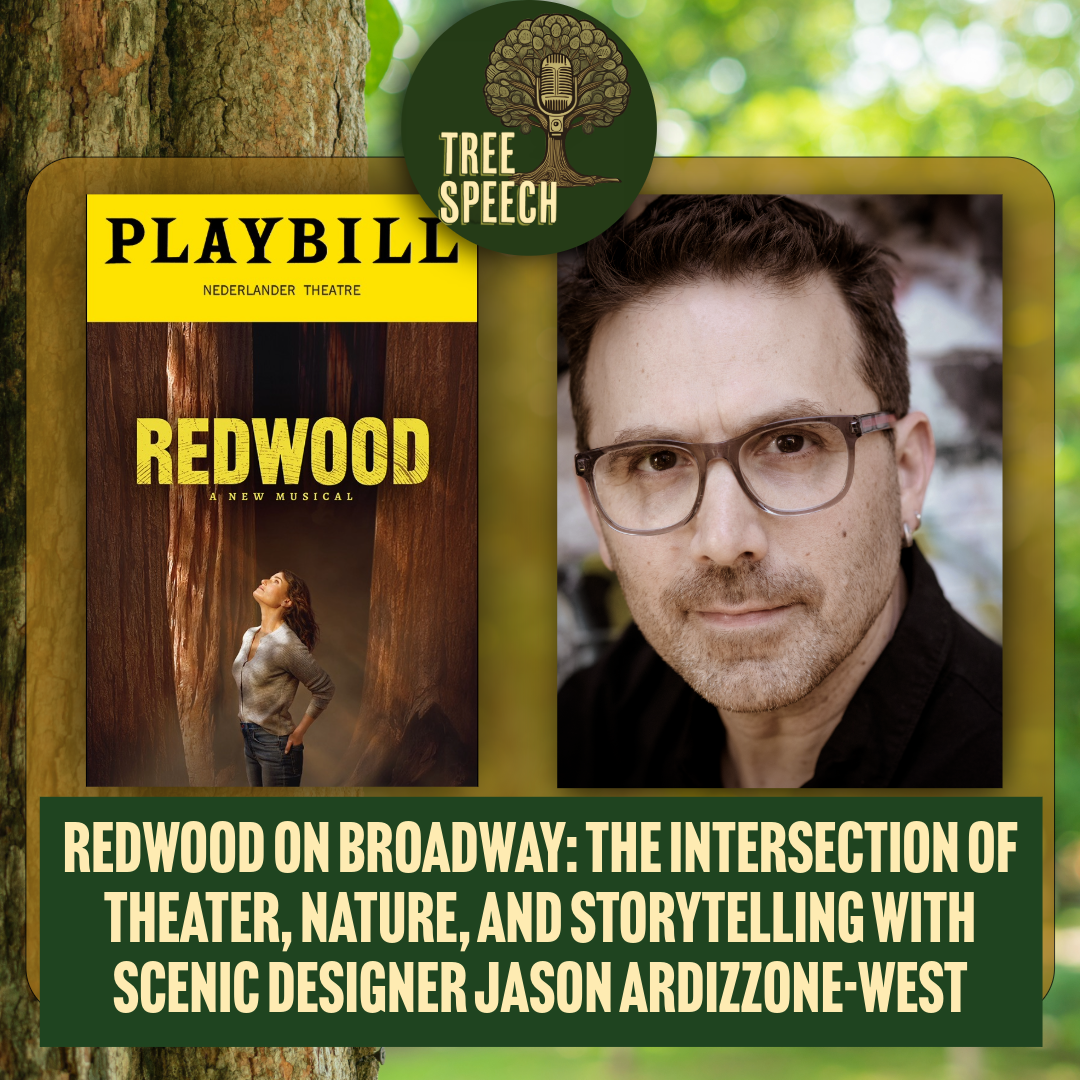
Join us on a captivating journey to Broadway as we explore the enchanting world of Redwood, a new musical that intertwines theater with the timeless majesty of redwood trees. This episode takes you behind the scenes of this extraordinary production, starring the remarkable Idina Menzel and a redwood tree named Stella. Joining us is Emmy Award-winning scenic designer Jason Ardizzone-West, who shares his journey from architecture to creating breathtaking theatrical environments. Jason’s innovative designs transform Stella into a living symbol of resilience and the nurturing power of nature, making her an essential character in this poignant storytelling experience.
Discover how Redwood beautifully weaves together themes of connection, healing, and the intrinsic bond between humans and nature. Jason discusses his creative process and the artistic challenges faced in bringing the visual world of Redwood to life. Envisioning the stage as a canvas for protagonist Jesse's emotional journey, the set design invites audiences into a realm where the roots of history and ancestry intertwine with the narrative. The inclusion of Tikkun Olam adds depth, emphasizing the call to mending the world through small acts of hope and renewal.
Reflect on the wisdom whispered by the redwoods and the strength found in their unseen roots that ground us all. This episode explores how the metaphor of the trees amplifies the story’s core themes, encouraging listeners to embrace resilience and the interconnectedness of life. With heartfelt gratitude to Jason Ardizzone-West for his artistry, we are reminded of the profound impact that thoughtful design and storytelling can have on our lives, enriching our understanding of nature and ourselves. Tune in for an immersive journey of wonder, beauty, and inspiration that promises to linger long after the final curtain call.
Jason Ardizzone-West is an Emmy Award-winning stage designer based in New York whose work spans theater, concerts, dance, film, and architecture. From intimate black-box theaters to massive stadium arenas, he creates embracing environments that transform storytelling into shared, deeply human experiences. Originally trained as an architect, Jason brings an innate understanding of space, light, and time to his designs, crafting visual narratives that bridge the physical and emotional landscapes of performance. most recently, he designed the Broadway musical Redwood, which Jesse Green of The New York Times described as “among the most beautiful and wondrous theatrical creations I can recall.”
Jason has collaborated with visionary theater-makers such as Tina Landau, Richard Nelson, Es Devlin, Pam Mackinnon, Mira Nair, David Leveaux, Sheryl Kaller, Susan Stroman, and more. his work also extends to global superstars, including Lady Gaga, Lana del Rey, The Weeknd, Beyoncé, Dua Lipa, Idina Menzel, Hikaru Utada, Usher, Phish, Pentatonix, and Florence + The Machine.
His achievements include an Emmy Award for Jesus Christ Superstar Live (nbc) and multiple nominations for his innovative contributions to theater and live performance. His designs have appeared in renowned institutions such as The Public Theater, The Atlantic Theater company, American Conservatory Theater, The Apollo, La Jolla Playhouse, Berkeley Rep, The Huntington, and St. Ann’s Warehouse, among many others.
This week’s episode was written and recorded in New York on the land of the Lenapee tribes.
This episode was written, edited, and produced by Jonathan Zautner.
To learn more about our podcast and episodes, please visit treespeechpodcast.com and consider supporting us through our Patreon - every contribution supports our production, and we’ll be giving gifts of gratitude to patrons of all levels. Please also consider passing the word, and rate and review us on Apple podcasts. Every kind word helps.
Episode Transcript:
0:00:10 - Jonathan
This week Tree Speech is going to Broadway. So curtain up, light the lights. We've got nothing to hit but the heights. And those heights, well, they're towering, because today we're focusing on the new Broadway musical Redwood, starring the incredible Idina Menzel and introducing a stunning new presence on the theater scene a redwood tree named Stella. There's always been a natural harmony between trees and theater, an enduring connection that transcends mere scenery. Perhaps it's the rich symbolism trees carry, or the way their presence on stage transforms a space with light, shadow and meaning From the apple tree to desire under the elms, the cherry orchard into the woods and Steel Magnolias. Trees have rooted themselves deeply in theatrical storytelling, shaping themes, moods and dramatic resonance.
Today we are focusing on Redwood, the new Broadway musical inspired by the extraordinary true story of environmental activist Julia Butterfly Hill In the late 1990s. Hill lived for two years yes, two years high, in the branches of a thousand-year-old redwood tree to prevent it from being cut down. Conceived by director Tina Landau in collaboration with Tony Award winner Idina Menzel, redwood follows the journey of Jessie, a woman with a successful career and loving family whose life is upended by a traumatic event. In search of healing, she leaves everything behind and retreats to the Redwood forests of Northern California. There, surrounded by ancient trees and a new community, jessie begins to rediscover herself, finding connection, resilience and the quiet strength to begin again. Idina Menzel first encountered Julia Butterfly Hill's story nearly 15 years ago. She was so moved that she brought the idea to Landau, and the two have been developing Redwood ever since.
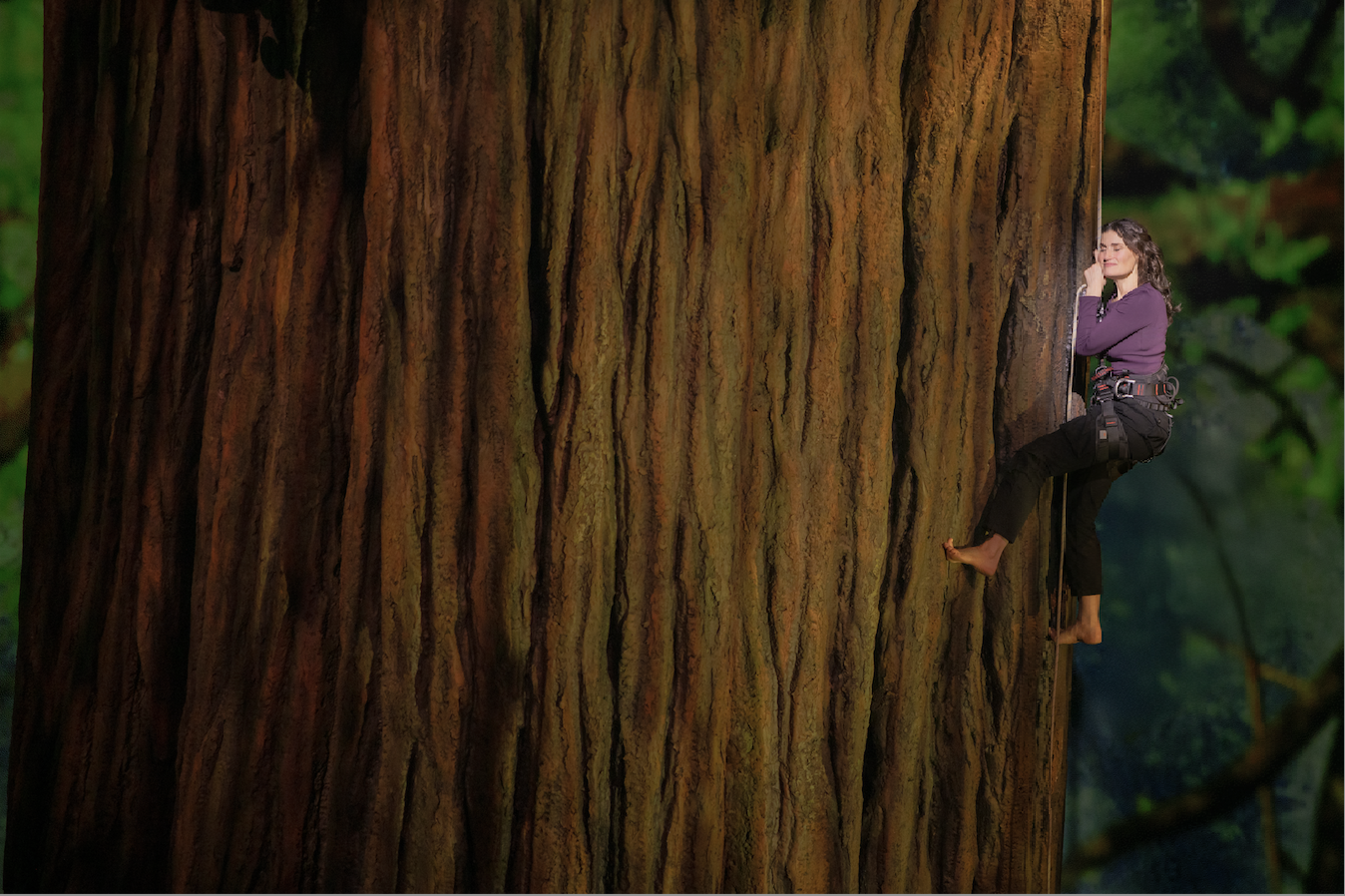
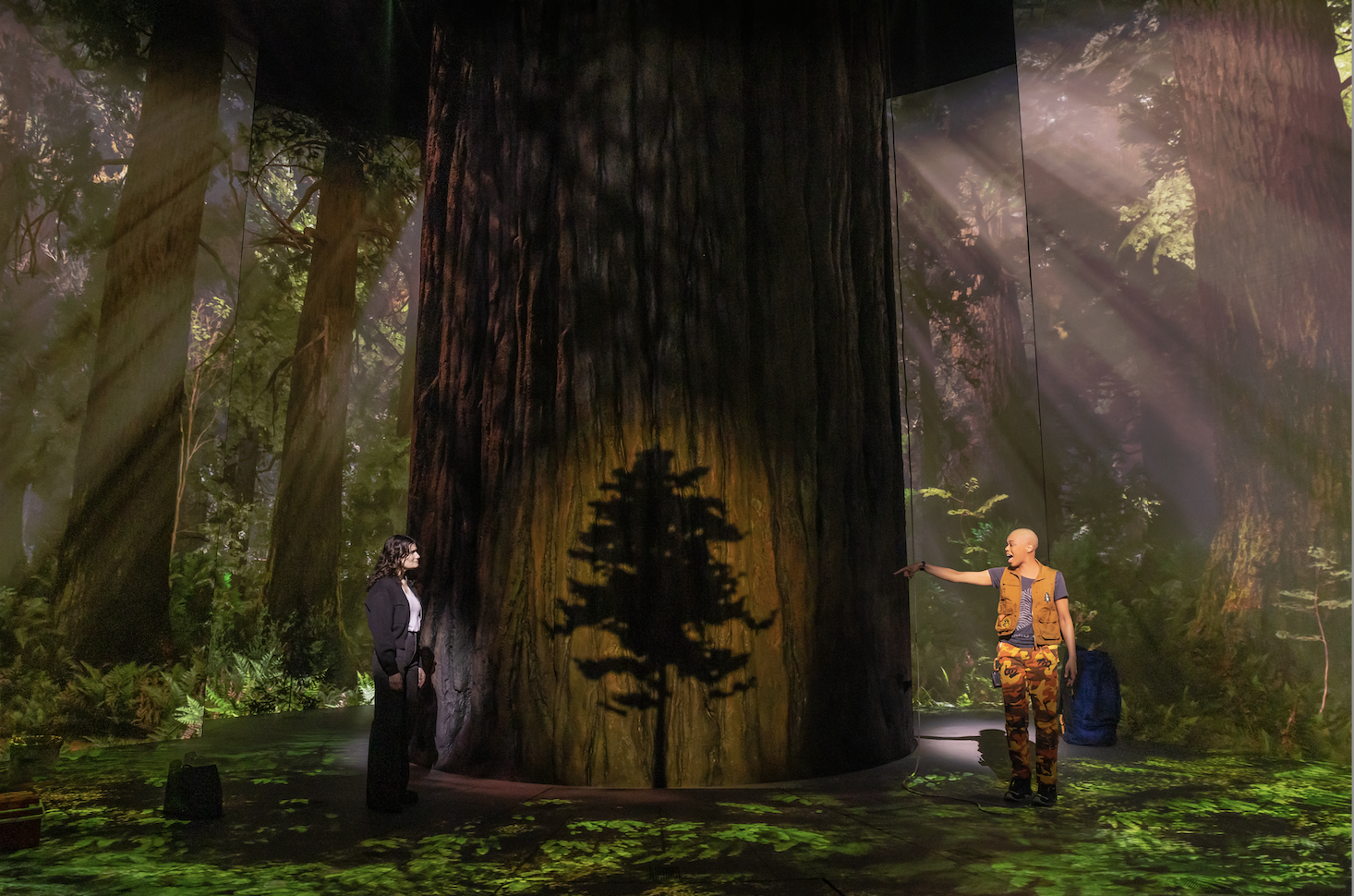
A few weeks ago, I had the opportunity to see Redwood at the Nederlander Theater on Broadway, and let me tell you it's not every day you see a show where a tree takes center stage. The production is absolutely stunning. The story is deeply moving, the cast is packed with powerhouse performers, including Idina Menzel, who sings while climbing and hanging upside down from the tree, and the visuals Just spectacular. The show blends dynamic projections with gorgeous, large-scale physical designs to create immersive worlds, both in the redwood forest and inside Jesse's emotional landscape. And then there's Stella. Stella is the redwood tree at the heart of the show, towering, majestic, built to scale. She's not just a set piece. She's a character, a presence, a force Standing in her grounded magnificence. Stella represents endurance, beauty and the power of nature to hold us when we fall apart. I'm thrilled to share my conversation with the brilliant scenic designer behind Stella and the entire world of Redwood, Jason Ardizzone-West. But first a little bit about our guest.
Jason is an Emmy Award-winning stage designer whose work spans theater, concerts, dance, film and architecture. Designer whose work spans theater, concerts, dance, film and architecture. He's known for creating immersive environments that elevate storytelling into shared, deeply human experiences. On his designs for Redwood, jesse Green, the critic of the New York Times, described them as among the most beautiful and wondrous theatrical creations that he could recall. Jason has worked with some of the biggest names in the world Lady Gaga, beyoncé, the Weeknd, dua Lipa, florence and the Machine and, of course, stella the Redwood.
His achievements include an Emmy for Jesus Christ Superstar Live on NBC and multiple nominations for his groundbreaking contributions to live performance. His designs have graced stages at the Public Theater, the Apollo, la Jolla Playhouse, berkeley Rep and many, many more. In our interview, jason offers an in-depth look at how the breathtaking scenery for Redwood came to life. We talk about his design inspirations, how an eye injury shaped the visual language of the show and what advice he has for young designers looking to work in scenic design. So, without further ado, let's head into the forest and into the mind of a visionary designer. Well, hello Jason, welcome to Tree Speech.
0:05:35 - Jason
Hello, I'm very excited to be with you.
0:05:38 - Jonathan
We are excited to speak with you today as well. We know it's been a whirlwind this past weekend as you were designing for Lady Gaga at Coachella, and we've also been fortunate to have seen quite a few of the productions that you have worked on, and your designs continually take my breath away and have greatly enhanced and sparked our imaginations, whether it be in theater, concert or on television. Thank you, so I'd like to start sort of in your early days. Can you tell us a little bit about how you first came to scenic design, and was there a particular moment or project that pulled you in?
0:06:17 - Jason
Yeah, I've basically been doing this my whole life. I got the theater bug really, really early, like when I was six or something. My father was volunteering with the local children's theater in Worcester, mass, where I grew up, and I just started tagging along. And, to make a long story short, by the time I was in high school I was very, very actively designing and building scenery for the local Worcester there was various theaters at the time there and I was doing lighting design but really focusing on set design. And I had this moment when I was applying to college where I kind of got cold feet and was just worried about the challenges of making a living as a theater professional, having just seen you know, even as a, as a teenager, just seeing my colleagues and the mentors that I'm working with and how you know how tough the life is. And so I decided to kind of take a detour and I and I majored in architecture.
I went to Cornell and I did a very intensive five-year bachelor of architecture program and kind of promised myself I would focus on that and not do theater.
But, of course, very quickly started getting into all the theater clubs and taking classes and independent studies at Cornell and working in the scene shop and very much kind of was an architecture student, also doing as much theater as possible.
But I graduated, I got my license, I got a proper job and I worked as an architect for about a decade, getting closer to theater by finding a firm that designed theaters, and I located myself in New York City to be kind of close to the theater scene there in hopes of finding some way to moonlight as a set designer, which I did. I started designing off-off-Broadway in my spare time as I was working as an architect. But I had sort of an epiphany somewhat related to 9-11, witnessing that and somewhat related to my wife and I having kids, where I just realized I wasn't actually pursuing, I wasn't following my bliss, you know, as Joseph Campbell describes it and so I quit and, with the very deep and generous support of my wife and my family, I went back to school. I got my MFA at NYU, graduated in 2012. And since then I've just been very grateful to be doing a lot of really interesting work and making a living as a set designer, finally, after quite a meandering path.
0:09:00 - Jonathan
And we're all the better for it, and you have quite a list of projects in your resume, so you've done a lot of work then, in not a very long amount of time. On your website there's info regarding how you develop designs, and one of the things that's featured is what you term spatial dramaturgy. I'm wondering can you tell us what that phrase means and how you use it in your designs, and then how you, as you came to scenic and set design, how you began to craft your own style?
0:09:40 - Jason
Yeah, spatial dramaturgy I made the term up, as far as I know. You know, dramaturgy in theater is the sort of study of the play and the context of history and society and culture. And you know, I think, with my roots in architecture, I've always just been interested in observing and thinking about how humans interact with space. And over the years I realized that part of my process was collecting photographs that I had taken of things that interest me out in the world, which got easier once iPhones came into the picture and I realized that if I saw some really interesting kind of trace of human activity in space I could take a picture of it. And I consider myself sort of an amateur photographer and I love photography as well and I'm sort of drawn to stories that I find in spaces.
I'm sort of particularly interested in ghost architecture and so that's sort of where there used to be a building next to another building, but the one building has been removed but the shape of the removed building is still intact and present on the remaining building and I just find textures and visual opportunities like that just full of really interesting storytelling, even without active humans involved, just like seeing the spaces of human presence.
That's like an over analytical description of spatial dramaturgy. But the way it works is I just kind of like I try to be very present as I'm living my days and walking through the world and I take pictures and make sketches of things that I find meaningful and interesting, and then inevitably, if I'm working on a design for anything a play, a musical, a concert I will find myself making a connection to something that I've seen, something that I photographed, that feels conceptually connected to a particular project that I'm working on, and then, of course, I'll sort of expand the research from there quite a bit. But it's become a really interesting process that I just sort of recognized retrospectively I was doing so I've made up a name for it, called spatial dramaturgy for it.
0:12:08 - Jonathan
About spatial dramaturgy. Yeah, I love that and I think that makes so much sense as we'll talk about when we view many of your sets. They're worlds of themselves, that sort of stand up on their own without the play. Of course they enhance it, but they also stir the imagination and the senses and I can see how this path of architecture into spatial dramaturgy, into your interests, combine to create these magnificent worlds. So we'll talk about Redwood in a moment, but some of the other productions that you've designed include Rite of Spring, the Grove, Our Town, the Night Falls, the Bluest Eye, Lana Del Rey's concerts, to name a few, and the thing that combines all of these is that trees are featured as a centerpiece to all of the design elements. Can you share with us what trees mean to you and why they are so prominent in your work on stage?
0:13:06 - Jason
I mean similar to theater. I have always been a tree hugger. I was the artistic kid in school and so I was a painter and a sculptor and I still am. But I was sort of obsessed in middle school and high school with drawing and painting trees, and I didn't know why, I just liked them. You know, I couldn't articulate any particularly deep reason, but I think as I've aged I have come to understand more about why and what draws me to trees and why I find myself kind of drawn to projects that are somehow wanting to articulate an idea about them.
Just as an example, I was having a problem with my eye.
I got attacked randomly and someone like sucker punched me in the face and so my retina was partially coming unattached so I had to get laser surgery.
I had this incredible experience very painful, getting laser surgery to reattach your retina. But when they were zapping my eye I saw this impression of the inside of my eye, like I saw the vein, the kind of radial branching vein pattern of the backside of my eyeball. Every time they touched, hit it with the laser, and simultaneously I was looking out the window and I could see this beautiful tree outside my retinal specialist's office window and I was like, oh my God, it's all the same. We're like this organic branching structure. This is what kind of combines all of our life forces together. Of course you can see this pattern in so many places, not just trees or veins, but like neural paths and stalking patterns and material and family trees and our relationship to each other through time, to that structure and those organic life forms that I find deeply meaningful, and I just find the pattern and the ideas popping up a lot in different projects.
0:15:26 - Jonathan
What a remarkable experience to witness all of those things all at the same time, and I'm so sorry it had to happen in that way.
0:15:35 - Jason
Thank you. Well, it ended up being a very positive thing for a lot of reasons, this sort of being one of them. So thank you.
0:15:41 - Jonathan
It's amazing. Well, let's talk about Redwood From the beginning. Then, when you read the script for Redwood for the first time, or whatever was presented to you, I'm not sure what were some of the initial images, colors or textures that came to mind. Had you spent a lot of time amongst redwoods, Were you familiar with that type of tree and that area? Or what was the spark for what the design would later become?
0:16:11 - Jason
One of the many great things about this process with Redwood is the collaboration with Tina Landau, the director and writer and co-conceiver. She co-conceived this with Idina Menzel and so even before I read this script, tina had shared with me her treatment of it and she, before I even came to the project, had already had a lot of design-related ideas about how she wanted to do this piece of musical theater and knew, for example, that she really wanted to use video somehow as a tool to help articulate the kind of psychological space and the vast array of different places and brain places that we go in the story. But she also knew that she really wanted something very, very tangible to be physically present. That was this tree named Stella, who's kind of the other main character of the story besides Idina Manziel. So Tina had no idea what it all looked like, but she knew that she wanted a kind of realistic presence of a redwood tree, but that she didn't want that to be there all the time and she didn't want any like fake foliage or you know any. You know Disney level attempts at rec, in a kind of literal way, a redwood forest, because of course you can't possibly come close to reproducing a redwood forest on stage. So even before I started thinking about it, there was already kind of a strong conceptual statement about the design which is it's going to be, this kind of abstract approach, this transformative ability to shift languages. So that was really valuable for me as a set designer to kind of start my process with such a beautifully articulated creative statement from the director and the writer. But then I read, when I listened to the music and read the script, trying like struggling with like well, how am I going to do this? Have a realistic tree? That's not always there and it's abstract but it's tangible.
In the script there's this and if you saw it you probably remember this there's a story that the character Becca tells Idina's character, Jesse, which is a Jewish creation story called Tikkun Olam, and I had never heard of it before and I was sort of blown away just reading it and learning more about it. But it's basically the very simple version of it. Is the beginning of time. God sends his light to Earth in these vessels and the vessels can't contain the strength of God's light, so they shatter into millions of pieces and the light scatters across the universe. God creates humans in order to attempt to gather the light and repair what's broken. As I said, that's an oversimplistic restating of this creation myth, but the essence of, you know, humans' purpose being to try to gather light and repair that which has been broken.
Very, very connected to what Redwood is about. And very, very connected to what Redwood is about with Idina's character, Jesse, trying to figure out how to come to terms with her grief and the loss of her son and her broken marriage, and just like, how do you repair? But I also I realized that this story, Tikkun Olam, also kind of describes my approach to theater making. Or why I think I'm interested in being a theater designer is that I think of theater kind of as us humans attempting to gather together and collect light and story and share it with each other and if not, you know, repair the universe, at least try to collectively come to terms with the human condition through communal, shared storytelling.
So that story became really really kind of deeply inspirational for how I was going to try to find my way into the spatial design for Redwood, the notion of trying to kind of find what that might look like, a broken vessel that is in the midst of being put back together, and also being inspired by the memory of seeing the inside of my eyeball and the sort of branching structure that also looks like a root system, and so the physical design of redwood is simultaneously inspired by the idea of an empty vessel, the cross-section of a redwood tree, the inside of an eyeball, with a radial root system and map of the universe.
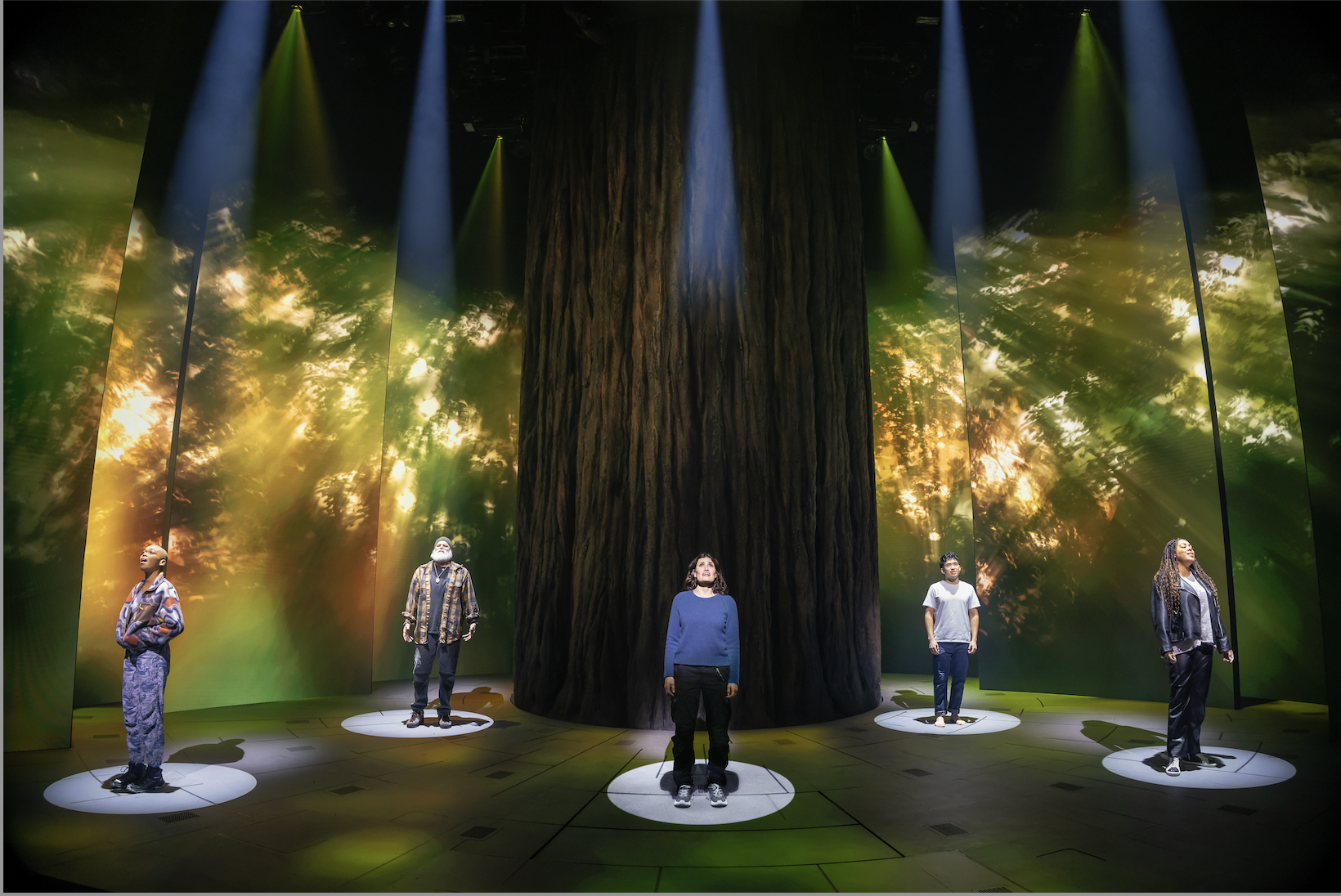
You know it's all these ideas sort of went into how to try to think of a space that can simultaneously be an empty, abstract container for light, in that it is literally made out of a material that delivers light through little pixels and is there to emit image and light and collect light from without.
And then at the very center of it and um, sort of occupying the, the heart, the very geometric center and the kind of spiritual center, is our tree Stella. Who is this very in the midst of this open, abstract, digital, transformative space, we have this extraordinarily tangible, sculpted, textured, correctly scaled cross-section of a real redwood tree and it can rotate into the middle of the space or it can rotate out of the space and on the backside has another led screen, so it just sort of joins the empty space. And at the very center of that revolving platform is this space where Spencer, the the character of Jesse's son, who has died of an overdose, sort of appears in the middle of this tree and in the middle of this space. It's a very simple idea, but it's very complicated in terms of how it works and how it gets there and how it's all related to itself.
0:22:47 - Jonathan
It all makes sense now. I think you feel that you don't need to know all of that information as an audience member, but you feel how the music is intertwined in the design and you feel part of it almost in an immersive way, because it does come out into the audience and surrounds you. It's all consuming in a really beautiful and powerful way. The visuals stay with you, I think, because they're so pronounced and they're so close. Then, once you had all of these ideas and you're starting this process of putting them together, were there particular challenges that you had in translating these themes and weaving these separate elements into one cohesive design and into the physical visual?
0:23:39 - Jason
world on stage. It took me a while, it took us a while, to kind of figure out that there only needed to be one tree. And that was interesting because early on there's this I remember feeling like well, we're supposed to be in a forest and there's multiple trees, so there should be a few trees, and so the original design. I kind of forgot about this until the other day when I looked back and saw, but the original design had two physical trees that would rotate into space, and then we realized that was too much. So then there was just one tree. It was Stella, but she wasn't always in the middle, she sort of tracked to another position and was Stella, but in two different places, and that didn't make any sense either.
And so I was really just scratching my head about it, and I guess it was sort of not right at the very beginning actually, as I'm talking about it, that the simplicity of the circular cross section of a tree or the circular radial organization of my vein structure and my eyeball wasn't lit until later that that became really helpful in sort of simplifying the design and had this kind of aha moment where I realized that there should just be one tree.
Her name is Stella and she's always in the middle, and that is what's important is that she's in the middle. She can come and go out of space. The middle of the rotating platform that she's on represents the heartwood that they talk about, which is the strongest part of the tree, but it's not physicalized except for by this character, spencer, who is the only person who stands right in the middle there at the very end of the musical. So, yeah, it was interesting to be flailing about in the beginning, trying to figure out what is the balance between literal and abstract and just sort of letting the simplicity of this diagram from the natural world help kind of focus the design and focus our approach to the staging.
0:25:49 - Jonathan
Right, and the reveal of Stella is so magnificent. I remember I had seen production photos and I entered the theater and there's no sign of Stella. I didn't know where she would come from and the way that she's revealed. We won't give anything away, but it does take your breath away. I wonder then how do you think about the audience's experience as they walk into the space? So in this case it's a pretty blank canvas. You know you're not given a lot of clues. It does look very modern and abstract, as you've said. What goes through your mind as you're thinking about their experience entering this space? I know there is some audio, there's sound and other elements at play, but as far as visuals, you're not given very much.
0:26:38 - Jason
Yeah, yeah, and that was a choice, for sure, and part of what the whole creative team really was trying to do was to kind of break the audience's expectations of what they might think they were going to walk into, knowing that they were coming to a musical about redwood trees that took place in the redwood forest and kind of, you know, wanting to, just from the very moment of entering the theater, make it very clear that this is not going to be an attempt to pretend that we're in the redwood forest, this is not going to be an attempt to recreate the redwood forest. You can't do that, you just can't do it. As I already said, what we were really more interested in was exploring the, the psychological space and the emotional space, as opposed to the literal space, and so we I often say that the, the play, takes place inside Jessie's brain, much more so than it takes place in the car or in the Redwood Forest or in New York City. We're sort of in her mind space, and so the choice to have the audience walk into a kind of blank, empty space is connected to that. It's also connected to this concept of an empty vessel, and we haven't yet gathered the light we just have as a vessel right and we're going to put it together to remove the telling of this story. But also we wanted the musical starts with jesse running away from new york city.
She's in the car Again, not literally in her car, she's sort of in her head, because she's just like driving nonstop across the country, reliving all of these snippets of memory and being haunted by her son and haunted by her crumbling marriage with her wife Mel, and we're shifting all over the place as her brain is shifting all over the place. And it's not until she arrives at the Redwood Forest at the end of this first song, where she experiences seeing the forest for the first time and looking up for the first time and sort of getting outside of her head for the first time. So the audience goes on that journey with her and it's not until she sees the forest that the audience sees the forest. We don't want to give it away because she's not there yet. So it really was the only way to start as far as I'm concerned.
0:29:12 - Jonathan
As a designer, do you find yourself changed by the worlds you help create? Has Redwood, for instance, left any lasting impression on you personally?
0:29:24 - Jason
Every show I work on, I think, changes me and leaves an impression.
I mean I am very humbly grateful to be in a position where I'm able to, you know, say yes to projects that I am moved by and have a real spiritual connection to. I, knock on wood, am lucky to really just be able to work on the things that I find moving and helpful to the human attempt to trying to find meaning through storytelling, and so every project I work on really does affect me. I find myself sort of being able to learn something new from the research of working on a show or getting to collaborate with new people that I haven't. And I'm always learning something new always, and getting to take that and makes my life richer, it makes my work richer. I bring lessons I've learned in the theater world into the concert design world and vice versa. You know like the technology of concert is something that theaters kind of shy away from, and so you know like I find myself cross-pollinating between media a lot. It's really one of the wonderful things about, I think, working in the theater is that kind of constant learning that happens.
0:30:57 - Jonathan
Each production has its own worlds with its own set of research. You sort of get to immerse yourself within that and go as deep as possible to learn every so. It's this never-ending supply, I'm sure, which is so exciting. Through all of that, I know that your work inspires many, many people, including young artists, and I wonder what advice would you give to a young scenic designer or young designer who dreams of working at the level that you are at?
0:31:27 - Jason
My advice is to pursue what is interesting and to reject any notions of boundaries between different types of art forms. I really like it when the boundaries are blurred between you know what my job is as a set designer versus this person's job as a lighting designer versus that you know, like, for example, with with breadwood hana kim, who is the video designer. I our work is very tangled together in terms of what is video design, what is set design, Also the lighting designer too. You could extend that too to the sound design. The whole creative team really gets tangled together really beautifully in Redwood, really gets tangled together really beautifully in redwood.
But I also really like blending and blurring those boundaries, as I was sort of starting to talk about, between different types of of expression. So like I really like bouncing from designing big musicals to small plays, to scrappy, weird immersive things, to very large scale pop star concerts, TV film, like they're all kind of the same uber design journey. For me, Conceptually that is very fruitful and interesting. But also and this gets maybe to the kind of advice for young people entering the profession question it's a hard profession to survive in. You know the scale of finances in theater. I don't think I'm giving anything away to say that it's not so robust, and so I sort of think having a diverse range of scales and types of projects is also a requirement. If you don't happen to come from money, or if you don't happen to be married to someone who can support you designer and with theater, I think it's very smart to also be working in other corners of the industry that are in different scales in terms of the fee and the budgets and everything.
0:33:45 - Jonathan
Thank you for those insights and that really great advice. Well, Jason, this has been such a pleasure here. Design and art evoke such a strong reaction and delight in the audiences that are fortunate to see it, which is many at this point and with many more to come. We are so thankful for the ways you bring the brilliance of nature and the wild outdoors to life on stage and many of your works, and we'll be watching to see all of the wonderful things that you will continue to create. So thank you so much for talking with us today.
0:34:19 - Jason
Thank you. It was my deep pleasure to talk to you. I love that this podcast exists, by the way, and I was very happy to talk to you about trees. Thank you.
0:34:30 - Jonathan
It was wonderful, thank you. I remember when I was in the audience of Redwood and as the show ended and the final note faded and the stage fell quiet, we in the audience were left with something deeper than applause, a stillness like the hush beneath the forest canopy, a knowing. As Jason mentioned, at the center of every redwood there is heartwood ancient, dark and strong. It does not grow anymore, it does not bend toward the light, but it holds the tree upright through storms, through fire, through centuries. It is the memory of all that came before and the promise that the tree will endure. We too carry heartwood within us, the quiet core made from love and loss, from songs sung and stories lived. It's where the pain lives and the beauty. It's the place we return to when the world asks us to remember who we are.
In Redwood, we witness people searching through bloodlines and branches reaching toward healing, witness people searching through bloodlines and branches reaching toward healing. And just like those towering trees, they find strength not just in what's visible but in what's buried deep, sacred, unseen and eternal. And in this sacred search we are reminded of Tikkun Olam, the call to repair the world, are reminded of tikkun olam, the call to repair the world, not in grand sweeping acts, but in the quiet daily tending of what's broken, the mending of memory, the holding of grief, the planting of hope. So today, whether you walk through a forest or just feel the rustle of your own spirit through a forest, or just feel the rustle of your own spirit, listen closely. The trees are not only speaking, they are singing, singing of roots and ancestors, of strength and survival and of the heartwood that holds us all. Until next time, may you walk gently and listen deeply. A special thank you to Jason Ardizzone-West for his time and generosity and thank you for joining Tree Speech today.