

Racist Trees: Unveiling Hidden Histories & Environmental Racism
We’re thrilled to open this fifth season with an interview with filmmakers Mina T. Son and Sara Newens who directed the eye-opening and thoughtful documentary, RACIST TREES. The intimate film captures an inside look at the frustrations of residents of the historically Black Lawrence Crossley Tract neighborhood, who are cut off from the glitz and glamour of Palm Springs, due to the planting of 60-foot tamarisk trees that overshadow the community and are viewed as a symbol of segregation.
Join us as we explore the fascinating intersection of nature, history, and social justice through the lens of the thought-provoking documentary "Racist Trees." This episode unravels the powerful symbolism of trees in our lives.
Listen in as we uncover the layers behind the making of this impactful film, which was initially inspired by a 2017 article and took years to develop. We question the societal dynamics that delayed the recognition of the Black community's plight and highlight the universal relevance of their story. The documentary's premiere in Amsterdam and its powerful reception at the Palm Springs International Film Festival underscore the global resonance of these issues. As we engage with media figures and city council members, we emphasize the importance of accurate representation and the filmmakers' commitment to amplifying community voices. Join us for an eye-opening discussion that not only challenges perceptions but also encourages new awareness and curiosity about our ever-changing world.
Racist Trees is streaming on PBS Passport. We highly recommend that you check it out and would love to hear from you. Email us at treespeechpodcast@gmail.com with your thoughts.
Episode Transcript
0:00:12 - Dori
Hello, this is Dori Robinson and Jonathan Zautner and you are listening to Tree Speech, a podcast that strives to hear the forest through the trees. Together, our goal is to create monthly what we call Conversations in a Clearing that blend narrative storytelling, interviews and wanderlust at the intersection of the personal, historical and cultural ways that trees impact all of our lives.
0:00:39 - Jonathan
We're looking to find new understandings to the tangled relationships we have with the natural world in which we inhabit.
0:00:47 - Dori
And we just love trees. Thanks for joining us. And let's begin today's episode. When I was a little girl, like so many people, I was afraid of the dark. There was no clear reason for this. Perhaps the dark was scary because it made everything harder to see and, having grown up in New England, ghost stories abounded and, along with them, my imagination. Regardless, I made it to about 8 or 9 years old when my father first learned of my fear and, without hesitating, turned off the lights in the house, grabbed a flashlight and took me outside into the dark backyard. He explained that he would help me learn to adjust to the dark and when I was ready, he was going to turn off the flashlight and walk back inside the house, leaving me alone in the inky darkness. He assured me he would wait for me by the door until I was comfortable and would join him. At the time, I remember that I was completely skeptical, certain that within moments of him walking away from me, I would be swept away by all the things that go bump in the night. That's not what happened. When he turned off the flashlight and walked to the door, my heart raced for a few minutes, but eventually it slowed as my eyes adjusted and I began to feel calm. I saw the trees I played among every day. I saw the outlines of my house and of the houses next door. I heard the soothing sounds of wind, insects and the neighborhood. As my visions of ghosts faded away, what I was left with was my family's backyard, which I loved. After a few minutes, I confidently walked back to join my father, and I have not been afraid of the dark since. I've definitely walked back to join my father and I've not been afraid of the dark since.
This week the vernal equinox began in the northern hemisphere, and I've been considering this story while thinking about the ways that the emergence of spring can teach us to face what might initially be uncomfortable changes in our lives. Seemingly effortlessly, nature continually demonstrates growth and adaptation. Already in this season, we are beginning to see buds emerging, the days are staying lighter longer and the temperatures are warming. We have the opportunity to lean into our ever-changing world with new awareness and curiosity, even as it seems to be spinning out of our control, with the chance to examine the unknown darkness of our own backyards, to understand ourselves, our neighbors and our environments in brand new and exciting ways, and trees are leading the way. Trees are having a real moment right now. Everywhere we look we see tree stories in the news, in books, art and in film.
One particular documentary that recently caught our attention is the insightful and thought-provoking film Racist Trees. In this eye-opening documentary, local politics, news, media, race, class and gentrification intersect through an inside look at the frustrations of residents of the historically Black neighborhood of Crosley Tract, which sits inside a small corner of Palm Springs, california. These two areas, palm Springs and Crosley Tract, are separated by a row of towering 60-foot tamarisk trees, which has caused frustration and animosity for residents, who regard them as an enduring symbol of racism. As some people believe, the trees were intentionally planted to exclude and segregate the neighborhood. An important part of the film to explain is Section 14.
A one-square-mile tract in downtown Palm Springs, section 14 forms the heart of the reservation belonging to the Agua Caliente band of Cahuilla Indians. As the city evolved from a desert outpost to a playground of the rich and famous, section 14 became more desirable to developers. Between the 1940s and 1960s, competing interests vied for this valuable land and residents were forcibly displaced as the local government set fire to homes in the area without providing a place for its inhabitants to relocate. Many families had no choice but to take up residence just outside city limits or leave town altogether. A few families found refuge in Crosley Track In the film when a white activist named Trey Daniel campaigns for the removal of the Tamarisk trees.
The history of racial tension in the city comes to light. When the conflict makes headlines, a firestorm of local politics and international media puts into question the progressive reputation of Palm Springs itself, and the documentary captures the whole story in an intimate, sobering and at times even humorous investigation. Jonathan and I spoke with directors Mina T Sun and Sarah Newins, who gave us insight into both the behind-the-scenes process of making the film as well as the impact these controversial trees have had within this neighborhood in Palm Springs.
0:06:12 - Jonathan
That's right, Dori. Our guests for today were fascinating. Here's a little bit about them. Sarah Newins is an award-winning filmmaker and editor based in LA, who has received prime time Emmy award nominations for her work on Pretty Baby, Brooke Shields and Alan vs Pharaoh, and she served as editor and writer for the documentary On the Record. Mina T Sun is a Korean-American filmmaker, also based in LA, whose films have screened at film festivals and museums, including the National Gallery of Art, Margaret Mead, Traverse City and Cinequest. With Sarah, she has directed Top Spin, which streamed on Netflix, and Racist Trees through their company Wild Pear Films.
0:07:03 - Dori
Here is our interview with Sarah and Mina. Sarah and Mina, welcome. It's so lovely that you're both joining us today.
0:07:20 - Sarah
Thank you so much for having us. That's going to happen a lot.
0:07:25 - Dori
That's great, the more the merrier. We especially appreciate it because you're coming from two different coasts right now and we're all over Zoom, so really appreciate you making the time to make these real connections.
0:07:39 - Jonathan
So we want to start at the very, very beginning, where this film Racist Trees came into being. Of course, documentary films often start filming before the full story is apparent or you have an idea where the story will go. So we're curious to know how this particular film started and what was the impetus for the idea to concentrate on these trees in this location.
Sarah
Sure I can kick things off. So basically I'll start with how Mina and I became filmmaking partners, which is actually gosh, going on 14 years. We met in graduate school, 2009, and we started making projects from the very beginning together and made our first feature. One of the reasons I went to grad school was because I wanted to find the people to make good work with, and then Mina and I just clicked right away and I call her my creative soulmate because we like joke about sharing a brain, like having a similar sensibility of storytelling. Sensibility is like a really valuable thing. And then we just kind of kept it going and made our first feature, top Spin, which took us to five different countries and we put everything and all of ourselves into it and are so proud of it.
But then we thought maybe the next one could be a little closer to home. So we were really like on the hunt for something that was closer to our backyard and then, separately, just living in LA. You spend time in Palm Springs occasionally for some respite, to get away, and the local paper had a picture of these trees on the cover and then there was like a little byline that said some residents believe these were planted for racist reasons and it just I mean it leapt off the page, especially because they're so tall, so thick. It's a true barrier between historically Black neighborhood and the rest of Palm Springs, which at that point we had known it as a predominantly white, you know resort community. So we realized this was a real blind spot for us and then decided this is likely a blind spot for a lot of people.
0:09:59 - Mina
We want to dig deeper. It was just a matter of finding the right subject, and so when Sarah sent this to me, it felt like, oh, there's something here. So at the beginning we thought, oh, we'll make a short. We had no idea what would happen. We thought, if anything, nothing would really happen. But there's some interesting layers of complexity here and I think we really wanted to explore that, and so that's really how it started, and then it kind of it evolved into maybe we do a short doc series. And then the pandemic happened and then sort of the world, you know, as everyone knows, halted and we had breaks in terms of what we were going to do with this project. And then we had our production partners, Wayfair Studios, come on board and they were the ones who said, hey, you think there's something there to make a feature. And the more we got into the story we realized there was.
0:10:56 - Dori
Thank you for sharing Just a fun thing. Jonathan and I met in graduate school as well, so that there is something really special about finding like-minded collaborators with whom you can continue the work. So you spoke about finding out about the trees. The presence of the Tamarisk trees were, and continue to be, a very heated and divisive topic in Palm Springs. What was it like going into the community to film, especially since you gathered stories from so many voices, especially because your presence is so felt throughout the film?
0:11:35 - Sarah
Well, yeah, I mean it was funny in a way, like the community sort of came to us in a sense, because when we reached out to Corinne Kennedy, the Desert Sun, and said, would you mind putting us in touch with some of the people that you profiled? And she wrote a very in-depth article about all of this and had been researching for months and she introduced us to Trey Daniel, who is the white activist in the film, who is a newer resident of the Crosley Tract neighborhood, and it felt like the next day he got in his car and came to LA and with a stack of papers, just like Corinne describes in the film, was like here's everything you need to know. This is incredibly problematic and the city council is being ignorant. They don't remove the trees, they're racist From the very beginning. Council is being ignorant. They don't move the trees, they're racist From the very beginning. It felt like the community really invited us in to help them put pressure on the city council.
Jonathan
Can you tell us how long you spent in Palm Springs? What was that process, from the first time that you went there with this idea in mind through the end of filming. What was the duration of that time and at what point did you feel that you had the full story and footage to create a film felt?
0:12:53 - Mina
That first meeting with Trey was the end of 2017, when the article first came out, and then, interestingly enough, because of the attention I think that that article drew, things were sort of moving very quickly and so filming was sort of immediate, leading into 2018. And, without going into spoilers, things happened very quickly, but I think for us to film sort of that immediate story was over the course of a few months into that first half of 2018. And I think during that time we unearthed a lot more and sort of we were getting more to the story, more historical context of the Lawrence Crossley neighborhood and just communities of color in Palm Springs overall. But then filming sort of continued on because, as the making of any documentary project, lots of things happen and there's funding and there's all these sort of different issues, and so, you know, we really filmed all the way through Gosh. Now I'm starting to blur my dates Is it 2021?
0:13:59 - Sarah
2021. We filmed, yeah, through late 2021. And then we premiered our film at the IDFA Film Festival in November 2022.
Jonathan
So that's a pretty long process for this film. That's a big commitment that you had to the story Without giving away spoilers, because everyone should experience the film as we did. As we watched the film, there were a lot of surprises and a lot of revelations. One of them to me was the fact that I was rooting for these trees to come down, which is sort of a different side of things to be on. I don't think I've ever wanted trees to come down as I did, as I was watching this film. And I wonder for you, as you were filming and or editing, whether within the story or within yourselves or your understanding of the world, Were there any surprises that you encountered as well?
Sarah
Yeah, I think we really tried to approach it from a neutral position. We wanted to kind of investigate it and knew from the beginning it would have a little bit of a playful tone. We thought there's something about this idea of these trees being evil and the fact that true crime documentaries are so popular. We were playing with it and trying to have a little fun with investigating this issue and trying to get to the bottom-Prosley neighborhood.
And very few from the city council you know JR Roberts really spoke on behalf of everybody, but we were certainly interested to hear more and that was sort of kind of how we just ended up with him representing their point of view express their frustration with the trees. It was pretty easy to get on board with wanting them down for us certainly, and whether or not they're quote racist was sort of a secondary issue to solve and I think it didn't really matter in the end who planted them. It was more about how it was affecting this community today and particularly how it was depressing their property values. And given the real estate and the value of real estate in Palm Springs, it just seemed like just really an unfair shake that they should have benefit in the way that everyone else does.
0:16:27 - Sarah
I think in watching the film we have all of these surprises or all of these very interesting characters and happenings. But I was just curious as to what that would be like for, as you described, years and years and years of being invested in these people but also having to probably go away and do your own things and then come back and be tied to it. Were you constantly invigorated by the story, or how did you carry on or find the energy to continue to be invested in the film that you were creating?
0:17:04 - Mina
So the timing of when we started and then how the film making evolved is interesting, because so, as we mentioned, this article came out at the end of 2017, and that's when we got involved. I think what attracted us to the story in particular was that it wasn't just about the Lawrence Crosley neighborhood, wasn't just about a story about a Black community, because the complexity, the multi-layers of it was specifically Trey, because I think people were also questioning his motives and what was this white guy doing and why was he so invested? And is there something going on and why does it seem like the Black residents had been complaining for decades and now there's something happening? So there was something there that we wanted to really look at, especially as people who aren't from the Black community. I think we wanted to really look at this in the way of like, there's something going on here. Let's unpack this and also look at our own biases as well.
It suddenly really came to light. I mean, we knew this was important back when we first started and it just crystallized it even more so that this is important now more than ever, and sort of the role of people who are in power, not the people of color, not communities of color, right. It's sort of like what is the role that other people can play in the world and in the community and to sort of right injustices that have happened and that continue to happen. And so I think that really just came to light after all those years, right after we had started, and sort of what was happening in the world.
0:18:48 - Sarah
Just to circle back a little bit to your question of what surprised us, I think we were very much like wait a minute, why is it taking this white activist to get the city's attention?
Like this makes no sense. And then, as we became more familiar with the community members, it was like, oh, they very much understand that that is what it takes to have the dialogue that they need, especially given how much they'd tried in the past on their own and gotten nowhere. And then it was like, okay, well, trey's willing to do it, let's use his power, his privilege. And so that was something that surprised us and then, additionally, really really surprised I mean I guess I should just speak for myself and not for Mina, but it really surprised me, and I think also Mina, that the links to which the city council went to try to disprove and ultimately not even acknowledge that it was a possibility that the trees were planted to exclude this community and nobody knows, nobody was there when they were digging the dirt. So we were like, wow, really, you're not even just going to say it was in the end a nuisance issue, and that definitely surprised, I think, both of us, that's a lot to process, especially over multiple years.
0:20:08 - Dori
So what has the reception to the film been?
0:20:11 - Mina
Been pretty incredible.
Our world premiere was in Amsterdam, as Sarah mentioned, and we were sort of surprised because we thought it's a very local story and so we thought it would resonate with Americans.
But we weren't sure sort of the response overseas and we were really surprised that people there really connected and resonated with it and there are sort of issues very similar in the Netherlands that I think they saw parallels and so we thought, oh wow, we knew in the US this is a story that could resonate in so many other communities, because in Palm Springs it just so happens to be trees, but I think if you look in other communities it could be a railway or it could be a highway.
There's lots of other barriers that I think communities of color have experienced, and so that was nice and illuminating to see that it could have worldwide resonance. And then we had a pretty amazing American premiere at the Palm Springs International Film Festival, where everyone who participated in the film came to a packed house. I think there was something really special and unique and sort of poignant that the theater was on tribal land and so it sort of all came full circle and here we were in this acknowledgement and it just was really nice to have that moment and have the community really felt like they were finally being seen and their story was being heard.
0:21:33 - Dori
Oh, that's incredible. Did you hear any specific comments or have you overheard any conversations?
0:22:17 - Mina
no-transcript cover this, so anyway. So that was really really meaningful and, of course, hearing the residents feel like we had represented the story accurately was always the most important and a satisfying goal to meet.
0:22:39 - Jonathan
So powerful. Two questions Did you think that it could possibly be shown at the Palm Springs International Film Festival as you were filming, or was that a surprise later? And two did the city council come to the screening? Do you think that it gave them a new insight?
0:22:58 - Mina
The Palm Springs International Film Festival is very prestigious and you know we were fans of the festival. So we thought, oh, that would be a nice full circle moment. But then at the same time we went both ways in terms of, I don't know, they want to highlight this. It's hard to know. We're thinking maybe the festival wouldn't want to promote because the city is behind the festival and it's so much a part of the city's identity. So we were very, very surprised, obviously, when we got the invitation and then JR Roberts. He came to the screening. He had seen the film beforehand and we had had a nice conversation and I think he acknowledged that we sort of captured both sides and he stood by his representation. But kudos to him, he came to that screening and he was there in the audience with everybody.
0:24:03 - Sarah
I mean because he was the sole representative of the city council in the film. I think we really wanted to talk through with him, given it had taken so many years to make, and just make sure if he had a different viewpoint. We were prepared to get a crew down and interview him again. But he really he just reiterated his same point of view. So that was really important to us that we made sure that that was accurate and he felt good about how he was represented and he came to the premiere.
Jonathan
As I think about all of this, I wonder has this process changed either of you in any way? And to look at trees in a new way after spending all of this time with them as the subject of the film.
Sarah
Well, that's a really good question. I think it's expanded how I look at cities, less so about trees specifically, but just more about barriers, and in this case it happened to be a row of trees, and Andre Perry says this in the film. It's highways, railroads, fences, walls. There's just various forms of this separation in so many cities. And so definitely the more sort of hyper-local the story was, the more kind of universal it became and representative of the way that this country was built, very imbalanced, depending on what community you belong to and how those decisions back then continue to affect the lives of communities of color today, of communities of color today. So that was one of the reasons why we learned about Section 14, that history in Palm.
0:25:45 - Mina
Springs. It was just like a no-brainer, Like okay, we have a feature film here. I think in a state report they called it a city-engineered holocaust, and so it's quite serious and it's something that not a lot of people know about, so we knew that that had to be a part of this film.
0:25:57 - Dori
It's a very powerful part of the film, and you mentioned that it was secondary, that the most important part was figuring out how to solve this issue right here, right now, for the people who are actually residents of Palm Springs. But then the question that I can't help thinking about that's raised throughout the films is is it possible for trees to be racist? No-transcript.
0:26:27 - Sarah
Well, I like to say I like to thank Tucker Carlson for the title because it was really his attention across multiple broadcasts, not just one. He highlighted the story of the quote racist trees in Palm Springs and went so far as to invite Trey Daniel from the neighborhood on as sort of this like weird pawn to make fun of. Oh now, everything trees are racist, everything's racist. There is a inflammatory nature to the way that they chose to talk about it, just to jab at, you know, liberals basically. And so, again, like we did have that playful tone in mind when we started and I think that we knew that it would grab the attention of some people, and it's probably a title that some people see and will never, ever watch, because of the title as well.
0:27:21 - Dori
I mean, there's something so powerful about going to that uncomfortable place and elevating that issue so that we do have to face it.
0:27:31 - Mina
Tyrone Beeson, the LA Times reporter. He really says it very well in the film and I feel like he sort of speaks on behalf of us as filmmakers and a lot of the themes that we wanted to address. That the issue of can trees be racist? I mean, they're a symbol, right, I think they're a symbol of people's actions and so obviously a tree can't be racist, right, they're a tree, but it's looking at. Well, who did plant them? And even if the planting of the trees didn't have any racist intent, who chose to leave them up to serve as a barrier, and even if residents were complaining and if it was negatively affecting housing prices, and it's the way people can use good things to exclude, and so it's just, it's more symbolic and I think sort of what Sarah was saying before. It's like it just happens to be trees in this situation, but it really could be anything else.
0:28:32 - Sarah
I do look at trees differently. Now I didn't fully answer your question earlier. I definitely see them differently now Tell us Tell us.
I think it's interesting that the trees that are planted there are a particular type of tree. It's not just any tree. I had a lot of fun figuring out or learning about and talking to the arborists about. This is not a native species, but it's actually quite damaging. On the aquifer in the desert. Each plant drinks 300 gallons of water a day and they are just an eyesore. I mean 60 feet tall branches top to bottom. So much detritus littering backyards of residents because they border right up on the border of their property line. And so I do think that there's a beautification just across the fairway very different kinds of trees, jacaranda trees and fruit trees. So there's a statement there in itself, but also just I've been more aware of environmental racism because it's like flipping it on its head in this story, but it has made me more attuned to how trees affect communities in a number of ways.
Jonathan
And you have helped us to look at communities and trees in new ways as well. We're inspired by the film, but we're also inspired by the conversations that are prompted after viewing the film. We love telling people to watch it and then having discussions, because we believe everyone has a tree story and, as you said, the specificity of this and looking at traditions from different vantage points really leads to a universal story that we all share, and we're so thankful that your work and artistic sensitivity is shining a light into an area that we don't think many people consider or fully understand, and we really do believe you are making the world a better, more empathetic and kind place, and we're so thankful that you spent some time with us and we will tell everyone where they can see this film so that as many people as possible will get to experience your artistry. So thank you again.
Sarah
Thank you so much. This has been really wonderful, thank you.
0:31:31 - Dori
We have been thinking a lot about how objects, including trees, so often become powerful symbols that are taken for granted, sometimes for generations at a time. One tree may symbolize peace or the very idea of life itself, while another can represent a history of racism that aims to keep people divided, hidden or oppressed. We urge everyone to think about the natural symbols that are a part of our communities and lives and question whether they are helpful or harmful to the growth and flourishment of all people. It is crucial to start to identify these representations and to question them, whether we can identify where they came from in history or not. Because of these tamarisk trees, a whole city was asked to grapple with their beliefs and to face them head on. And yes, this work can be tiring and seem beyond repair, but Sarah and Nina remind us that through nature and art and storytelling, we can become more informed and more aware, which is the first step toward an impact being made, more aware, which is the first step toward an impact being made.
The other day, to find solace, I walked in the woods and decided to visit a set of three birch trees. I absolutely adore. The path to them descends from the main trail and is much more swampy than the rest of the forest I usually frequent. Nonetheless, the birch, with their sweet whitish bark and their ability to stand out from their fellow arboreal friends, are worth getting muddy for. As I took the turn that runs toward the trees, I saw a huge birch branch on the ground split into pieces, and my heart broke. Did someone chop down my favorite birch? Did the wind or lightning take it down? Just as I was about to panic, I stepped closer and realized it was simply a birch branch from a completely different tree. My birch were still there intact when I finally reached them. I hugged them as I would old friends, and found myself crying, not simply from the relief of seeing that the birch were safe, but because I was also carrying the weight of so many unknowns right now, so much struggle and so much suffering.
The world seems so precarious. Darkness and light are deeply entwined. To have one, you must have the other. The more difficult concept is that our society and the world also simultaneously experience lighter and darker times. These can indeed feel like dark times in our world, and yet when I sit with the dark long enough, I can start to see elements of light. I see the trees coming into a new season, a new chapter, just as they always have, and I see reasons to hope.
In their book Active Hope, authors Joanna Macy and Chris Johnstone write that at the core of our consciousness is a wellspring of caring and compassion. This aspect of ourselves, which we might think of as our connected self, can be nurtured and developed. We can deepen our sense of belonging in the world. Like trees extending their root system, we can grow in connection, thus allowing ourselves to draw from a deeper pool of strength, accessing the courage and intelligence we so greatly need right now. And this is what we aim to do with this podcast, this new season. We look forward to continued conversations and connection with you.
Special thanks to our guests, sarah Newins and Mina T Sun for joining us today. Check out their documentary Racist Trees and we'll see you in the clearing very soon. Thank you for listening, for joining us today. Check out their documentary Racist Trees and we'll see you in the clearing very soon. Thank you for listening to Tree Speech today. This week's episode was written and recorded in Massachusetts, on the native lands of the Wabanaki Confederacy, penicuik, massachusetts and Pawtucket people, and in New York, on the land of the Lenape tribes, as well as in San Francisco on the lands of the Ohlone. Thank you their support. To learn more about our podcasts and episodes, please visit treespeechpodcastcom and consider supporting us through our Patreon. Every contribution supports our production and we'll be giving gifts of gratitude to patrons of all levels. Please also consider passing the word and rate and review us on Apple Podcasts. Every kind word helps.
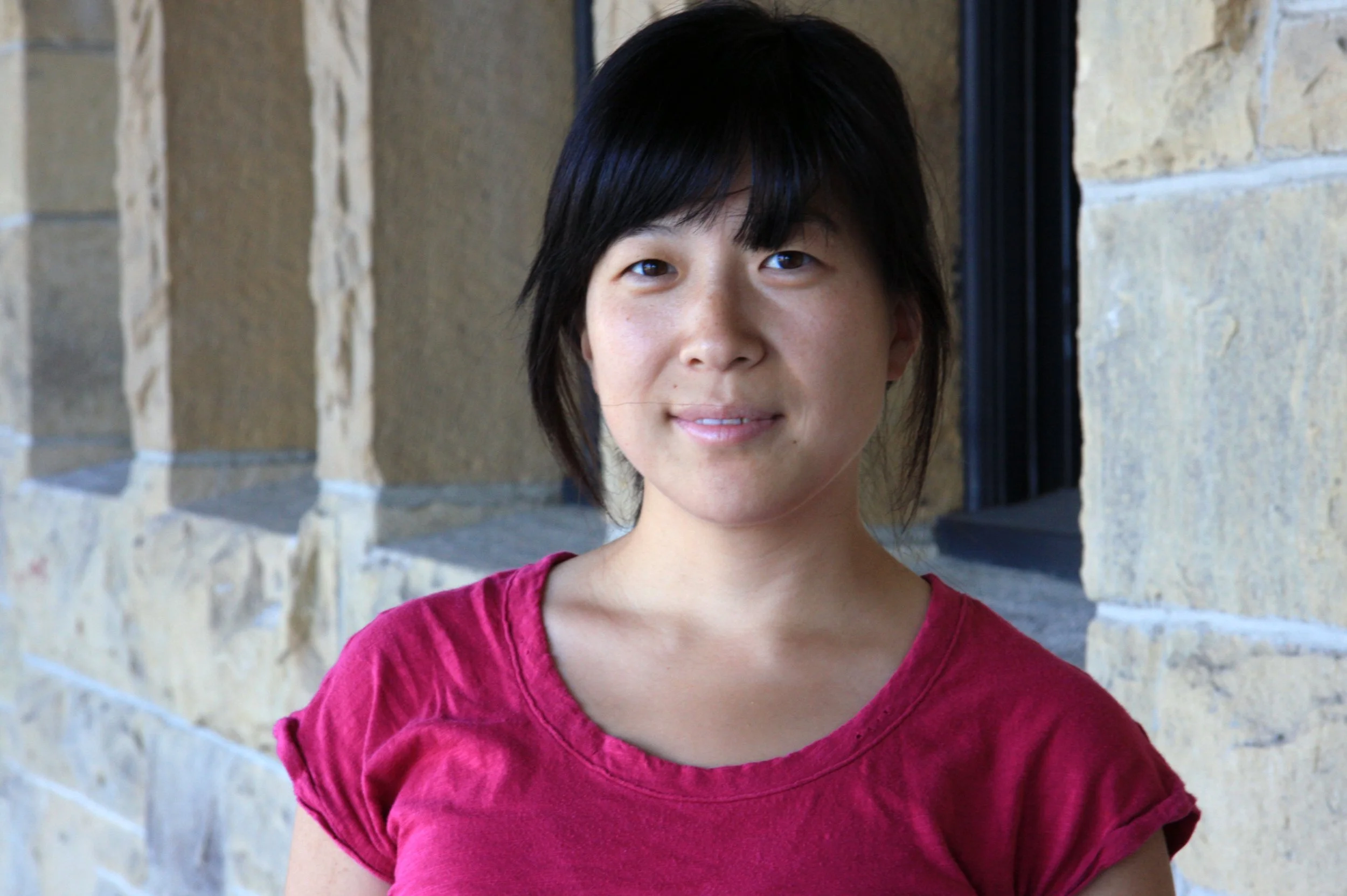
Mina T. Son is a Korean-American filmmaker based in LA whose films have screened at film festivals and museums, including the National Gallery of Art, Margaret Mead, Traverse City and Cinequest. With Sara, she has directed Top Spin, streamed on Netflix, and Racist Trees through their company, Wild Pair Films, and is in post-production on a longitudinal documentary about Japan’s 2011 tsunami.
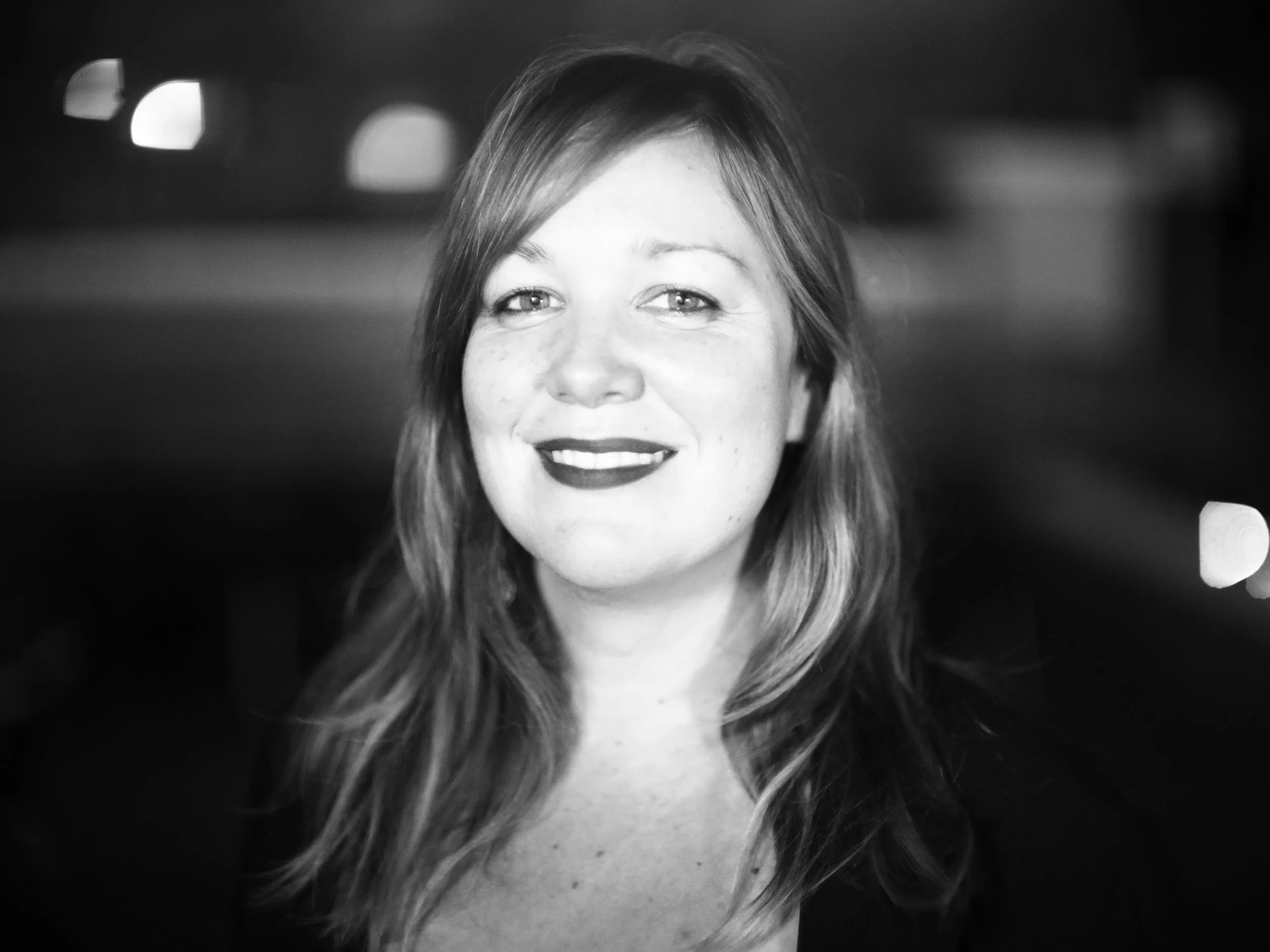
Sara Newens is an award-winning filmmaker and editor based in LA who has received Primetime Emmy Award nominations for her work on Pretty Baby: Brook Shields and Allen v. Farrow and served as editor and writer for the documentary, On the Record.