

The Quiet Wild of the Autumnal Equinox featuring poetry by Alix Klingenberg
Join us as we embrace the magic of the autumnal equinox, celebrating September's unique duality through the power of poetry and rituals. Drawing inspiration from the evocative work of Alix Klingenberg, we explore how this transitional time invites us to balance urgency with ease and preparation with presence. We reflect on the beauty of the Nut Moon within the Cherokee Nation's sacred 13 moons and how September's quiet abundance encourages us to align with nature's patterns, finding our own center amidst the world's noise. Through traditions and the wonders of the season, we honor change and navigate our paths toward peace.
Listen in as we journey through the transformative power of storytelling, inspired by Robert Redford's dedication to conservation and the Sundance Institute's creative legacy. We highlight Alix Klingenberg's "Quietly Wild," a poetic exploration resonating with nature's cycles and the themes of ecology and social justice. Reflecting on the significance of the lands we create on, we acknowledge the indigenous Lenape tribes and others, and we share our hopes for balance and unity in the coming season. This episode is a heartfelt celebration of change, growth, and the interconnectedness of earth and self.
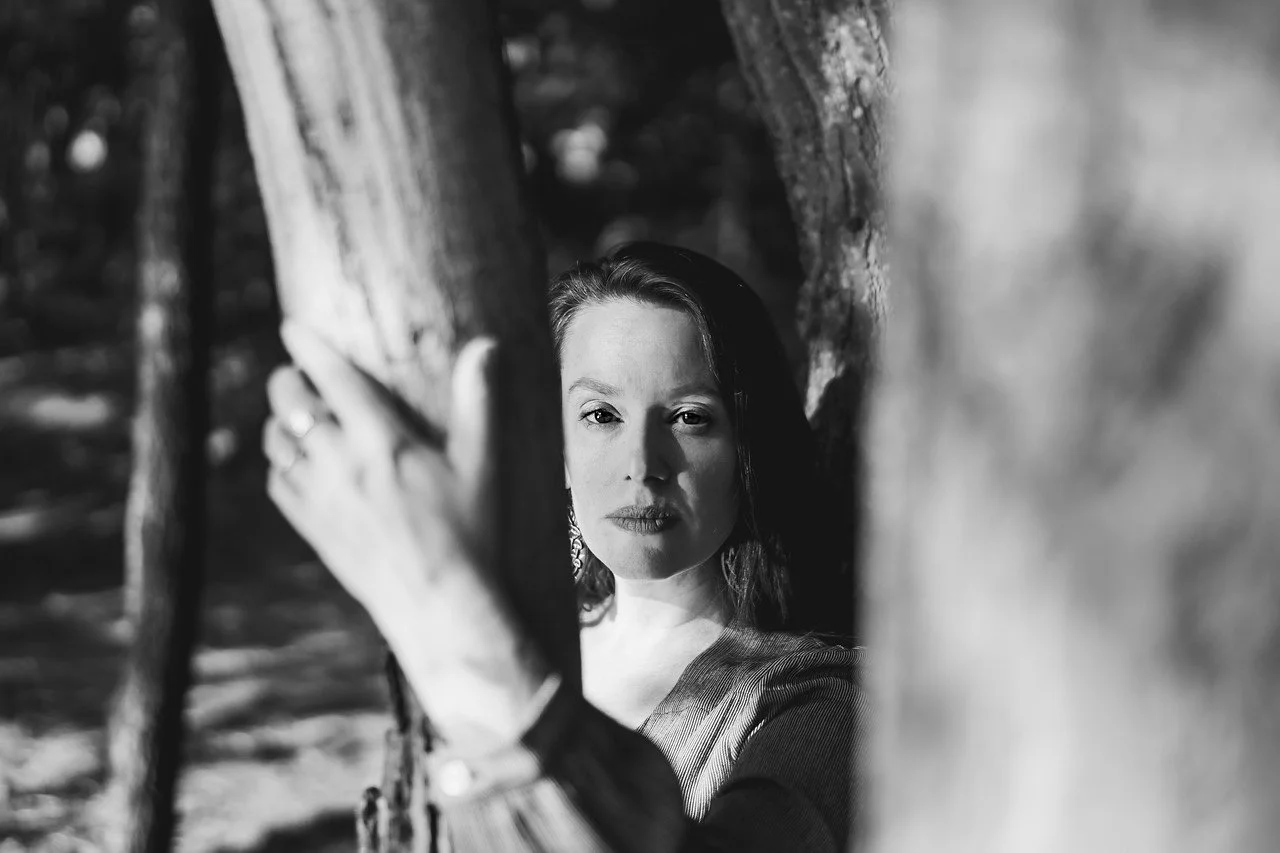
Alix Klingenberg is a poet, artist, and earth-centered spiritual director living with her family (and a house full of pets) in Melrose, Massachusetts. With a bachelor’s degree in visual art from Oberlin College and a master’s in divinity from Meadville Lombard Theological School, Alix weaves professional photography, mysticism, personal narrative, and a bit of ecological justice into her work. You can find her creative classes and essays on Substack, at Earth & Verse, and more of her visual poetry on Instagram @AlixKlingenberg.
This week’s episode was written and recorded in New York City on the native lands of the Lenape tribes.
This episode was produced, written and edited by Jonathan Zautner.
To learn more about our podcast and episodes, please visit treespeechpodcast.com and consider supporting us through our Patreon — every contribution supports our production, and we offer gifts of gratitude to patrons at every level. If you liked this episode, please rate and review us on Apple Podcasts or share it with a friend. Every kind word helps this forest grow.
EPISODE TRANSCRIPT
00:06 - Alix (Guest)
Stay here with me, September. September is the turning point the tilt of the earth on her tiptoes, the slow drift toward darkness and rest and night, but not quite yet. You hold the world in place with a finger to your lips, the tip of a chin, the slight gap between your teeth, the moment before the inevitable kiss, magnetic, full and heavy with almosts. Stay here with me, September. Stay poised on the edge of satisfaction, the brilliant agony of almost falling, the pain of beauty too precarious to last.
00:58 - Dori (Host)
The pain of beauty too precious to last. This is such a beautiful, poignant way to express how September truly feels. I am Dori Robinson and this is Tree Speech. In today's episode, we will celebrate and explore the autumnal equinox with our own patchwork quilt of rituals, performances and poetry.
01:27 - Jonathan (Host)
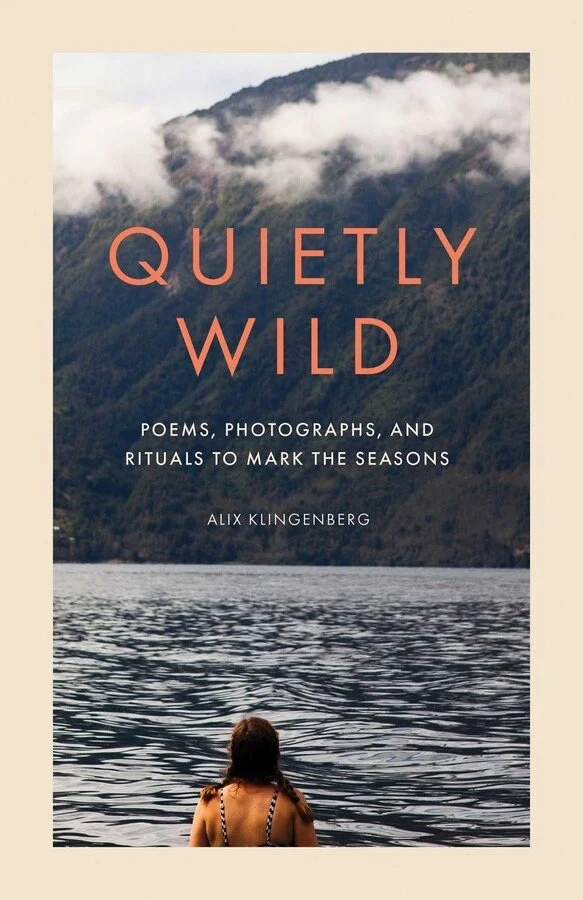
And I'm Jonathan Zautner. And speaking of poetry, the poem that was read as the intro to this episode was written and read by Alix Klingenberg, whose new book of poems, photographs and rituals to mark the seasons was released this past week Titled Quietly Wild. The book serves as the theme of our own autumnal commemoration here, where images of the natural world become doorways into balance and belonging, and we will hear Alix read more poems throughout the episode.
02:03 - Dori (Host)
Hi Jonathan, Happy autumnal equinox.
02:07 - Jonathan (Host)
Hi Dory. It's my favorite time of year and I'm so excited for this month.
02:13 - Dori (Host)
Me too. It is also my favorite time of year. September carries a strange magic. The forest grows quieter, birds softer, evenings cooler. And yet beneath that hush, there's an unseen urgency Roots deepen, squirrels scatter, winds sharpen. It's a month balanced on the edge stillness on the surface, preparation underneath, september is a season of contrasts. Slowness and speed, silence and song.
02:49
Letting go and gathering in the equinox asks us to hold both at once, to listen for the pulse of this liminal time, both in nature as well as our own everyday lives. We see this shift into the next season reflected everywhere. For farmers, this is the time to harvest, when fields that once rang with labor now yield their abundance, in kitchens where jars of preserves and pickled goods and baskets of apples stand beside steaming mugs of tea. For students and teachers, we return to classrooms, a new rhythm of learning and growing about to begin. For spiritual communities, september often holds holidays of reflection and renewal Across cultures and landscapes. We feel this pull of duality, the work of gathering and preparing, as well as the invitation to pause, breathe and honor the moment.
04:07 - Jonathan (Host)
There is a lot of noise in our world right now, voices rising louder and louder in an effort to be heard, while images and information rush toward us at a pace faster than we can truly comprehend, it is easy to lose our bearings. Only by embracing the quiet, the still, the wild, the bare simplicity and beauty of natural world can we find our true center of gravity. This is where our intuitive compass lives, the one that can guide us forward, both individually and collectively, toward a place of greater peace. As we stand at this threshold of light and dark, pulled between stillness and speed, the equinox arrives as an invitation to slow down, to notice the patterns of change unfolding around us and to ask ourselves how we might carry both urgency and ease, preparation and presence and ease, preparation and presence. This season also asks us to notice the quiet abundance that is still here, the last fresh produce at the farmer's market, the vibrant orange and red leaves turning before our eyes, and to honor the wildness that insists on change. Ready or not, autumn has come.
05:27 - Dori (Host)
In this spirit, today's episode offers reflections on this time of transition From poetry to seasonal commemoration, to cucumbers, and we'll return again and again to the equinox itself, a hinge that links these voices, reminding us how nature's balance can help us navigate our own.
06:00 - Alix (Guest)
Autumn Ivy, I swear to you, everything can seem terrible and lonely and horribly mundane. And then you see the autumn ivy curving in great rainbows around the cemetery wall, the wild turkeys crossing the highway, the leaves changing tones only in the upper reaches of the branches, and suddenly you are well again. Bones, only in the upper reaches of the branches, and suddenly you are well again. The sadness is red and yellow and green and orange. The sadness is a briefly passing wind that holds the trees in its Elysian embrace, allowing them to let go. Let everything go in a shower of beautiful release.
06:58 - Dori (Host)
The more I learn about trees and the many ways we are connected to nature, the more intrigued I am about earth-based rituals. This curiosity led me to learn about the Nut Moon. For the Cherokee Nation, the calendar is marked by the moon. In September, it is the Nut Moon, which invites people to gather, prepare for the colder months and to give thanks. For the Cherokee people, time is not measured in the 12 months, but rather by the rhythm of 13 moons. Each moon marks not only a season of work, but a season of spirit celebrated with ceremony, a weaving together of community, gratitude and balance weaving together of community, gratitude and balance. To the Cherokee and other First Nation people, the number 13 is sacred and is compared to the backs of turtles Thirteen large scales at the center for the 13 moon cycles and 28 smaller ones around the edge, indicating the days of the lunar month. In this way, the turtle became both symbol and teacher, a reminder that the earth itself carries wisdom in its patterns.
08:15
In September, the nut moon is what celebrates the transition into autumn. It's a season of storing what has been gathered and ripened, specifically walnuts, hickory, chestnuts and corn. It is a time of feasting on breads baked from the gifts of the forest. This moon speaks to more than harvest. It is also about the delicate balance between preparation and presence. We see it in the squirrels leaping from branch to branch with cheeks full of acorns, reminding us that survival is instinct, but also rhythm, timing and trust. We live in a world that often pushes us to hoard and to hurry. How can we prepare without rushing past this moment? How do we put aside what we'll need for winter while still savoring the sweetness of the season we're in? Maybe a bridge between preparation and planning is gratitude and mindfulness in the moment. Maybe we can take a quick moment to give thanks to trust that preparation and presence can coexist.
09:31 - Alix (Guest)
Autumn's Keeper. The path is a river of pine cones, red and ancient as the squirrel's tail, hushed as a night warden making her rounds. The red fox is waiting for you to remember. This is not a dream, not anymore. There is a circle of pines and you at the center, shining in your russet cloak, brass buckles at the neck. You came here, a mother and left a hunter Emblazoned with a crimson purpose To light the chalice of change.
10:15 - Jonathan (Host)
When we think of Quietly Wild, we often focus on the personal and internal ways we mark this season and internal ways we mark this season. But quietly wild actions can also have ripples that extend far beyond the self, touching the wider world. In this spirit, we honor Robert Redford, a man who, like the fox in Alix's poem, carried with him a quiet, power and purpose, steady, yet revolutionary. As an actor, director and activist, redford's impact on the world was not only shaped by the roles he played, but by the stories he helped create, the lands he protected and the voices he nurtured. Redford's legacy spanned seven decades marked by films that transcended the screen, including Butch Cassidy and the Sundance Kid, the Sting and Ordinary People. His portrayal of Sundance the reluctant outlaw became a symbol of freedom and independence, a spirit that he later imbued in the creation of the Sundance Institute and the Sundance Film Festival. These spaces, built with care and vision, allowed voices from all walks of life to rise, flourish and change the landscape of storytelling forever. For me, redford's legacy touched me in a personal way. As I continued to work and co-develop this podcast, I was honored to receive a scholarship to attend an audio storytelling intensive at the Sundance Institute. That experience a gift from the very hands that built a platform for independent voices, fundamentally changed the way I approach storytelling.
12:07
In 1969, robert Redford chose to protect the land below Mount Timpanogos, rejecting the temptation to allow it to become yet another expensive development. Instead, he built Sundance Resort, rooted in his commitment to conservation and the natural world. The first cabin there was constructed around a tree already standing tall, and that tree's enduring presence inspired the Tree Room, a space and restaurant where people gather to reflect and remember what is worth protecting. Redford's legacy is like that tree deeply rooted, ever-growing and never forgotten. Through the Sundance Institute, he lit the chalice of change for so many artists, including myself, who carry forward the belief that art has the power to transform, that stories matter and that the world must be reimagined.
13:12
We would also like to take a moment to give more information about Alix Klingenberg, whose voice and poetry is featured in today's episode. Alix is a best-selling indie author who leads spiritual and creative writing workshops and whose work explores the intersections of wonder, ecology and creative practice. She is the author of several poetry collections. With a passion for social justice, anti-racism, intersectional feminism, community and the natural world, Alix writes and teaches from a place of spiritual and social transformation.
13:51 - Dori (Host)
I had the privilege of meeting Alix and since then I have been reading her work and have been struck by the ways she weaves together reflections about modern life right alongside the rhythms of nature, about modern life right alongside the rhythms of nature.
14:05 - Jonathan (Host)
We will include links to Alix's website, socials and works in the show notes and we hope you take a moment to explore them. I have been savoring Quietly Wild, her new book. I especially love that Alix dedicates the book to the planet Earth, and especially the trees, which feels so fitting as we honor Robert Redford and all those whose work honors the wild of this season.
14:38 - Alix (Guest)
Cucumber Season. The wind is a whistling kettle at the window, a kind of alarm to signal the end of summer days. The birds are quieter and more busy doing their bird business between the neighbors' rooftops. I'm not sure what they do for work the neighbors or the birds but I wonder if they watch me in the morning, barefoot and wearing only a t-shirt, wandering out to check on my garden. The cucumbers are round this year, perfectly round spheres, like they decided to come out as women after years of playing men in grocery stores. I wash one off, removing the sharp spines that keep the deer from eating them all, and cut them into phases of the moon, sprinkle them with sea salt and see if they taste as feminine as they look. They taste sweet and warm, like sun-ripened cucumbers. Do like women do when they have enough time, when they can make themselves into any shape that pleases them.
15:41 - Jonathan (Host)
Autumn has always felt like a threshold to me. The air sharpens, the light softens and each evening the sun slips away a little earlier, a reminder that time is always in motion. Autumn is both urgency and release, the call to begin anew, while also the invitation to slow down. It is a season that asks us to hold contradictions. At the farmer's market this past week I noticed cucumbers still piled high, crisp and green. They belong to summer in our minds cool, refreshing, a relief from heat. Yet as the cousin to the pumpkin in this in-between season, they linger, carrying summer's brightness into fall.
16:33
This abundance is not accidental. It is the season of preservation. Cucumbers become pickles, transformed with vinegar and spice, sealed into jars for winter, and in that transformation I see a kind of wisdom that change does not mean loss. It can mean continuity, memory and even resilience. When I slice a cucumber, I too notice the tiny moons. I see inside pale crescents and circles echoing the phases of the lunar cycle. Cucumbers made almost entirely of water are joined to the same rhythm, pulled into the moon's orbit in quiet ways. Together, they remind me of the deep ties between body, earth and sky. Like the cucumbers turned to pickle, the season knows how to change form without losing essence. And at the heart of it all lies autonomy the right to choose how and when to transform, to claim one's own timing, one's own way of preservation, one's own way of renewal.
17:52 - Alix (Guest)
Earthkin. She was Earthkin, a forest walker tuned into the fox den and the sparrow nest. She talked to the maple tree on the corner by the bookstore, whispered secrets into the stony bark, and it spoke to her, in hushed leaves, of the coming autumn, of letting go of small deaths. She felt herself shedding layers, preparing for her own kind of fall.
18:27 - Dori (Host)
Out in the forest. This is the season when the ground begins to soften under a quilt of fallen leaves. They are not swept away, not tidied or discarded. Instead, they stay, they gather, curl, darken and slowly begin the work of becoming something else. They shelter tiny lives through the winter, they break down and in this transformation, they create the rich soil that will nourish spring. We too are made of seasons, just as the forest composts, so do we. The hurts we've carried, the disappointments, we've held the thrills of anticipation, the chapters that are ready to close. These can become nutrients for what comes next.
19:23
The alchemy is the same Patience, darkness, time and trust. It's one thing to talk about this alchemy and having patience and time, but it's another thing entirely to access that feeling of trust in your breath and body. So I invite you now to a short meditation where, together, we will hold the idea of transitions and transformations. Take a moment to come to stillness. Maybe you want to close your eyes or look out at something beautiful a tree, a plant, a picture. However you can arrive, arrive. Let's take in a deep breath together and let it out Again, in and out One more time. And as you inhale and exhale, bring to mind one thing from this year that you'd like to release a weight, a worry, a disappointment, something you have carried. Name it softly to yourself. Give it a word. Let that word be simple. Hold that image in your hands as if you hold a leaf. Feel its edges, feel its weight. Breathe into it once more.
21:12
Now imagine tenderly placing that leaf down on warm, dark soil. See yourself layering it with care. It is not being thrown away, it is being offered. You place it with thanks for what it taught you and with the clear intention that the earth will transform it. Listen, there is a small, busy orchestra beneath the ground the slow, unhurried work of microbes and mycelium, of worms and beetles. They take the hard edges of what we no longer need and make them soft and rich. They do not hurry or judge the work. They simply turn it into nourishment, it into nourishment.
22:03
Consider now what else needs a similar turning, a careful, patient transformation, rather than a frantic fixing. Perhaps it is an old habit, a harsh word, a grief you keep polishing like glass. Let the image of the leaf remind you that some work happens best in darkness. Some healing is quiet and slow. Now feel your own roots, sense them, sinking through floorboards, through soil, rooting into the earth like your favorite tree. Through soil, rooting into the earth like your favorite tree. Feel your spine like a trunk, steady and alive. Let your breath move the branches. One more breath, slow and full, in for gathering, out, for releasing. When you are ready, open your eyes, place your hand on your heart and know that what you have offered will feed you in time. The leaves at your feet, the rot in the soil, the small creatures that do the steady work are all a reminder that life's endings are often the beginning of nourishment. As Alex writes, when you connect with the earth, you connect with the infinite parts of yourself. It is the quietly wild work of becoming.
23:43 - Jonathan (Host)
To all of our listeners. We wish you an effortless and enjoyable transition into this equinox, and we will end this episode with one more of Alix's poems from her book Quietly Wild. Let's reject the productivity culture that leaves our souls exhausted. It's time to rewild and reconnect with our internal rhythms.
24:09 - Dori (Host)
To honor our animal natures so that we might see ourselves, with clarity, beings of the earth made from the stars. This week's episode was written and recorded in New York on the lands of the Lenape tribes, as well as in Massachusetts, on the native lands of the Wabanaki Confederacy, penicuik, massachusetts and Pawtucket people.
24:45 - Jonathan (Host)
This episode was written, edited and produced by Jonathan Zautner and Dori Robinson.
24:52 - Dori (Host)
To learn more about our podcast and episodes, please visit treespeechpodcastcom and consider supporting us through our Patreon. Every contribution supports our production. Please also consider passing the word and rate and review us on Apple Podcasts. Every kind word helps.
25:12 - Jonathan (Host)
Happy Equinox Together. May we carry balance, presence and peace into the season.
25:19 - Dori (Host)
Thank you for listening to Tree Speech today.