

Seeds of Change: Exploring the Life of Lizzie Mcduffie with Shara Moon, author of ‘Let Us March On’
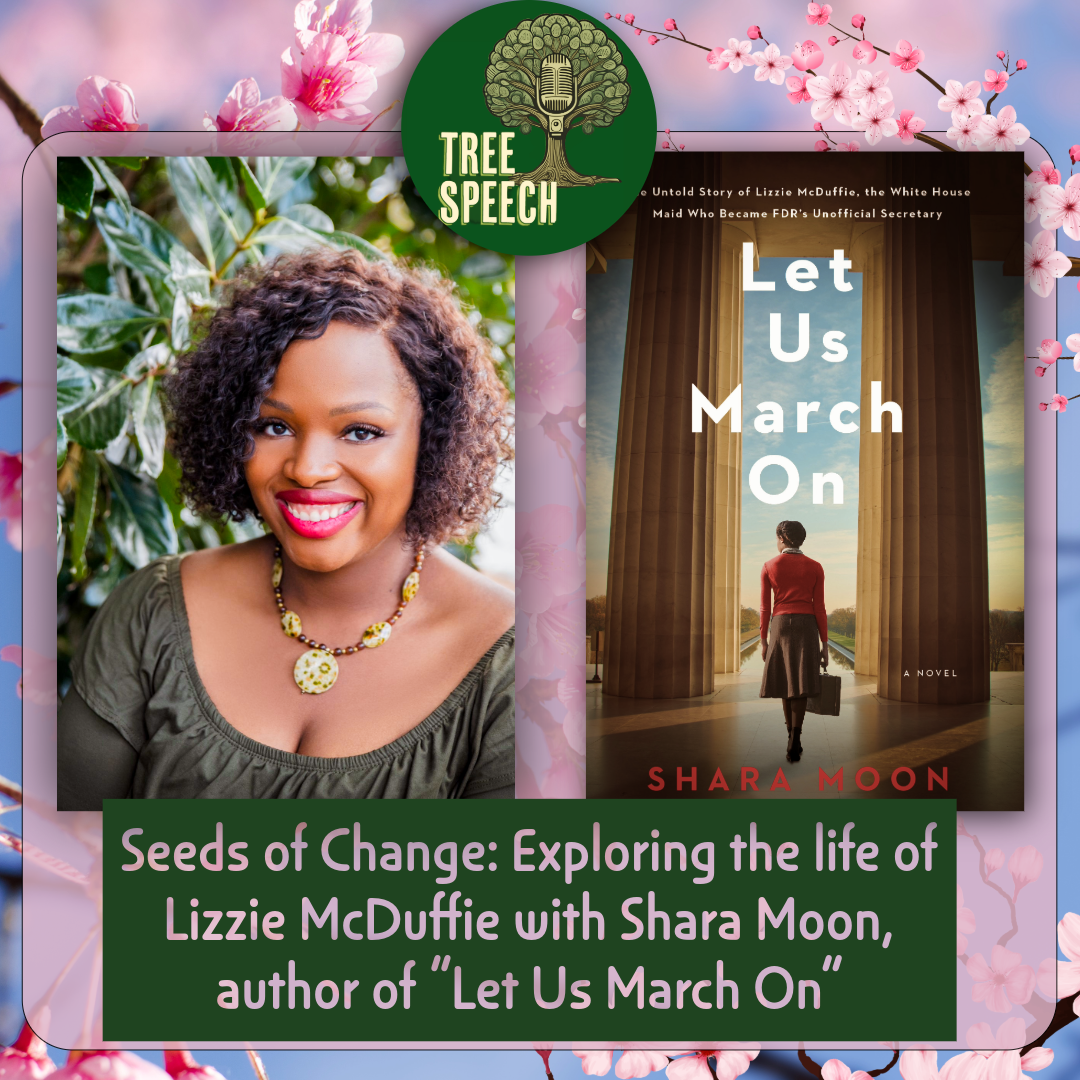
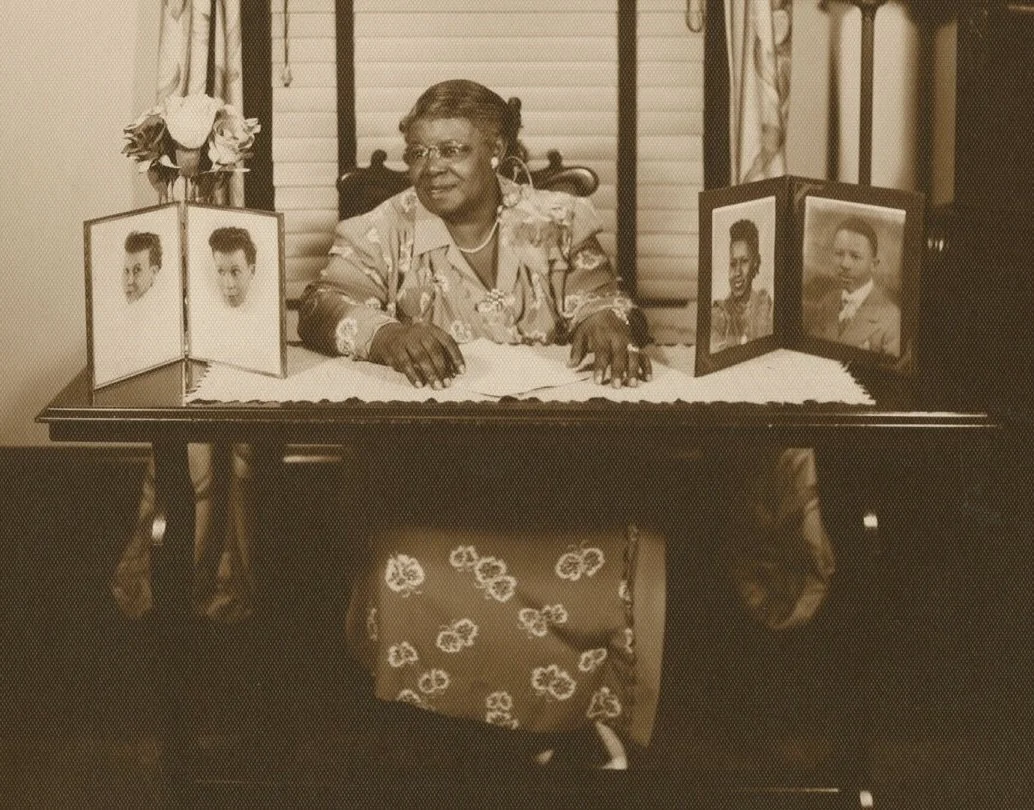
Author Shara Moon takes us on an extraordinary journey through history with her novel "Let Us March On," unearthing the powerful legacy of Lizzie McDuffie. McDuffie is a civil rights figure often left in the shadows, yet she played a pivotal role in bridging the African-American community with President Franklin D. Roosevelt. We explore the meticulous research and vivid storytelling that bring Lizzie's courageous life to light, revealing her influence that extended well beyond the White House corridors. Shara's insights offer a profound exploration into McDuffie's world, where activism, justice, and wisdom thrive like precious seeds awaiting growth.
The episode delves into the nuanced connections between nature's rhythms and the urgency of political action, mirroring the themes woven into Shara's narrative. We reflect on FDR's relationship with anti-lynching legislation and his retreats to nature, unveiling the constraints and freedoms of his political life. Shara offers a glimpse into her creative process, sharing how her novel's shift in narrative perspective helped capture Lizzie's authentic voice.
As we honor McDuffie's courage, we are invited to reflect on the lessons her legacy imparts. The metaphor of cherry blossoms emerges as a reminder of growth and renewal, symbolizing the tenacity needed to bring our dreams to life. Through a guided meditation by Dori Robinson, we nurture the seeds of potential within us, contemplating the patience and steps necessary for personal growth. Shara Moon's novel and our conversation remind us to cherish the beauty and potential within ourselves, while the wisdom of trees guides our journey forward.
This week’s episode was written and recorded in New York on the land of the Lenapee tribes.
This episode was written, edited, and produced by Jonathan Zautner.
To learn more about our podcast and episodes, please visit treespeechpodcast.com and consider supporting us through our Patreon - every contribution supports our production, and we’ll be giving gifts of gratitude to patrons of all levels. Please also consider passing the word, and rate and review us on Apple podcasts. Every kind word helps.
Episode Transcript
00:12 - Jonathan (Host)
Welcome to Tree Speech, where we examine the ways trees shape our stories and how our stories in turn shape the world around us. I'm Jonathan Zautner, and in this episode we step into history's shadowed grove and walk alongside voices that continue to echo across generations. Today we're joined by author Shara Moon, whose new book Let Us March On brings to light the life of civil rights leader Lizzie McDuffie, a powerful yet often overlooked figure in American history. And after our conversation, we invite you to stay with us for a special guided meditation with Dori Robinson, designed to help us reflect on Lizzie's legacy and connect more deeply with the compassion and resilience of the season.
01:12
In her new novel, let Us March On, Shara Moon uses meticulous research and vivid storytelling to trace Lizzie McDuffie's influence on movements for justice, as she explores the influence she had as a champion for the rights of everyday Americans over President Franklin D Roosevelt throughout her time working for him as a maid in the White House. While FDR is widely known for leading the nation through the Great Depression and World War II, less often discussed is his deep personal connection to the natural world, including the trees and animals at his Hyde Park and Warm Springs estates, which he considered sources of solace and strength. While FDR served longer than any other president in US history, the job title that gave him the most satisfaction was that of the 34 years. He also considered himself a tree farmer. Even while serving as president, he went so far as to record tree farmer as his occupation when he voted.
02:18
In her novel, Moon draws a compelling parallel between Roosevelt's environmental ethos and McDuffie's grounded activism, showing how both leaders, in different ways, drew power from the land beneath their feet. In this episode, we'll talk with Shara about how she unearthed the true stories that shaped her novel, including what Lizzie McDuffie's legacy teaches us about justice and memory, and how both McDuffie and Roosevelt drew from the quiet wisdom of trees as they faced the storms of their time, and what these historical threads reveal about our present moment. So settle in beneath the canopy of history and hope and let's listen to a conversation with Shara Moon and her novel. Let Us March On.
Hello, Shara, welcome to Tree Speech.
03:18 - Shara (Guest)
Hi, Jonathan, thanks for having me.
03:21 - Jonathan (Host)
You're welcome, it's our pleasure. Thanks for having me. You're welcome, it's our pleasure. So our conversation today is truly embracing the speech part of Tree Speech, as we're going to explore who gets the opportunity to speak, how their voices are amplified and the way their stories resonate across time, and, of course, we'll talk about trees too. To start, could you share a bit about yourself and what inspired you to write your new novel, Let Us March On.
03:50 - Shara (Guest)
Yes, of course I've always loved history and it's been a passion of mine To be able to actually incorporate history into my writing and fictionalize it so that I get a little bit more creative. Freedom is a dream, but what inspired me to this particular story was when an author friend of mine shared with me an article about Lizzie McDuffie, and the more I read about her, the more fascinated I became when I found out that she had an unpublished memoir, that she had lived this great life with the Roosevelts and had done so much that I felt like her story needs to be told and a lot of people need to know who she was and what contribution she made to our country.
04:32 - Jonathan (Host)
Exactly. She was so important and without you who knows if this story would be told. So I read that you were researching another project and then you found out about her and decided to write that book. Could you tell us how that all came to be?
04:47 - Shara (Guest)
Yes. So I was in the middle of writing another story, really unrelated, but in that story my protagonist was running into an issue where she needed to get the president involved and she was hoping that if she got an audience with the president or the first lady, that maybe she can convince them to help her in her situation. But you know, there's always levels to things and she knew she couldn't just show up at the White House and expect to meet the president. So I needed a realistic entry point. And when I was telling my friend, Kaia Alderson, about my dilemma, that's when she shared the article with me about Lizzie McDuffie and I was like, oh, that's when she shared the article with me about Lizzie McDuffie and I was like, oh, she's perfect, she's exactly who my protagonist needed, because I found out that she was very much involved with becoming that bridge between the African-American community and the president.
05:36
But the more that I researched her and found out that, wow, she did more than just share stories with the president. She campaigned, she advocated. She did so much that even he respected her opinions enough to enact some of these changes. And that's when I was like, okay, I need to get a hold of her unpublished memoir, and I did. Of course I'm writing historical fiction, so I can't say it's a biography by any means, but still a lot of the fiction comes from the people she met. The things that happened are very much true.
06:11 - Jonathan (Host)
Did you do a lot of other research beyond the memoir? What other things were you able to draw upon to weave within this historical fiction novel?
06:23 - Shara (Guest)
So I definitely did a deep dive at the Archive Library in Atlanta that has her collection in the memoir. I was able to go through a lot of personal letters, her autograph book that she talks about in her memoir and I also mentioned in the book. There was correspondence that I got to read. There was pictures I got to look at. I also visited.
06:43
Warm Springs and got a real good behind the scenes of not only FDR but also the close personal staff that he brought with him to Warm Springs when he visited which they called at the time the Little White House because he was there. He spent a lot of his free time there.
07:00 - Jonathan (Host)
You can really tell in reading your book how important she was to the president and to his wife, to Eleanor Roosevelt and the whole staff, and what an impact she had within his presidency and within his personal opinions and beliefs, which led to the work that he did in his three going into a fourth term, which is amazing to think about, and I'm glad we don't have four terms today. Term, which is amazing to think about, and I'm glad we don't have four terms today, and that was a tumultuous time because of everything that was happening in history. The book explores deep themes of resilience, justice and collective action.
I'm wondering what are some of the key messages you hope readers take away from reading about these experiences. Resilience is definitely the one that jumps at the top of my mind, especially in the times that we are in now. There has always been something to fight for and struggle for, and the fight never stops. You have to kind of push through, you have to hold out hope and hold on to your resilience that change will come and the work that we're doing isn't for nothing.
08:05 - Shara
Everyone thinks the civil rights movement really like kind of spearheaded in the 60s, but it was happening years before then and I hope just that knowledge that this was happening in the 1800s and then in the early 1900s. And then when we get to Lizzie's story, and they're still fighting for civil rights, human rights and social justice, that was in 1930. The story kicked off 1933. We're in 2025, and we're still pretty much fighting for a lot of the same things, fighting to hold on to a lot of some of these things and hope, resilience and the fact that there are people out there that are striving to be on the right side of history and we just kind of have to be hopeful that good things will come and continue to come.
08:55 - Jonathan (Host)
And that leads me to nature. So your book beautifully explores the connection between humanity and nature, both thematically and in vivid moments. Some of my favorite passages involve Lizzie's visits to Hyde Park with FDR for rest and rejuvenation. I've been to Hyde Park in upstate. It's gorgeous, I love it.
09:16 - Shara (Guest)
That was the one place I had wanted to go. I could never make it out there during my research, but I definitely wanted to make a stop over at Hyde Park.
09:25 - Jonathan (Host)
I highly recommend if you're in the area or you know it's just, you can just feel the peace, you can feel the groundedness and the way nature sort of speaks to you, the energy. It's really beautiful. Then, contrasting that, one of the most striking tensions in the novel for me was FDR's reluctance to push for anti-lynching legislation due to the political climate of that particular time. I'm wondering as I think about Hyde Park and this time of year, spring, I wonder did the natural rhythms of change you know it sort of happens over time, how nature moves at its own pace and transitions over time did that influence your writing and the broader message of Let Us March On? Is there something about being close to nature and having patience but really wanting to push things forward but having to relax? What does that mean to you?
10:16 - Shara (Guest)
It was definitely a conscious effort to put those moments in there.
10:21
I like the words that you use, Hyde Park being equated to rest and rejuvenation, because a lot of the times that's what it was Hyde Park and Warm Springs for the president, and in those moments when they could get away from the White House and a lot of the political environment, there is that scene with them talking about the bird and how FDR really did have a great love for birds and he was a bird nerd and it was a great way for me to introduce that, because for me birds symbolize freedom and I wanted to make sure I pulled that in so that I could show like, in the grand scheme of the story, we're all fighting for freedom, our own freedoms and whatever that means Because even with being in politics, you kind of get locked in and lack of a better word like chained around certain things, and so for me it was like showing that FDR was still kind of chained into, like he was restrained in a lot of what he could and couldn't do, or what he felt he could and couldn't do.
11:32
He didn't want to commit political suicide by supporting something he felt would really destroy his chances at a reelection, and so just kind of showing that he wanted all good things for everyone in his own words. He wanted all good things for everyone in his own words. He felt like he was fighting for the American people, not just for African Americans or Asian Americans or, you know, Latino Americans. His whole message was I'm fighting for all Americans. But in that he also knew that there is a game to be played and that keeps you restrained in a lot of ways.
12:07 - Jonathan (Host)
And that keeps you restrained in a lot of ways Right and like. I said it built conflict within the arc of the novel as well. I do want to mention that Lizzie's husband also worked for the president, Irvin, and both of them lived a really full and vibrant and interesting life. I read that writing this novel took a long time for you, I'm wondering, did you find any personal healing or growth or insights yourself in the process of writing this book? I think so.
12:40 - Shara
I think I always tell people it's a labor of love, because I had just gotten married when I even pitched this story and then, through the journey of writing and editing it, I had three children and it kind of changed my perspective too and made me realize not only did Lizzie, like you know, love children, but she was a very good caretaker, I think with everyone around her, and I think for the most part I always felt like I was a good caregiver. But it definitely changed my perspective when I became a mom on what it really means to give yourself to someone else and have to devote your time and put yourself last and in a lot of ways I felt connected a lot with Lizzie because she did put herself second in a lot of ways.
13:30
And you know, just moving to the White House, she doesn't really elaborate that in her memoir but I can imagine that she didn't want to leave a family she had been working for for over two decades. You know, to go to an unknown territory and kind of restart her life again. But she did that so she could be with her husband. Oh, to go to an unknown territory and kind of restart her life again, but she did that so she could be with her husband. And then when she gets to the White House, it was again putting herself second so that she can take care of the president, take care of the White House and keep the machine running.
14:03 - Jonathan (Host)
That's really interesting. We talked about the pace of nature and everything sort of has its own timing. Interesting we talked about the pace of nature and everything sort of has its own timing. And maybe that's part of this book as well is you had to have a certain experience to get into the imagination, to really create this historical narrative.
14:21 - Shara (Guest)
Yeah, and I think yeah, it helped me plant myself in her shoes, something I don't really share a lot. But I had originally started the story in third person because that's how I'm just used to writing and it just didn't feel authentic and right for me, and so I talked to my editor about it and so I switched the narrative to first person POV and it then started to feel like not my story anymore or something I was forcing. It really felt like she was telling her story story anymore or something I was forcing.
14:48 - Jonathan (Host)
It really felt like she was telling her story. It's sort of like a alchemy or something, her voice comes through.
14:52 - Shara (Guest)
Yeah.
15:02 - Jonathan (Host)
Not to have a spoiler, but FDR does die in his fourth term while in office, and that had a profound impact on Lizzie. So shortly after his death, which happened at Warm Spring, she was on a train back to DC and she gazes out the window and reflects, saying I stared out the train window and saw a lonely pine tree towering above the rest of the forest. It loomed in the distance with such distinguished power and solitary splendor, much like the man we were bringing back home, and solitary splendor, much like the man we were bringing back home. That's such a striking and poetic image. Where did the inspiration for this tree metaphor come from? For you?
15:34 - Shara (Guest)
It came from her, that was from her memoir and it's actually the opening chapter and it definitely hit me hard. I was just like wow, how beautifully told she opens her memoir with them leaving Warm Springs and her talking about him passing, and that metaphor was so powerful for me that I was like I have to make sure this ends up in the book, because it was not only poetic but it was very much, I think, the sentiment that a lot of people felt about FDR, and when she talks about people coming from all races and statuses and classes coming to mourn this man who took a country that was in the brink of destruction and revived it and pretty much gave his life in the process, I definitely resonated deeply with that line.
16:31 - Jonathan (Host)
Well, it's a beautiful moment that really stuck with me, so thank you. The title, Let Us March On suggests a sense of movement and progress. Also, it feels like a call to action. How did you arrive at this title and what does it mean to you in the context of the book?
16:50 - Shara (Guest)
The title journey is a long one. I'll give you a semi short version. Originally I had actually titled the book Our New Day Begun, and I pulled that because in her memoir, lizzie takes a snippet of a poem by James Weldon Johnson, and it's pretty much what everyone considers. Or in the Black community, the Negro National Anthem lift every voice and sing. And in her memoir she titles every chapter, and one of the chapters was Our New Day Begun and I thought, oh, that would make a great title if you knew where the context came from. But when we got further along in the process, my editor came back to me and told me that sales didn't think the title would work, and so they tasked me with coming up with another title, and I wanted to stay true to what she was trying to do, and that was incorporate that poem into her story and so what I did was I took a look at the poem again.
17:52
So in that segment that she pulls the poem and she includes in her memoir, it's sing a song full of the faith that the dark past has taught us, sing a song full of the hope that the present has brought us, facing the rising sun of our new day begun, let us march on till victory is won. And so I felt, if I couldn't have our new day begun in honor of her chapter title, I wanted it to be let us march on. And so that was the winning title, and I think it very much fits with not only the overall theme of the story, but what Lizzie was trying to do.
18:31 - Jonathan (Host)
Yeah, it really speaks. You know, it jumps off the shelf. How do you hope this book will inspire readers to engage with social justice or environmental activism in their own lives?
18:43 - Shara (Guest)
I really hope that they see that for the most part, things take time, as you mentioned, like in nature, a lot of things take time, and there is even a line in Hamilton that I love. It's like what is legacy. Legacy is planting a seed that we don't get to see grow really hope that people can recognize that change does take time. Things don't happen overnight, it's not immediate, but it takes one person, it takes a couple people to just spark that change and with one spark we can really make some changes, and so I hope they get inspired by what she was trying to do A woman that no one knew anything about, but she used her small position to make great strides.
19:31 - Jonathan (Host)
Yeah, that's so apparent and so powerful and lasting. How are you feeling now that the book has been released?
19:39 - Shara (Guest)
I'm just glad that it's available and people get to pick it up and have an experience. At least it kind of starts the conversation about a lot of unsung women who have made differences in our country and they don't get the limelight and so hopefully this is just the start of her getting recognition and then hopefully others will pick it up and there'll be more about her. There'll be more stories in books or movies about her and her legacy.
20:09 - Jonathan (Host)
Exactly. I mean, it's such an accomplishment to synthesize such a big life into a work of fiction. We're so thankful that you were the one who were first to bring her life into the open like this. Well, thank you so much, shara, for joining us today and for so beautifully honoring and bringing Lizzie McDuffie's inspiring story to life. Through your documentation of her journey, we also get a glimpse of your own artistry and strength as well, and we're so grateful for your work and can't wait to see what's next for you and to read your next book.
20:44 - Shara (Guest)
So thank you very much, thank you.
20:55 - Jonathan (Host)
As we reflect on the conversation with Shara, we're reminded that history is not just something we study, it's something we carry. The stories of Lizzie McDuffie and FDR show us how resilience can take root in unexpected places, in a voice raised against injustice, in a seed planted with hope, in a quiet moment beneath a tree's outstretched limbs. Lizzie McDuffie's story is a testament to a deep, unwavering belief in human dignity, offering kindness, courage and strength even in the face of injustice. Strength even in the face of injustice. Her life calls us to consider what true leadership looks like not just power but empathy, not just influence but compassion. May we carry forward Lizzie's legacy by demanding that same humanity from those who lead us today. Lizzie's legacy also reminds us that compassion can be a powerful act of resistance and a source of renewal. Just as she nurtured hope in difficult times, we too can find ways to cultivate care in our communities.
22:11
Spring teaches us that even after the longest winters, the earth remembers how to bloom, and that resilience isn't about pushing through blindly. It's about reaching toward the light again and again and again, even when it feels far away. While Shara's novel Let Us March On unfolds across various locations, much of the story centers around Washington DC, and when we think of spring in DC, we think of the iconic cherry blossoms, symbols of renewal and resilience that return each year in full bloom. We invite you to pause with us, not just to listen, but to truly feel, to take a breath, to reconnect with the quiet strength that lives within and surrounds all of us. Find a comfortable seat or let your feet touch the ground wherever you are, as Dori Robinson leads us in a guided meditation.
23:17 - Dori (Host)
It is spring, very, very late spring, yes, but technically still spring until we hit the summer solstice. And you cannot convince me otherwise. Spring is when I return to the garden. Outside, I turn over the soil in my garden bed, while inside I prepare and germinate the seeds I'll be planting once the weather is warm enough. Consider the seed of the sakura, the cherry blossom tree.
23:46
Cherry blossoms are unique in that they require a cold period, a process which breaks down the seed code so that eventually, when the conditions are just right, the seed can open and germinate. And yet this is not the end of the process. For a cherry blossom tree to grow from seed can take anywhere from 4 to 10 years to mature. After all this, the blossoms open for only a handful of days each year. Blooming in the hundreds, they gently unfold their delicately colored pink and white blossoms, then, shortly after, they detach from their stems and billow out into the wind. So much work for a brief yet extraordinary existence. So much work for a brief yet extraordinary existence. The seed had to endure the cold, break open and grow for years through rain, snow, heat and wind all to be able to shine in its fullest radiance. It is a journey measured in tiny, patient, enduring steps, and yet it is all worth it. Cherry blossoms blooming from DC to Brooklyn, to Japan not only bring about great beauty, but they also remind us of the tenacity it takes to fully come to life.
25:12
Consider with me what seeds literal or figurative, are you planting in your own life? What is needed in order to fully germinate each of these precious and resilient seeds? How many steps are needed to bring about one sweet idea, project, relationship or journey to life in its fullest, most radiant way? Take a moment to come to stillness. Perhaps you may want to close your eyes or look out at something beautiful a tree, a plant, a picture. However you can arrive, arrive. Let's take in a deep breath together and let it out Again, in and out, and, as you inhale and exhale, start to call to mind one special seed in your life. What is? Something you are just beginning, or perhaps something that is already in progress, that requires multiple steps and resilience and yet may bring about beauty and joy.
26:37
Picture this now, first, in its smallest stage the seed of an idea. Perhaps, with a few more breaths, can you bring warmth to the part of you that began this journey that created this idea. It's a very special thing to bring something into the world, big or small. Now imagine the steps it will take to develop this seedling. Now imagine the steps it will take to develop this seedling. Perhaps you may want to acknowledge the many steps it has taken so far to have grown to this point. Can you send yourself gratitude for all that you've done so far, perhaps recognizing the inner strength it takes to move forward? Have others been helpful during this journey? Perhaps you can hold gratitude for them as well.
28:00
Finally, can you envision the fully grown version of your work? What shape that might take? How will it feel in your body to see this dream fully realized? Where does that feeling live in your body? How can you honor that? Picturing it now? How does it feel? It feel, taste, smell, what does it look like? How does it sound? With another deep breath, take it all in with as much detail as you can conjure. Perhaps put your hands to your heart to hold this detailed vision with you, or find another place in your body where this inspiration can live. Now start to come back to the room around you, first by wiggling your arms and finally your head, with one more deep breath in. Before opening your eyes, picture this seed one more time, in all its challenges, steps and beauty. And as you open your eyes and move about your day, I wish you luck and light as you and your seed continue to grow together.
30:03 - Jonathan (Host)
Thank you, dory. As we step back into the rhythm of our daily lives, may we carry with us the stories of those who came before, like Lizzie McDuffie, whose courage reminds us that change is the seed that takes root when we choose to stand, to speak and to keep marching forward Until next time. Take care of yourself, care for one another and when in doubt, look to the trees. Care for one another and when in doubt, look to the trees. A heartfelt thank you also to Shara Moon for joining us. Copies of her novel Let Us March On are available wherever books are sold. To learn more about today's episode, explore show notes or support our work, visit treespeechpodcastcom or follow us on Instagram at TreespeechPodcast. Thank you for joining Tree Speech today.