

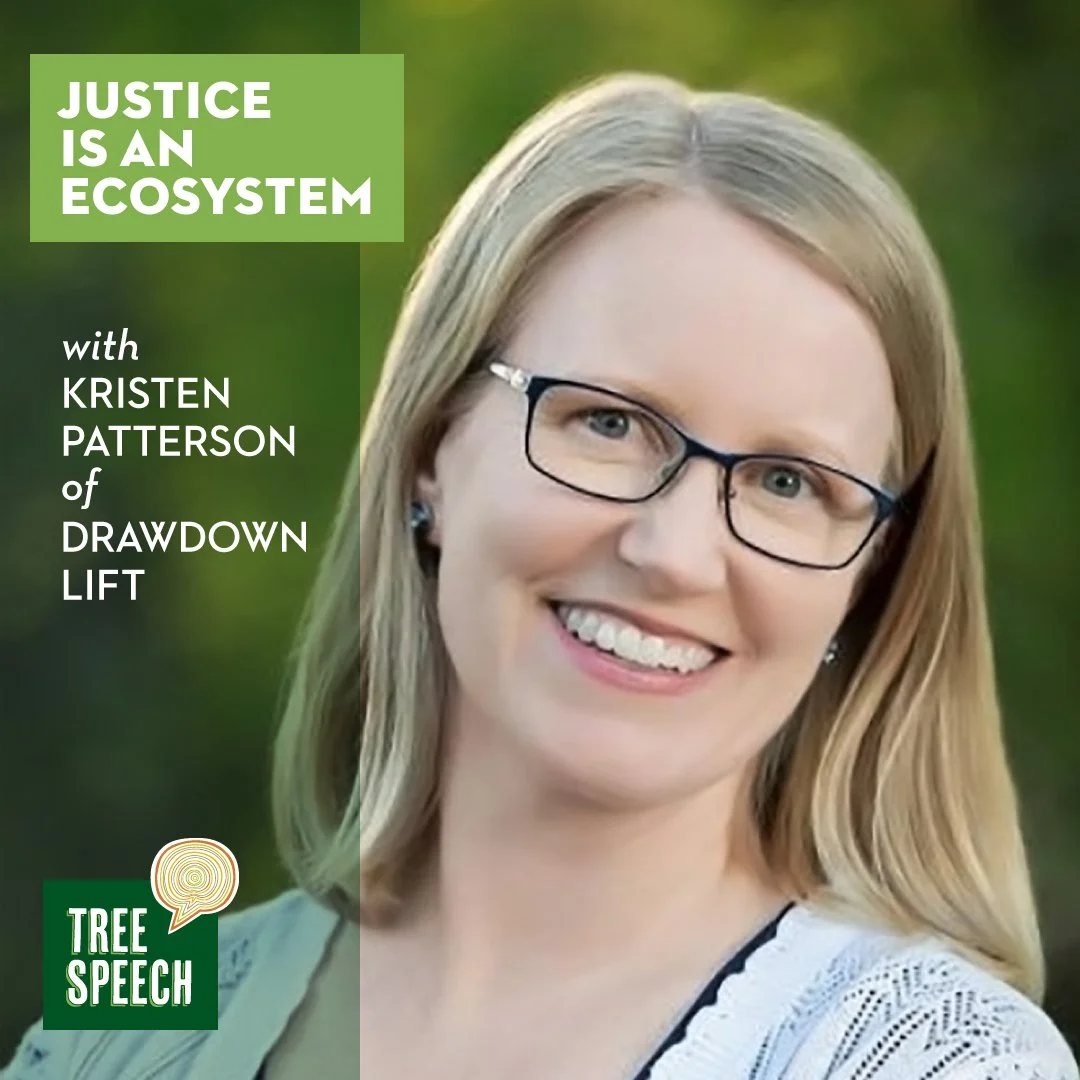
Join us as we explore the powerful intersection of reproductive rights and climate solutions, emphasizing how justice issues are intricately connected. Our guest, Kristen Patterson, the inaugural director of Drawdown Lift, shares her unique journey from her formative years in Ohio and the American West to her transformative experiences as a Peace Corps volunteer in Niger. Through her story, we gain insight into how these experiences shaped her commitment to justice work and a global perspective that informs her innovative approach to advancing climate solutions that also improve human well-being.
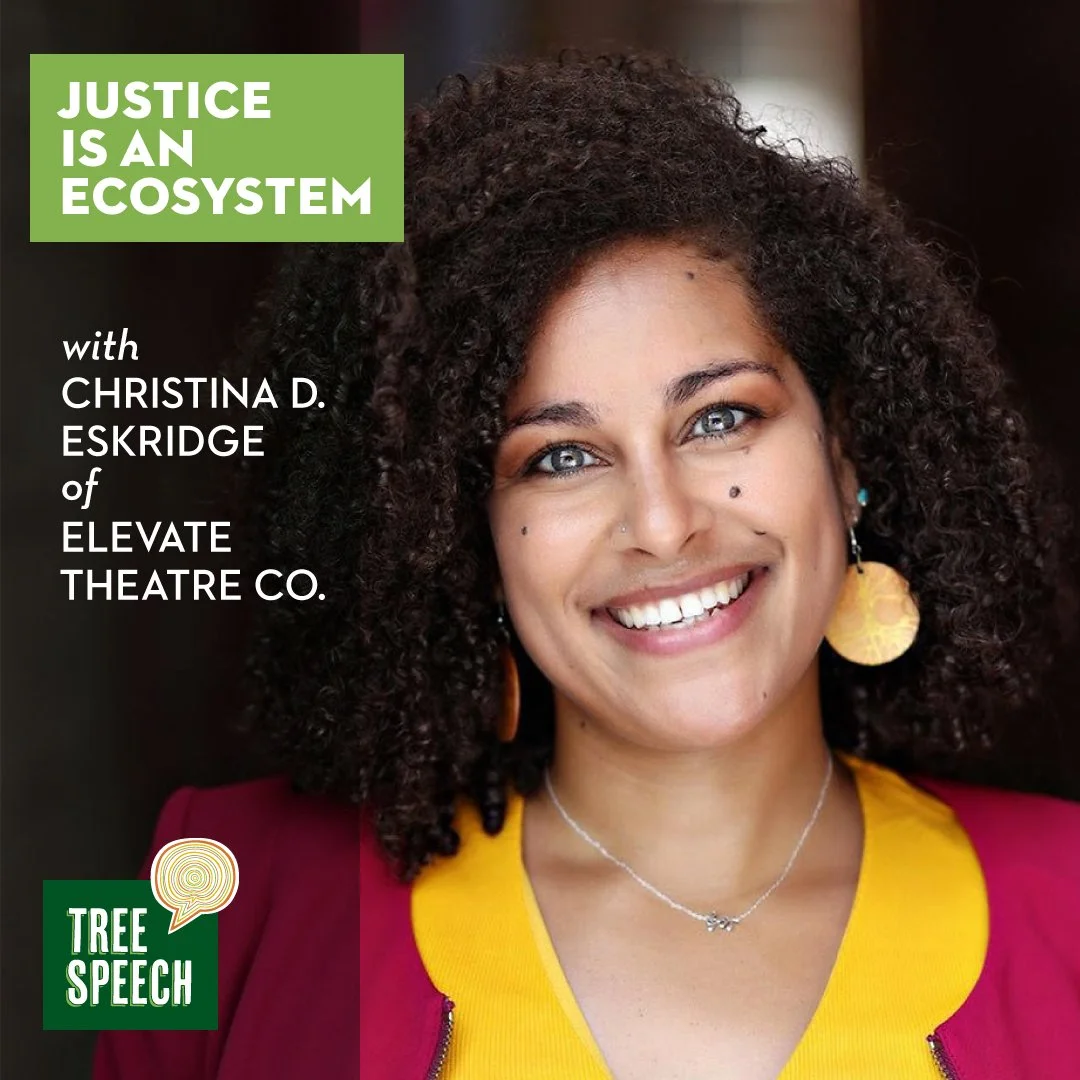
We also engage with Christina D. Eskridge, founder and executive director of Elevate Theatre Company, as we examine how reproductive rights and environmental action are intertwined, especially in the wake of the Supreme Court's decision to overturn Roe v. Wade. Listen in as we discuss the research efforts of the Drawdown Solutions team and the steps individuals can take to support reproductive autonomy, particularly in vulnerable communities. We explore the broader implications of climate change on reproductive, mental, and physical health, while highlighting the importance of community, nature, and the progressive outlook of younger generations as sources of hope amidst these challenges.
Justice is an Ecosystem
EPISODE TRANSCRIPT
00:11 - Dori (Host)
On June 24, 2022, the Supreme Court overturned Roe v Wade, curtailing the reproductive choices of more than 135 million people in the United States. Compounded to this have been other recent rulings, including limiting the EPA's authority to set standards on climate-changing greenhouse gas emissions from power plants. These Supreme Court rulings, along with other assaults on individual rights, including the banning of critical race theory, constant politically motivated attack on transgender, youth and LGBTQIA plus rights and marriage, leave me feeling overwhelmed and a bit helpless, but energized to roll up my sleeves and learn more to take action. When I consider justice, I see it as an ecosystem. Everything is interconnected. When one element of the world is unjust or off-balance, it impacts everything else. If one tree in the orchard is diseased, other trees are at risk, as we are seeing. If a water source is poisoned with toxins, there will be a distressing ripple effect on that whole environment, not to mention the effect on people. While not always considered, reproductive justice connects with and impacts racial justice, climate justice and socioeconomic justice in many ways. In fact, there cannot be climate justice without reproductive rights.
01:46
In this episode, we will examine the intersection of reproductive rights with climate solutions and we'll be speaking with Kristen Patterson, the inaugural director of Drawdown Lift. We'll also be speaking with Christina D Eskridge, the founder and executive director of Elevate Theatre Company. Climate change and reproductive justice are two enormous issues and it can be challenging to consider how to even approach them. Both our guests today, Kristen and Christina, are two inspiring leaders who will tell us how they engage in justice work and lead by example. I am Dori Robinson, the host of Tree Speech, a podcast where we strive to listen to the forest through the trees. This week's episode was written and recorded in Massachusetts, on the native lands of the Wabanaki Confederacy, Penicuik, Massachusetts and Pawtucket people. In New York, on the land of the Lenape tribes, and in Virginia, on the lands of the Nacotchtank and Piscataway peoples. Tree Speech is co-written and produced by Light Theatre Guild and Jonathan Zautner.
03:01
Kristen Patterson is the inaugural director of Drawdown Lift, where she leads efforts to advance climate solutions that improve human well-being and alleviate poverty in low and middle-income countries. She is an innovative leader focused on finding equitable solutions to global challenges that improve people's lives. It was inspiring to speak with Kristen. Let's listen, Kristen. Thank you so much for being with us today. Thank you for having me. So your bio states that you enjoy hiking and backpacking, gardening and things done in nature. As an innovative leader, your life work is directly based on finding climate solutions. Where did your love and appreciation for nature begin it?
03:47 - Kristen (Guest)
really began as a young child. I grew up in a very small town in central Ohio and had access to the outdoors and we had a big field in our backyard and some woods, and as a young adult I spent summers out west working for the US Forest Service in Utah and California, searching for spotted owls during the spotted owl controversy and searching for wolverines in Northern California, which was pretty cool, and so spending time in the American West made a big impression on me, especially spending time with people who were ranchers for a living or were loggers, and so I always save her time when I get to go back out West.
04:29 - Dori (Host)
So that was sort of your foundational experience, and after college you went to Niger as a Peace Corps volunteer. Can you tell us why you made the choice to do that and what you were looking to experience?
04:42 - Kristen (Guest)
Actually, when I was in high school we had a guest speaker come to my high school French class who had served as a Peace Corps volunteer in Mali, and I was probably 16 years old at the time and I just remember hearing her talk and thinking, oh, that's something maybe I would like to do.
04:59
And in college I ended up majoring in biology and environmental studies because I wanted to spend time studying abroad in what I thought were interesting places. So I was lucky enough to study abroad in Palau, which is an island country in the Western Pacific, and also spent a lot of time in the Caribbean. I thought I wanted to be the next Jacques Cousteau, but then being assigned to the Peace Corps in Niger, in the Sahara Desert, kind of altered those plans forever. But I was interested in traveling, I was interested in learning about other cultures and I was interested. I think back then I would say I wanted to help people, which is not how I would describe it now, but I think I was just interested in learning about the world and thought it would be a positive experience and it was much more than I ever could have anticipated.
05:49 - Dori (Host)
Specifically, what experiences in Niger shaped your worldview and had the most impact on you?
05:56 - Kristen (Guest)
I would say pretty much everything I saw and experienced in Niger just changed my worldview and kind of flipped things upside down. I lived in a rural village about five kilometers from the nearest road and nobody had access to running water or electricity At the time. There was no school in the village where I lived. There was no health clinic. The nearest health clinic was a two and a half hour walk, one way from the village. So I think it was really powerful to see kind of how the rest of the world lived, which was how a lot of people still live without access to the resources that they need to lead healthy, fulfilling lives.
06:37
But the experience in Niger was overwhelmingly positive. I would say one of the key takeaways for me was that generosity is a mindset and not something that you decide to do or not to do. It's just kind of a way of living and the people in the village where I lived in Niger were extremely generous in terms of just being good friends to me and being very open to this young woman who was seemingly dropped in out of the middle of nowhere to live with them for two years, but also were generous with what they had and in Niger, which is still consistently among the top poorest countries in the world. People don't have very much, but everyone would unfailingly share a meal or share whatever they had with me and with each other, and I think that really instilled in me just the mindset of generosity, generosity as a mindset is such a powerful statement.
07:36 - Dori (Host)
And you're right, it's not something that is necessarily in our culture, sort of in a wider sense. When you came back to the United States, did you experience culture shock?
07:48 - Kristen (Guest)
I did. Actually, I experienced a lot of culture shock. The month that I came home, amadou Diallo was shot in New York City and that he was from the same ethnic group that I lived with in Niger, and so that was just very disheartening, and I remember being really angry with you know just the state of our country at the time like how could something like that happen? Of course that was in February of 1999. And now, if you look at where things are, things have definitely gotten way worse in terms of gun violence.
08:19
I just remember how I felt when that happened and realizing a lot of people, you know, wouldn't know, like, where he was from in West Africa or wouldn't know, like, why he had come to the United States or what life he was trying to make, and so having that connection to his origins, I think, was powerful for me. I also I had met my future spouse in Niger, and so I was in a little bit of a funny space. He was finishing his Peace Corps service still. So we spent a year apart and we wrote letters to each other. We still have, we each have a shoe box of letters that we wrote back when people used to write letters to each other. That's beautiful.
08:55
I wonder where it is, it's somewhere in our house we should look for those and dig those up.
09:01 - Dori (Host)
25 years after your time in the Peace Corps, are there things that you've seen changed for the better? Are there more areas of concern? What's that reflection like?
09:12 - Kristen (Guest)
I mean there are definitely lots of things that have changed for the better. I mean, over 1.3 billion people have emerged from extreme poverty over the last three decades, which is just a huge amount of progress for the world, but the progress has been a little bit uneven, in the sense that, particularly in Africa, which the African continent is near and dear to my heart, 400 million Africans are still experiencing extreme poverty, and so that's a challenge. Child mortality has fallen dramatically, especially in Niger, but yet half of people living on the African continent still don't even have access to electricity. So there's just a lot of work that still needs to be done, and one thing that I've really realized is that attaining gender equality is really at the core of solving so many of the world's seemingly intractable problems, and working on gender equality as the center of everything will help us make a lot of progress.
10:10 - Dori (Host)
That sort of shifts us to our next topic. Why do you think that reproductive rights and climate solutions are not seen as being linked?
10:19 - Kristen (Guest)
I mean, I think it's a challenge At the very highest levels. We can recognize that population projections, or global population levels, are a key variable in climate modeling, and so it matters how many people there are on the planet in terms of modeling our climate. So we can't ignore population dynamics when it comes to climate change. But people seem to get hung up on the idea that if you link reproductive rights and climate solutions, that somehow you're then not supportive of bodily autonomy, which is definitely not the case. I fully support centering bodily autonomy and individual choice, and really contraception and family planning are not in themselves climate mitigation solutions. Rather, it's the outcome of using family planning, which is slower population growth, that can contribute to reduced carbon emissions, and so family planning and reproductive rights, you know, when women and men and all genders have bodily autonomy, then these are indirect climate mitigation strategies. But another reason that linking reproductive health and climate can be a challenge is the issue of geography. So I'm sure, dori, you're very familiar that we're in the current climate crisis because of high emissions in countries like the US. In fact, even though emissions are now dropping in the United States and in EU countries, our countries are still responsible for almost 50% of historic emissions, if you look back from 1750 to the present. And so there's the issue of what we call a just transition, which essentially means that we have to really dramatically and immediately reduce energy use in high-income countries like the United States to allow space and sufficient energy for development in the rest of the world. So there are many parts in the world, like I had said a few minutes ago, that don't yet have sufficient access to electricity, and they need that access, and so we need to reduce emissions in countries like the United States so that countries, for example, on the African continent, can grow their economies and pull people out of poverty. And the other factor is that most of the world's population growth is occurring in low and middle income countries, particularly in India and much of sub-Saharan Africa, and so some advocates think that if you talk about population and climate, you're almost insinuating that slowing population growth is the key to solving the climate crisis, which is definitely not the case.
12:56
What we need to do is you and I, as individuals and institutions and corporations and governments, particularly those of us in countries like the United States we're going to solve the climate crisis by taking concrete action to reduce our emissions immediately, while at the same time, giving full reproductive autonomy and full bodily autonomy to everyone in the world.
13:19
So slowing population growth isn't the goal at all. Really, the goal is full bodily autonomy, which includes access to contraception of their choice, and that's one aspect of reproductive health that I think people often forget is that many women around the world they might have access to one type of contraception, or maybe two, but they don't have the full suite of choices that you or I may enjoy. But they don't have the full suite of choices that you or I may enjoy. And so the key is for women to be able to choose contraception that works for them, to have all of their questions about potential side effects answered and addressed so that they're able to choose whether and when to have children. And the UNFPA the United Nations Population Fund highlighted unintended pregnancy in their report that came out this spring on the state of the world's population, and it was such a powerful message and such a powerful report because, essentially, what they shared was that there are over 120 million unintended pregnancies every year, and these pregnancies take place quote In the bodies of women who did not choose pregnancy or motherhood, who are not planning to have a child at that time with that partner.
14:32
In those circumstances, gender equality ensure women have access to holistic reproductive care and really help women reach their goals for their lives and for their families if they choose to become mothers.
14:57 - Dori (Host)
Let's talk a little more about Drawdown Lift. Launched in early 2021, Drawdown Lift works to deepen collective understanding of the links between climate change solutions and poverty alleviation, particularly in low and middle income countries in sub-Saharan Africa and South Asia. What was the process that led to the development of Drawdown Lift, especially at that time when you first created it? Yeah, so Drawdown.
15:27 - Kristen (Guest)
Lift, like you said, really seeks to lift up climate solutions that decrease greenhouse gas emissions while producing significant economic benefits for people experiencing poverty.
15:38
Drawdown Lift was created when it was because every day, it just becomes more clear that regions of the world that are experiencing widespread poverty and food insecurity are also the most vulnerable to climate change, and so it makes a lot of sense to advocate for evidence-based solutions that address both the climate crisis and also, at the same time, can contribute to alleviating poverty. Project Drawdown, historically, in the first five or so years of the organization, focused a bit more on the United States and European countries, but our solutions are global. We actually just updated our list of climate solutions, and we have over 90 climate solutions now, and these are solutions that individuals, institutions, governments all need to take action on, and some of them there are about 28 that we highlighted in a report that came out in March really are climate solutions that both mitigate emissions and also have clear direct and indirect benefits for improving multiple aspects of human well-being in terms of health, livelihoods, food security and gender equality.
16:53 - Dori (Host)
Can you tell me a little bit about what that research process was like and how your team collaborated to find those solutions?
17:00 - Kristen (Guest)
Yeah, so we built upon the work that the Drawdown Solutions team has been working on for several years, ever since the organization was founded. So writing the report and doing all the research was pretty intense lots of long days and long evenings, as you can imagine. But it was work that we felt was important and work that we felt was timely, and I've never worked on something so intensively that felt like it was also so important. So it was really a labor of love and there were four of us who worked on it for over six months and I'm just really pleased with the result.
17:37 - Dori (Host)
It sounds as though you brought together the power of multiple people to do this really wonderful work.
17:43 - Kristen (Guest)
We did. We read over 450 articles and reports and papers.
17:48 - Dori (Host)
It was a little insane. As we know, our country is grappling with the Supreme Court's strike down of Roe v Wade. What ways do you suggest that people become involved in making sure that reproductive rights are upheld in this country and around the world?
18:05 - Kristen (Guest)
I think it's been very challenging. I think there are lots of things that people can do, though, to feel more proactive, and I guess I would start by saying it's really important to center people who will be most affected by this first and foremost, which is young people, people with fewer access to resources and, in our country in particular, women of color, who face hurdles to getting good, holistic reproductive health care. So I just want to center those communities, but some of the realities are that nearly a quarter of women around the world are unable to say no to sex, and nearly half of all pregnancies are unintended. So for many women, the most life-altering reproductive choice whether or not to become pregnant isn't really a choice at all, and that's going to be even more of a challenge in the United States.
18:54
Moving forward, I encourage people to support women's rights and women's bodily autonomy in any way that they can, whether it's funding organizations that provide holistic reproductive health care, funding travel to other states for women who need it, and supporting policy changes in your own state. That will support women's reproductive autonomy. So there are ways that you can become involved. If you are able to give funding that's one option and if you're able to use your mind and your influence. That's another option. It's been amazing to see how young women and people who identify as women are standing up for people's rights, because it's an uncertain time in our country and it's kind of astounding to think that a generation behind my generation wouldn't have the same access to rights that I had.
19:44 - Dori (Host)
So, kristen, where do you find hope?
19:47 - Kristen (Guest)
I've had conversations actually about hope with several friends recently since the Supreme Court decision came out, and for me I find hope in community by diving in deeper. So when things get worse, I try to maintain a positive outlook and think, well, there are still ways that we can enact positive change. So I find hope in community, particularly in my faith community. I belong to a wonderful Unitarian, universalist church. I find hope in nature. Nature has always been a centering force for me, everyday things, just walking in the park near my house and you know, looking at the sunlight filtering through the trees, or climbing mountains out west, sliding down snowfields with my children. I also find hope in my children. They just don't see the boxes that we all grew up with.
20:38 - Dori (Host)
They don't see boxes in terms of gender, in terms of sexuality, in terms of human rights, and I find that really affirming Well, Kristen, if you, who can see so many different angles and elements of the problem, can also see so many avenues for hope in the future, then we can as well. Thank you for sharing all of this with us. It's been such a pleasure to speak with you.
21:04 - Kristen (Guest)
Thank you so much, Dori. It's been a pleasure for me too. I've really enjoyed it.
21:08 - Dori (Host)
It's been a pleasure for me too. I've really enjoyed it. The enormity of the climate crisis and the fight for reproductive rights is immense, and yet Kristen and Drawdown Lift are able to break down the issues and forge onward, advocating for reproductive rights and dignity for all. It's so inspiring to see an organization environmentally driven with human-centered practices.
21:35
Climate change has a profound impact on reproductive, mental and physical health. This intersection manifests in several ways. For starters, climate change creates food insecurity and nutritional deficiencies, especially in low-income areas. This is especially true when considering how much extreme weather impacts the water supply. Without drinkable water, menstrual hygiene, forms of contraception, prenatal care and pregnancy are all at risk. The lack of drinkable water is not the only element to fear. With air pollution on the rise and levels of heat rising, maternal health and pregnancy outcomes are at risk, especially among Black women. The California Environmental Protection Agency did a study citing that for every 10 degree Fahrenheit increase in temperature in California, there is an average increase in pre-term delivery of 8.6%. For Black women, there is an average increase of 14.9%. Finally, there is the issue of safety and well-being. Sexual and gender-based violence is heightened during times of humanitarian crises, which can include forced marriages and child marriages, and an increased risk to people of diverse sexual and gender identities and expressions. This is oppression, a symptom of systemic racism and discrimination. I should note that not all women are impacted the same way by climate change, so it's important to be cautious while applying a gender lens. However, in general, women and girls are at a higher risk of experiencing harmful effects of the climate crisis and can become even more vulnerable based on race, religion, socioeconomic status, ethnicity, disability and citizenship.
23:29
After this conversation, I'm left thinking about how I have felt helpless since that ruling in June. Armed with my pens and paper like a shield and sword, surrounded by agendas and lists, I look at the battle ahead and falter. Yet Kristen reminds me that these are multi-layered processes with multiple goals. I find hope in this. To me, it is invaluable to know that there are many ways into the fight, maybe avenues where a person can start to make changes, big or small. Making change is exactly what Christina D Eskridge set out to do while working in public health. She found parallels between clinical practice and storytelling. Hoping to combine her two passions to bring about a higher level of healing, she created a theater company which has reached thousands of people. We were fortunate to sit down with Christina and hear so much more about her own journey as an artist and as a person in public health. Let's listen. Well, christina. Thank you so much for joining us.
24:41 - Christina (Guest)
Thank you so much, Dori, for having me. I'm really looking forward to our chat.
24:46 - Dori (Host)
You established Elevate in 2020 in the midst of a pandemic. Can you tell us what your thoughts were at that time and what led you to take on the challenge of starting a theater company at such a difficult moment?
25:02 - Christina (Guest)
Elevate was actually born in 2018. I ended up doing a show with a company called Trusty Sidekick and we did up and away at the big umbrella festival at Lincoln center education, and it was a an awesome opportunity to learn from myself why I had a master's in public health and a certificate in musical theater. What are these two things have to do with each other? And the show was designed specifically for children with autism and their families, and the entire festival was catering to this audience, and this light bulb went off, or I was like, oh, maybe there is a connection between public health and improving quality of life and the arts, and how do we put those two things together? And so I started thinking okay, well, what can I do with my master's in public health? How can I bring in this idea of health and wellbeing into the storytelling that I do? So that's where Elevate started. That's where it sparked. I consider public health to be everything from clean water to bike lanes and anything in between. So how do you put all of that into a story? How do you make it educational, entertaining and inspiring all at the same time?
26:15
At the beginning of 2019, there were a slew of abortion bans that happened across the South and across the country. Really Sort of a wave of information started coming at me and I realized reproductive justice was something that I was really interested in and really important to me, especially given the makeup of the lawmakers who are making decisions about women's bodies, their race, their gender, you know, is very intriguing when you think about it. So I thought, okay, can we create a festival that's all about women's reproductive health? We had a whole plan that we were going to do a festival in December of 2020. And it was going to be in person. We had a couple of clinics and other organizations around New York City that were going to come and be a part of a health fair.
27:01
Post productions had a venue. I mean, just, we were ready and I received the contract for the venue on like March 13th or some such nonsense, right. And so it was this moment of okay, what are we going to do? So I put a pause on everything and, as you know, I've been working in healthcare consulting for the last decade, in addition to my performing arts and work with Elevate, and so obviously, at that moment in time, healthcare consulting ramped up and then, in the fall of 2020, I was just itching to do something and a cousin of mine, actually she's like so when are you going to start your company? You said you were going to start and you didn't. And I started thinking about it and she gave me a notebook and she's like, let's write it down, let's figure this out. How many events could you do? Could you do it virtually? So that's where the Elevate Winter series was born, and the first was this collaboration with Chelsea D Harrison around Black women's reproductive health and how do we talk about this and educate an audience?
28:01 - Dori (Host)
It's really inspiring that you took the time to ruminate and to ask what is needed and how do we create the space for something, especially the space to truly shine a light on stories that don't get spoken about as often. What do you think it is about art and storytelling through theater that is such a good fit to explore health and well-being?
28:24 - Christina (Guest)
So art in general and I use the broadest definition of art when we think about it, just as I do with public health right, they're massively dense fields and it's not just painting or singing, right, it's gardening, it's cooking. Art is deep. What's really great about stories is we all have them, we all can relate to them, and I've always said what I love about theater is you're taking words on a page or notes on a staff and you're turning it into something that moves people to laugh, to cry, to get angry, to be inspired. And what better tool to talk about health with? In my opinion?
29:08
Now, theater is not everybody's gym. Not everybody is going to enjoy it the way that I do, but there is something about a live, hopefully in-person, exchange of real-time experiences that the artist has unfold in front of an audience. That really allows the audience to see themselves in another space, to experience something they may not in their everyday and, hopefully, to empathize with those characters and the humanity that unfolds in front of them. So I think that watching theater is a healthful act. I think participating in theater is a healthful act. It always has been for me.
29:51 - Dori (Host)
I really think that stories are at the root of who we are as humans and can really drive not only a healthy feeling within an individual, but spread information and inspire populations have, and you've taken these really caring and intentional thoughts and, as we've spoken about, created this ambitious winter series that consisted of four virtual events, which brought artists and health experts together, where a play was presented and then a panel of health practitioners would discuss the details and themes of the work, also taking questions and answers from a virtual audience. First of all, it's a brilliant idea, and your first evening centered on Black women's reproductive health. Could you share with us how that particular evening of programming came together?
30:45 - Christina (Guest)
Again, Chelsea D Harrison. You know she was. She and I worked together starting in 2019. And we continued to work together and we actually brought back a new re-imagining of the of the play in April of this year. So she always says this is work that is continuing, it's evolving, it answers the moment and in that moment, you know, we were really trying to educate around a real, a really broad spectrum of information.
31:12
We were talking about the weathering of Black women, which is really a term used to describe some of the health challenges or health impact of Black women and Black folks in general, through generational trauma, through health disparities and a level of access that is not there to our healthcare system. We were talking about doulas and what doulas do and the breadth of their abilities. Doulas can be used for childbirth, they can be used for abortions, they can be used for death. They can be I mean, there's so many different ways that a doula who is really your partner and your advocate can help shepherd you through a particular experience in life, and I think that was one of the takeaways I had was that our audience didn't really have an understanding of what a doula was in general. And then we were also talking about sort of challenges with to. I always say access to care because I view abortion as a specific but universal healthcare right, even the ability for someone to go to the doctor and get their needs met, whatever those needs might be.
32:27
We brought together four brilliant artists to deliver the play, we brought together panelists, we had a doula, we had a physician, we had Chelsea Dee as the playwright and then we also had a reproductive justice and abortion fund executive director on the line as well. So we could kind of you know we had authority to talk about all of those things. We did a follow up in April. We did a partnership with Access Reproductive Care Southeast and we were able to really dive deeper into what abortion funds do and how many services they provide. The humanity of these folks who are answering the phones, who are scheduling appointments, who are getting prescriptions filled, who are driving people to their appointments, who are taking care of their children while they're at appointments and during the pandemic, who are also helping out with other services and other information and getting masks to folks and getting just basic needs met and really celebrating the love that drives those who are behind the abortion funds.
33:36 - Dori (Host)
So how do you think the overturning of Roe versus Wade will impact Elevate's work moving forward, and what kinds of stories are you hoping to create space for?
33:48 - Christina (Guest)
There's good news and bad news with this right. The good news is anytime there's like something nutty that goes on, we have content because there's always something to talk about. There's always something to demystify, to unpack, to dive in deeper. I really don't think that the overturning of Roe v Wade changes our mission in any way. It doesn't change what we're going after. It just sort of helps point the direction to what public health issues are important, and I truly think that reproductive justice, which is bigger than just access to abortion right, it's a much broader, all-encompassing topic.
34:27
I don't think that will ever not be on the table for us. I don't think that will ever not be on the table for us. Healthcare should be accessible, regardless of your personal beliefs around what that healthcare is. I think mental health is a space we're going to spend some time in. I think gun violence is a space we're going to spend some time in, because these are big, juicy, universal issues. That again, we have two sides of the coin and we want to talk about both sides and we want to understand the logic behind it and we want our audience to have an opportunity to dive deeper and make their own decisions.
35:02 - Dori (Host)
Right, absolutely, and something you mentioned was about answering the moment. So what are your plans for Elevate moving forward?
35:11 - Christina (Guest)
I'm going to say it here we're doing a winter series in 23. More details to come, but it will be on mental health. What's really cool about having a public health theater company is I'm not an expert in any of this, but I get to explore some of the really juicy things that keep me up at night. When the decision from Roe v Wade happened, I didn't sleep for a couple of days. It wasn't like oh, I think this is going to impact me directly today or tomorrow. It may never impact me directly, but there is a sense of duty, the sense of responsibility to those it will impact, to the future generations, to the folks today who are already struggling to access care and need support. So there's lots that we can do and, using storytelling and art, that is what I'm putting into the world to try and quiet the mind.
36:03 - Dori (Host)
And the fact that you are using your skill set, you are using art and storytelling, your clear sense of leadership, that you bring so many people together and your background in public health really is a service. It's a service and it's an exercise in empathy and humanity, and I'm so grateful that you do what you do and that you are sharing that with all of us. How can we find you?
36:30 - Christina (Guest)
ElevateTheatreCompanycom is sort of your first stop. There's a one minute video where I kind of explain an overview of what we've done in the last almost two years and give you a clip of the various things that we've done and that we do, and then, if you explore our programs, you'll see all of the different plays. Everything's available on YouTube as well. So we're Elevate Theater Company on YouTube and then we're on Instagram at Elevate Theater Company and all of our content, everything that's on YouTube, everything that has been broadcast live. It's free to the audience, and the reason we do that is so that not only can you contextualize yourself in the space, whatever that topic might be, but you can also explore further without this barrier to entry.
37:13 - Dori (Host)
Thank you, Christina, for coming on today and for sharing all this with us. It really is such a pleasure to speak with you.
37:20 - Christina (Guest)
Thank you so much. Thank you for having me, thank you for the work that you do and the exploration that you're doing this season. It's really inspiring and exciting. And I think the work that you're doing with Tree Speech. It has layers and there are so many connections to other spaces and other topics, so I'm excited that you're being bold and you're exploring those layers. It's like the rings of a tree, right?
37:42 - Dori (Host)
Ooh, it sure is the rings of a tree. Here's to many more layer explorations. Cheers to that. Here's to many more layer explorations Cheers to that. Speaking with Kristen and Christina, I feel more hopeful. Both of them have found a way to use their specific skill sets and expertise to engage in conversations and advocacy. Every engagement makes an impact, one which has the potential to create a positive ripple effect. We can use what is at our fingertips, in our own communities or globally, understanding that, like nature, justice progresses with continual action and time For resources to wade into these waters. We'll have a link in the show notes to Drawdown Lift, where you can access their latest report of climate solutions, as well as to Elevate Theatre Company. Also, we would like to acknowledge the support of King Philanthropies for Drawdown Lift.
38:42
Kristen's statement that generosity is a mindset is one that will stay with me. It can be easy in times such as these to think of the world through a scarcity lens. There aren't enough resources, rights are disappearing. There simply isn't enough. Yet generosity in of itself comes from a mindset of abundance. Kristen reminded me that there is always something to offer toward balancing our ecosystems via time, resources, our votes and ourselves to one another and to nature.
39:15
In closing, a few words from Project Drawdown's 2020 review of climate solutions for a new decade to energize us as we work toward climate justice and reproductive rights. At times, this can all feel like a draconian assignment, but it's also an invitation into deeply meaningful work. Our purpose as human beings in this moment is to create a livable future together, to build a bridge from where we are today to the world we want for ourselves, for all of life and for generations yet to come. With commitment, collaboration and ingenuity, we can depart the perilous path we are on and come back into balance with the planet's living systems. A better path is still possible. May we turn that possibility into reality.
40:11
Thank you for joining Tree Speech today. To learn more about us, please visit treespeechpodcastcom. We're thrilled to be able to offer interviews, creative insights and stories about the natural world we live in and the trees who guide our way. Please consider supporting us through our Patreon. Every contribution supports our production and we'll be giving gifts of gratitude, including an invitation to Treehouse, our new virtual community for patrons of all levels. Please also consider passing the word to tree-loving folks and rate and review us on Apple Podcasts. Every kind word helps.