

Healing Through Nature and Heritage with GET ROOTED author Robyn Moreno
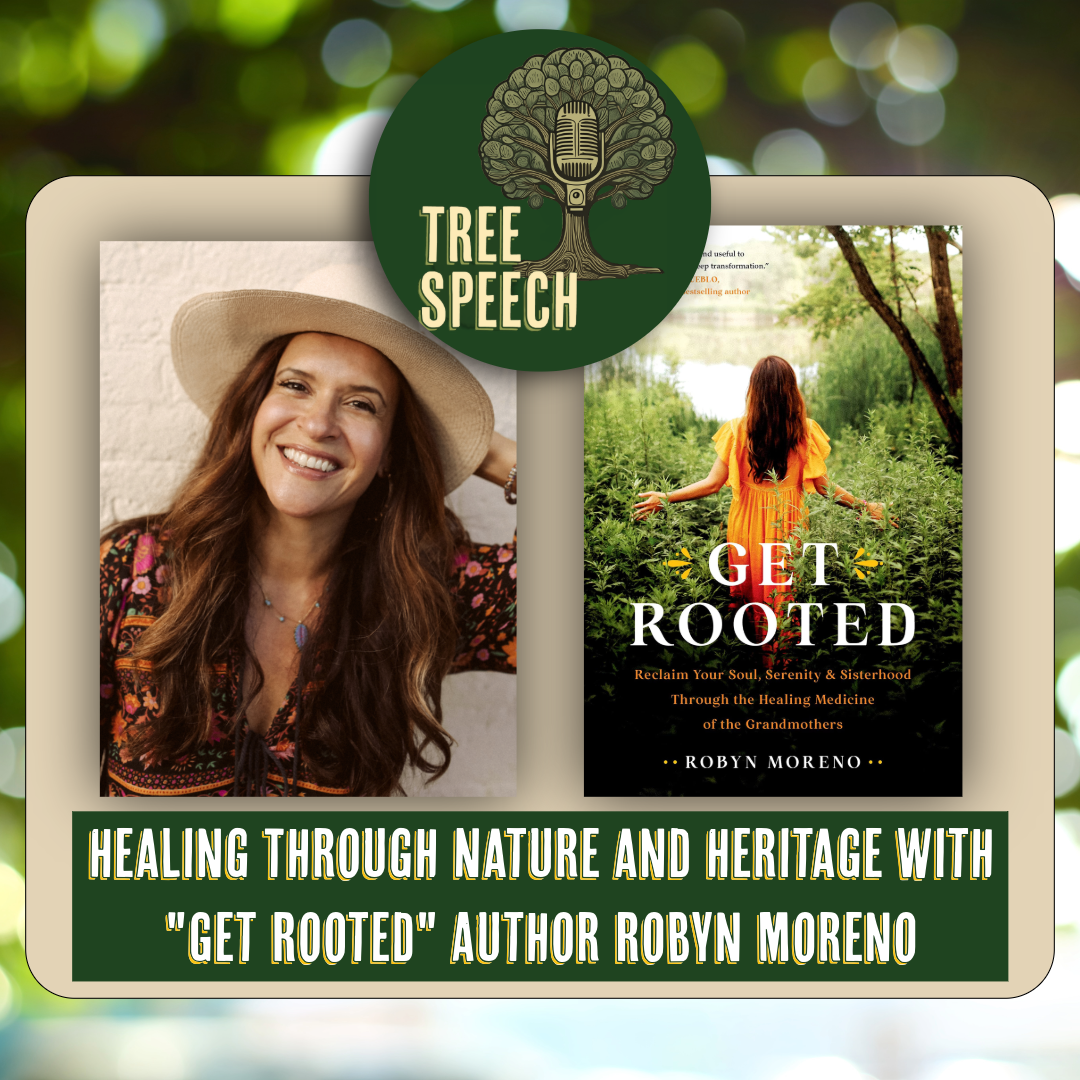
What if you could rediscover your roots and connect with the wisdom of your ancestors to find peace amidst the chaos of modern life? Emmy-nominated TV host, author, and storyteller Robyn Moreno joins us to explore this intriguing question. Robyn shares insights from her transformative book, "Get Rooted," which chronicles her personal journey of healing and self-discovery. Her story reveals the power of listening to subtle signals from within and reconnecting with nature and ancestral wisdom to navigate life's challenges more gracefully.
Through Robyn's heartfelt sharing, we uncover the importance of patience, self-forgiveness, and gentle care in the healing process. Her reflections on processing grief, understanding family dynamics, and confronting generational trauma offer a profound reminder that healing is a gradual, ongoing journey. Robyn's concept of "re-watering" the seeds of ancestral wisdom encourages us to embrace both the light and shadows within our heritage, ultimately leading to a deeper connection with ourselves and our community.
Our conversation also touches on the transformative role of community, nature, and ritual in personal growth, reminding us of the profound interconnectedness of life. Robyn highlights the significance of building a personal "medicine bag" of resources, emphasizing practical and accessible healing practices. We find inspiration in her journey and the words of poets like Adrienne Rich, who illustrate the importance of acknowledging beauty and nature amid global challenges. Join us as we draw strength from these insights and embrace our quest for a more rooted and joyful existence.
Robyn Moreno is an Emmy-nominated TV host, former Editor-In-Chief and Co-President of Latina Media Ventures, podcast host, and celebrated author and storyteller devoted to helping others reconnect with their roots and reclaim their joy. She has been a guest on the Today show, Good Morning America, and many others, sharing her expertise on culture, wellness, and personal empowerment and has written 4 books, including the one we discuss today entitled: Get Rooted: Reclaim Your Soul, Serenity, and Sisterhood Through the Healing Medicine of the Grandmothers. After years in the fast-paced world of media, Robyn pivoted toward a life of a different purpose, healing, and ancestral connection, inspiring others to live authentically and unapologetically.
In her book Get Rooted, Robyn shares a deeply personal journey of healing and self-discovery. The book follows her 260-day path toward healing that begins after events in her life lead her to a total breakdown.
Find Robyn at robynmoreno.com.
This week’s episode was written and recorded in New York on the land of the Lenapee tribes.
Tree Speech is co-written, edited, and produced by Jonathan Zautner and we thank Alight Theatre Guild for their support.
To learn more about our podcast and episodes, please visit treespeechpodcast.com and consider supporting us through our Patreon - every contribution supports our production, and we’ll be giving gifts of gratitude to patrons of all levels. Please also consider passing the word, and rate and review us on Apple podcasts. Every kind word helps.
Episode Transcript:
0:00:21 - Jonathan
Hello and welcome to Tree Speech. I'm Jonathan Zautner. What a world of contrasts we're living in right now, don't you think? Depending on where you are, it might be a season of vibrant blooms and hopeful new growth, a spring bursting with color and possibility. And yet, in the middle of all that beauty, the constant upheaval of daily life, the relentless new cycles, it can leave me feeling moments of deep despair. Things have changed. Humanity feels harsher, harder, even as the gentleness of the season is inviting us back to softness, to hope, to something new. So where do we even start to find our footing? It honestly feels like we're all just floating, sometimes stuck in this confusion, trying to hold on to the things we love and need, the things we maybe took for granted without even realizing it. But hey, this is Tree Speech, and around here, when we're feeling lost, we go back to the trees. We turn to them to get grounded, to find our center and to start the slow, important work of healing. Besides trees, another key resource that can guide us is learning from the people who are doing this work today, who are doing this work today, the ones who are quieting within, who are remembering and reconnecting with the wisdom of their ancestors, whether by blood or by spirit. It's also about not being afraid to face the darkness, because it's only when we do that we can truly find the light, the hope, the joy and the wholeness that this season so brilliantly models for us as a way to be.
Enter today's guest, Robyn Moreno. Robyn is an Emmy-nominated TV host, former editor-in-chief and co-president of Latina Media Ventures, podcast host and celebrated author and storyteller devoted to helping others reconnect with their roots and reclaim their joy. She has been a guest on the Today Show, good Morning America and many others sharing her expertise on culture, wellness and personal empowerment, and she has written four books, including the one we discussed today, entitled Get Rooted. Reclaim your Soul, serenity and Sisterhood Through the Healing Medicine of the Grandmothers. After years in the fast-paced world of media, Robyn pivoted toward a life of a different purpose healing and ancestral connection, inspiring others to live authentically and unapologetically.
In her book Get Rooted, Robyn shares a deeply personal journey of healing and self-discovery. The book follows her 260-day path toward healing that begins after events in her life lead her to a total breakdown. Blending heartfelt storytelling with ancient traditions as well as practical activities that anyone who is inspired by her journey can do, robin offers readers a path to reclaim a grounded, joyful life. Here is my conversation with Robyn Moreno. Well, welcome to Tree Speech, Robyn. It's so great to have you here today.
0:04:01 - Robyn
I'm so excited to talk about trees.
0:04:05 - Jonathan
I'm thrilled as well Now. I have read your book Get Rooted Twice, first about a year ago, when I was looking for more grounding in my life, and then recently, as it seems that we in this country and world are far from rooted at this moment of uncertainty and I was looking for further insight. Your work offers both guidance and a personal example of someone who, like a tree, has found deep roots while also reaching toward the sky, which is infinite. As you share in your book, though, this process wasn't easy, but you initially felt a particular calling. You write in Get Rooted. I didn't know what it was called then, I just felt its pulsing, hopeful signal, sent from somewhere ancient and far below that whispered there could be another way, Another way to work, another way to mother, another way to walk on this slippery, slick path. Could you describe what that pulsing impulse felt like? And for those who feel overwhelmed by the noise of daily life, how can we begin to tune into these deeper insights?
0:05:16 - Robyn
That's such a beautiful question and passage and I really relate to how I felt at that moment, which is, I think, a way that we often feel, which is really unrooted. I think the world can really unroot us and we feel unmoored and untethered. And at that moment there was just like this brief break in the noise where I felt something that was rooted, like it was coming deep. It was coming from deep in the body.
For me, a lot of my worry or anxiety can live high in my body or my head or in my chest, you know, with worry, but this felt deeper like. It felt deeper like more rooted in the body, right so like maybe even in my lower limbs, and there was like a pulsing sensation, I remember, almost like an infusion, right Like I was being infused by ancestors, by like the flow of life, by the many, many centuries of people and trees and animals that have walked this path, and it was just a break in the noise. And I think what I did first is listen and I just will offer that back to people, whoever are listening, because I think that I think we have that sort of constant inner knowing, whatever we call it, but a sense of rootedness, or peace, or or I got you. But it's so faint with all of the noise of the world, all the worries, all the news, all the social media, so, like I feel, often the first instinct might just be to kind of listen.
0:06:54 - Jonathan
Would another word be intuition? Is that really what it is, or is it separate from that?
0:07:00 - Robyn
You know, I feel like that's hard to describe and maybe that's everyone's individual homework. I found this sense when I had left a busy job. I was in a time of big personal transition and I had started to study this Mexican wisdom tradition of my grandmother's and I found a spiritual teacher and I started to sort of play with this idea of, and I began to at some point call it rooting, like I'm feeling unrooted. But then I feel this weird call to root and it was felt ancestral, it felt a little magical, it felt above all things, it felt almost true, right, that small still voice inside and she called it ser and S-E-R. Ser in Spanish it's actually a verb and it means essentially to be, to be right, but she's like it's your kind of inner knowing. I feel like it's almost felt more than described, if that makes sense.
0:07:57 - Jonathan
So I call it.
0:07:58 - Robyn
This is my gut instinct, this is my intuition, this is my right knowing, this is my ancestors, this is my inner compass, but again, I would say that I feel it almost more than I can put words to it.
0:08:12 - Jonathan
Right that's powerful and probably very individual, different for everyone. So after you heard that calling, you decided to follow that path wherever it would take you, and your journey toward getting rooted includes your study of curandarismo and please tell me if I'm not pronouncing that right and can you share what this healing tradition means to you and how it became a guiding force in your life along that pathway that you had been called toward?
0:08:44 - Robyn
Yeah, absolutely so. It's C-U-R-A-N-D-E-R-I-S-M-O, and so it's curanderismo. Right, in Spanish we would say curanderismo, and the root word would be cura, which can be translated as to heal, like a path of healing, like this is a way of healing, and so all global traditions have these what they call like old ways of healing. And so for me, as a mexican-american, my great-grandmother was what they would call a curandera, and she was the healer of the neighborhood. So if you you know, back then I mean she was born in 1896. So this was quite a while ago, but back then in her neighborhood in San Antonio, texas, she was born in Mexico and then she grew up in San Antonio, where I'm from and where I was born and raised. You would go to her and you would. She was essentially like an herbalist and she was could read your cards and she could give you what they call a limpia, which is she would brush you with like herbs or an egg and she would remove energies from you. And so I grew up understanding what this is. It's almost like superstitions or something.
But as an assimilated Mexican American, I'm probably like fourth generation at this point, I don't know. I was like, yeah, that's kind of old-fashioned, that's what my grandma did, or my aunts, but I'm a modern woman and so. But I've always been deeply spiritual, like we all are, and so I sort of moved in a different direction. I moved. I was a yoga teacher, I studied buddhism, I was looking toward what I guess maybe eastern philosophies, but what was interesting is at this time that I was feeling incredibly unrooted in a big state of transition, feeling that just I don't know all the winds were coming, I didn't know which way to go, and then I felt that sense of ser Also, you know, things just happen. All of a sudden four different people tell you about a book and you're like I must read that book. That's so weird, that's so synchronistic. Like if someone tells me about that book again, cura marismo came back into my life. My cousin invited me to a workshop, someone gave me a book. All of a sudden it was like front and center. I just felt again that listening, like I was in enough pain that I got, I think, humble enough to listen, and I was like that old fashioned thing of my grandma, and when I started to study it just made a lot of sense, like things started to click. It was like a puzzle being put back in place and I began to understand specifically what I was feeling.
I read this really beautiful book by this author named Elena Avila. She wrote this book called Woman who Glows in the Dark, and in it she said this she had this passage and when I read this passage, jonathan, I'm like, oh my gosh, this is me, this is me. And she basically talks about. There's this idea of susto, s-u-s-t-o. The word in Spanish is asustar and that means to fright.
And so there's this idea that if something happens to you a trauma, a shock, a thing that a piece of your soul will fly out, it'll fly or I'll flee and then you're incomplete because this piece of the soul is gone. And so you're walking around and you just, you know something's wrong. You don't really tell people, you try to fill it with achievement that was me or spirituality, or meditation, or veganism. Something was going to fix this thing in me that I kind of knew wasn't there, but it never was really working and nothing was filling this thing.
I got married, I had kids, I sort of I succeeded in all the ways I thought I should, and yet I still felt this incompleteness. And she said no, that's a symptom is you have susto, you have a soul loss. And I was like, okay, that, as weird as it sounded, it made perfect sense to me. And the antidote or the way that you sort of fix this, if you can or work with this, is you go into soul retrieval, you get that piece back. And I was like, well, that's what I need to do. And so that really began my journey essentially. And it came through this lens of cura marismo, but very much in the language, weirdly, of my own grandmother. It was almost like if all of these centuries she sort of came back and, I don't know, sent me a message.
0:12:50 - Jonathan
Right, I'm sure it's like the cyclical nature of remembering the past to move forward. Now you just talked about calling the soul back and that's a form of healing. But I wonder for you, when we talk about healing, what are we talking about? What does that look and feel like, and are we ever completely healed? Or is this a life or soul's journey that we just continue to seek, to search and to try to heal?
0:13:21 - Robyn
That's such a beautiful question and again, I think that's individual for everybody, right. For me, I specifically felt that there was something in me that felt what I would call incomplete right, and right now I'm like sort of touching my chest but I just felt like something was missing right and I couldn't fill this thing. And so the soul retrieval brought me on this path, but there was many ways that began to heal for me. What I did is I kind of actually stopped and I looked around, I took a pause, I went back and studied ancestry. Very quickly, if you look back into family history, I began to understand why my parents behaved the way that they did.
My dad died when I was young. He died when I was 13 of pancreatic cancer, and so the time from his diagnosis to his death was 260 days. It was very quick. Like it was like a shock. That was a soothpick, and so I had to really contend with that, because I don't think I ever had my mom, didn't have she.
Back then we didn't understand like, oh, you should go to therapy or you should have a grief counselor, like literally like we just had a funeral and went back to school. It was kind of weird and so I had to really contend with, like this person, who was complicated and amazing and beautiful and has been sort of haunting me my whole life. I've got to sit with this sadness, this grief. I had a lot of grief I had to process Then as I began to understand him because he was a complex person my dad. I had good memories of him, but I had some not so great, which I think is honest with anybody right. We tend to like make saints out of people that have passed, but the reality is they were complicated people because they're humans. I began to then look into his history and I began to be like, oh, okay, his parents parented in this way. It was like traumatized parenting, like every generation had this deep, secreted trauma and that's true, I think, for all of us and so as I, that there was a lot of healing there because there was a lot of forgiveness that happened.
I began to. It was almost like I began to open doors and I was like, okay, I understand, and I really had a deep sense of self-forgiveness for myself, overwhelmingly. I didn't expect that. That is not what I expected on the journey, but what I ended up with almost was the most deep self-regard and self-reverence for me after all these years trying to bump into walls and find my way and you've acted against yourself and that hurt me, but you've done these amazing, beautiful things and it was just a sense of like a coming home and of deep acceptance. So I feel like for healing to me if I had to say it would be an acceptance and a coming back, but it's again and again. I call the book Get Rooted, but I feel like it's rooting because the world will keep unrooting us and it's the healing, is almost the coming back the coming back, the coming back, the coming back.
0:16:20 - Jonathan
Heal, or to recognize things that are happening within our daily lives and to try to heal them, to make them better. Also, many people struggle with reconciling their call to heal. I think a lot of people feel that intuition and it's hard to reconcile that with the practical demands of making a living, managing daily responsibilities, work, family, our Netflix subscription, you know it all comes into play. So how were you able to merge your personal responsibilities with your ser, your deepest sense of being as a called healer?
0:17:04 - Robyn
I think that's so honest and so beautiful and I really am so glad that you acknowledge all the things, because one thing that I realized in this path is we live in systems that really don't aim to root us. Honestly, we do. I mean that's just. We have a lot of it is truth telling right, like like healing is like just true, like being able to look around and be like oh, hold on, you know, let me just take a quick moment. And the world that we live in is fast and it's getting increasingly faster with social media and technology. It's, it's really moving. It's like it feels very, very fast and all of these things are kind of slow. We want, we want fast healing, we want fast food. We All of these things are kind of slow. We want. We want fast healing. We want fast food. We want fast fashion. We want Amazon yesterday. We're annoyed if it doesn't come, like it's not coming tomorrow on Amazon Prime.
Like I'm conditioned by the systems to want these things, but the hard reality is that healing is not a hashtag. It takes it takes a long time. And so for me to like reconcile it, I mean, for at first I didn't. At first I was like I fought myself, because you're fighting against the world. Like the world doesn't give us permission to heal, it doesn't really honor art or writing, it doesn't really pay for it. You know what I mean, and no one's giving you an award.
I did all this and I didn't get in, I didn't get certified in anything. Like I didn't get, like Oprah. You know what I mean. Like it goes against what we've learned and that's hard, like that's a hard reckoning, because what, though, I think grows bigger is? It offsets that again and again, and it's a fine balance, because the world keeps worlding. The world keeps worlding. Is that you, you begin to actually feel rooted, and when you listen, so ser, right, intuition, inner knowing, ancestral calling, it's something you do. So the thing is you, you listen to the call, like maybe you had a call to launch this podcast. I mean there must have been I don't know if it was in the middle of the night and the show. Some idea must've been like, wow, I love this, I can do it, someone else might like it. And so you answered your own call. You were curious, you gave it time, you nurtured it, right. I came. Now we're in conversation, I've been enrolled in your dream. Now, right.
Which is amazing. And then you're like oh, this is so great. I got to talk to Robin, and then these people wrote and they loved it. And so you start to be like, okay, we're not alone. And I think that that's what happens. Is you get a sense of community, but it comes through the doing is I think you get a sense of community and you're like I'm not alone. Maybe we're small, but maybe there's more of us that want to live in a way that is true to us. Does that make sense?
0:19:50 - Jonathan
Yes, right, and it's really about taking that first step and leaning into that. The desire leads to an action. So, yes, we began this podcast because we were inspired by trees, and so let's talk about them a little bit. Trees are ever-present in your journey and throughout your book, which is just delightful From the Douglas fir that you see in the east, or that you face while in meditation, to the forests where you seek clarity while hiking, or burying your face in the dirt, to the Seba tree, the Mayan tree of life, where you received a blessing on a healing retreat, Robyn. What do trees symbolize for you and how have they shaped your healing work?
0:20:40 - Robyn
Oh, my gosh trees. As I'm sitting here looking and I'm lucky because I get I'm looking at it like a canopy of trees outside my window. I think they fundamentally root me. They root me without me even knowing, right, like I work in words, I work in speech, I'm a communicator all around communicator, right, but there's something about trees for me that just cuts to it quickly. I get quiet, I have more of an embodied knowing. It's like they share their wisdom with me and I think that's why I love them so much. As someone who is very heady and I move kind of fast, I'm a Gemini, I have a lot of energy Trees because they're rooted fast. I'm a Gemini, I have a lot of energy Trees because they're rooted, are good for me energetically. They ground me. I touch them all the time. I work with copal, which is a tree resin. I'm just fascinated by them.
What's intriguing and one of the reasons I called the book Get Rooted is there is this Aztec Mexica saying right, so there's a saying and it was almost like like don't put your all your eggs in one basket. You know, like a little, a little phrase we used to say, and it was a Nawa and it basically would say it was la lawe, la pitzkawi in la lipak, and what that meant is it is slippery, it is slick on earth. They had this worldview that the world was slippery, and I feel that, like it's slippery, you know, like you walk and you're doing good, you're doing your best and things happen. It's not fun, but there's a realness to it, right? But they also had their own path that they called Neltelitsli, and that it's a Nahuatl word and that means to be well-rooted. So they believed, right, the Mexica that to walk on this slippery, slick path of existence, this human existence, one had to be well-rooted, we had to root. And so when I found that out, I was like, yes, that's yes, yes, yes.
The other metaphor for that, this professor, who's really amazing, found he contends that they rooted in four different ways. One was that they rooted in the body, through, like coming back to the body, which that makes sense to me, like, I feel that, like it's been, I think it's what I've been talking about since we first started talking about this, about the listening, about the breathing, like having a body awareness. The second way is sort of balancing what we talk about, like how do you balance the call of healing, with a call of life, and so we dance with that balance, with meditation. For me, it's like I always call it over and out. Anytime I'm overwhelmed by life. I sometimes have to move it out. I do it with journaling, I take a long exhale and I do it through an act of limpia, which is an energetic cleansing. I'll do some smoke, medicine or something to move things.
The third path of rootedness was community connection. Connection, right. And if we're talking about trees, there are systems like the aspen trees that have these interconnected roots and so when one little tree is like I'm thirsty, I need something, it'll send it over. And then when one needs it, they're like oh, I got you. And the reality is, is that we need each other. I needed this conversation.
You found me because you liked my book, but maybe I had you in mind, or I'm more inspired to keep writing because it worked. Like we're we're, we're feeding each other, we're nurturing each other. And what happens, I think, in life, what happened to me is I thought I was too good for help. I didn't want to ask anybody for help. I I thought I could do it all on my own. I absolutely could not. So it's connection and the last path of rootedness is nature. It's what they call teot, it's energy, it's divinity, but really for me it's found in nature. It's like nature to me is everything and I guess the question was trees, and trees symbolize just life, the cyclical nature of life and my gratitude for it.
0:24:43 - Jonathan
We have a lot to learn from trees Beyond speaking of traditional trees or trees outside in nature. You also write quite a bit about family trees. In Get Rooted, you explore ancestral wisdom and reconnecting with cultural identity. What are some of the key lessons you hope readers take away from this journey?
0:25:11 - Robyn
I think so much of what we seek we have already. Honestly, we tend to think and it's normal like every generation thinks they're the first ones to face this. No one's been here before, whatever we're facing. But the reality is, when you look at history and our ancestry, or just people, generations that passed, they've faced so many things right, like famine and disease and moving and all of it, pain and loss, and so there's so much of their wisdom that actually lives already within us.
I was lucky enough to be at a lecture, but there was a Cherokee seed keeper and she was talking about this concept of re-watering and basically what her job is now is I think she's a farmer is that she's trying to plant like old strains of, like native corns, to see if they'll grow again. And it's such beautiful, but it has such symbolic work these seeds of the ancestors, and she talked about re-watering. So they're watering and what she contends and what I heard is that we have these seeds of our ancestors and this could be ancestors by blood, but ancestors by love, people that inspire us, artists, people that have passed, that their gems live in us. And if we could just tend to these seats with the listening, with the nourishment, with the gentle attention, can we actually ripen what's already within us? Right, it's funny, the book, my subtitle, is Reclaim your Soul, serenity and Sisterhood Through the Healing Medicine of the Grandmothers and I like the word reclaim, like somebody took something from me, because from my history as a colonized person, a lot was taken from from my people, honestly Right.
So there is a, there is a writing of me getting things back Right and right by through writing, writing like WRITING. I was actually writing things for myself, but I love this and that's a power. There's an agency. The world took this from you and you're going to take it back. But the rewatering aspect I really love because I believe in all of us there's things that can never be taken away, right, and so can we just tend to what's there, and I think that's what the set is doing, that's what the listening is doing, it's what conversations are doing. We're watering ourselves back into existence.
0:27:39 - Jonathan
And as you reconnected with your ancestral roots, did you find that the way that you interacted with the natural world changed as well?
0:27:48 - Robyn
Absolutely, absolutely. Like you can't, you can't be curious in just one area when you begin to see and listen, that listening and seeing is not just focused on that, it's wide. It's wide so, all of a sudden, like your view gets wide, like a panoramic right, like you're looking at a tree and you realize it's a grove. You're looking at like a little thing and it's like a forest. And I think that's what happened with my ancestors is, as their wisdom began to rewater, began to grow in me those old ways of connection and so many we call them old ways, but they're just ways, right? These ways of tending, these ways of listening, these moving in cycle, right, understanding that we have different seasons in our lives.
As I came back to myself, the gift was like, all of a sudden I was awake and I was like okay, now that I'm back in the body, now that I, this soul retrieval, I came back. It's like my, like the eyes opened, the cardinal's so red, the blue jay's so blue. Eyes opened, the cardinal so red, the blue jay so blue. You know what I mean. Like the forsythia is now growing out there in that really vibrant neon yellow. It's just like it gives life a hue that I think always existed, but that we just weren't paying attention. Someone told me once that love is attention, and I think that as we begin to heal and come back and listen, there's so much we just we all of a sudden can see yeah that's beautiful.
0:29:23 - Jonathan
Yeah, it's love is the universal life force. Really it's transformative, but it's not all easy and writing about and going through personal transformations can be cathartic and very challenging. I'm sure Can you tell us a little bit about your creative process in writing. Get Rooted, and were you doing this writing as you were going through this journey or was it after sort of looking back? How did that work for you?
0:29:53 - Robyn
Yeah, I'm so glad that you asked this question because it was and I think that's such a good point right. Like when we talk about healing, we have such a I don't know like, ah, the clouds are going to part and it's very idyllic right, and it's messy work. It's like when you put your hands in the dirt and you're just uprooting stuff. It's not pretty, it's not Before you get in there, like in the gardens now right, like you're out there and it's it's ugly out there, like you got to just right, you got to pick out the weeds. It takes a while for those flowers to come through and it's also incredibly painful.
So, for anybody on these journeys that we go on, we're called to go on, go slow, go really really slow, because working in ancestral healing, you're going to find things good and bad and they have to wash over you, they have to sit with you. So it's funny because so I. So, as I was on this path initially, I was really naive. I was like this is gonna be great, I'm gonna go heal me and my ancestors and me and my sister.
0:30:56 - Jonathan
It's gonna be amazing.
0:30:58 - Robyn
And then very quickly, oh my god, I was, I was on my knees and I went back in the book and so the creative process was that I lived and I wrote a lot, but without any clear like agenda. But later, when I decided that I wanted to write a book, that was a hard process because I had so many stories and I was like which ones do I want to tell? Some of the stories I wrote were really hard and really scary and really painful and so vulnerable that I was like when the book came out I wanted to hide underneath my bed. I'm like, oh my God, I cannot, I can't with this, I cannot believe I just did that Because you can't put the genie back in the bottle. But I had was talking to a friend and I always knew you really can't, you can't heal what you won't acknowledge and you can't really also help what you hide. And I very much, after I've gone through the process, I would say, of healing, I really knew that I could be of service to people, that I could find a group of people if I could just tell them how it went, and the desire, I think, to connect was bigger than my fear.
At the same time I will say there is stories that I did not tell. There's a lot that happened, as you can imagine, right in a life, that not every story made it. And I had that discernment, that honest, healthy discernment, where I'm like you know what. This can stay with me and I think that that's healthy. We can as writers and as artists I don't know if people talk about that enough but we have every right to tell stories, but we also have rights to not tell the story, to keep something for yourself. And so that was a beautiful process.
That was a very holy process and hard, so hard, like this was. I'm making it sound so poetic, but it was like pulling my hair out. I literally wrote the book and then I went back and at the beginning of the book I wrote something and I feel like I'll read it to you because I was like I need to drop in this part in here that so people will know, because otherwise it's going to sound too poetic and so easy. And so I literally dropped in the middle of the introduction. At the very end I went back because I was like this is a bit of a disclaimer and I said this I said I wish somebody would have told me how much I'd have to fall apart before I found my wholeness. What did you expect, comadre? My spiritual teacher replied when I complained how painfully hard this all was.
What did I expect when I started on this spiritual journey? Maybe a movie version of healing, where I would magically solve my midlife breakdown and never-ending family drama in a clever madcap and perfectly wrapped up 90-minute bow? Instead, it would turn out to be a 260 day journey and longer years that twisted and turned and took me backward, inward and down, down, down to the root of it all. I wish someone had told me that once you start opening the doors and windows of memories and secrets, that the winds will blow, they'll rip your house right off its foundation and they'll rattle and roar right through every part of you.
I wish someone had told me all about the revelations, abominations and transformations to come, the blessed and wretched discoveries, the agonizing peeling off of skins, the exhausted miracle of rebirth and the restoring joy of finally coming home. And I talk about how, at some point, you know, I saw this light and I thought it was a beacon and I ran for it. And what I didn't realize is that it was a fire and that I was going to be burned, and so I just I would be doing a disservice to anyone if I didn't tell y'all that it's it's hard, it's it's it's it's hard work.
0:34:32 - Jonathan
Yes, it's hard work. Yes, so with that disclaimer, can you also offer maybe words of encouragement, reasons why people who are on this path should stay on it? Where did you go in those really tough moments for just a little push of inspiration or relief, or just a sign that you should keep walking that path?
0:34:58 - Robyn
I believe we walk the path because we have to, because the call is sort of bigger than the fear, because what we're asked to do is to wake up right. We're asked to be awake in this life, to call ourselves back. That's what we're really called to do. Do we have a choice? I mean, yeah, I guess we have a choice, because some people we don't, not everybody maybe does it, or we escape as much as we can, and, trust me, I escaped too, I have to say. I think it was really community. I think it was really like weirdly, like those four paths of rootedness and much more.
I began to build what I would probably call a medicine bag what are some things that I can tap into when I'm really hurting? And so it was the moving of the body. It was doing a lot of like limpias and ceremonies and things, rituals, and I outline many in the book because I wanted to also give people tangible resources, right. So it's not so vague, it's just because it's a practical. Gurumirismo is a practical medicine. It's an everyday.
I don't want it to sound so like holy or out of reach. It's very accessible. I would say. Nature, nature was always so healing to me, sometimes the simple things, jonathan, we overlook again and again because we want it to be hard on, to be fantasy, we want it to be packaged well. The Robins are coming, the fleetingness of the daffodils, it's just the baby, the baby fur that's growing out there. Now there's something about like the resilience and persistence of life that I think is very rooting and people connection. Without a doubt I have. The biggest surprise and joy in my life is how much I love people and how much I need people and how much I'm willing to listen to other people.
I was really in my head for a long time and I'm like, oh, there's other people here and they're wise, they're so wise and and we think we're the only ones going through it, and so we get to hold each other's hand. So I would say all of that and I would love to hear what's in yours. What do you turn to when you need comfort or care?
0:37:04 - Jonathan
Same community. Sometimes it's also, though, going inward. For me, I think, it's having a spot in the world just to sit, maybe, to be close to nature or to witness nature, but to like have tea, to have a book or a guide. That's a resource to kind of evoke all of the senses, take deep breaths. Other times it could be practices, healing practices, a walk in the woods. For sure, just witnessing the slow but strong change of nature is very healing, because it is cyclical, as we talked about, and just knowing things will come around again, and this is only a blip in the magnitude of the world and our experience. Whatever it is that's giving me pause, I think breath. Number one is breath. Really, just being rooted in that which is in direct correlation with trees brings me back to myself.
0:38:05 - Robyn
I love that. I feel like I just took a breath and the breath has so it's like it's cleansing. It's like our most potent cleansing tool, right, because inhale and exhale and just move the rivers in our body, move aside any blocks, untangle some knots. You know, guru Miri Sama, when I started on this path, it was like really scary, right, I don't know. I was like, oh my gosh, am I going to do this? Right? Like because there's no real certification for it. You know what I mean. So, one of the translations of the word Gura means to heal, but it can mean to cure, right.
And as I began to be a practitioner and kind of support others, I was like, oh my gosh, I'm so responsible for people I can't cure anybody. That scared the heck out of me. But there's another translation of Gura Gura, which means to care for, and I was like, ah, and when you're talking about, how do we stay on that path when things are hard? How do we stay on the path when it doesn't make sense, when we have to work all the time, when the demands of life overwhelm, when the news just lays us out and makes us lose our faith, right, it's just like I've lost my faith in goodness. You know, it's that gentle care that repeated and gentle care again and again, Like you were, know it's, it's that gentle care that repeated in gentle care, again and again, like you were saying it's. I mean, all of these things become ritual, the breath.
0:39:23 - Jonathan
Right, and oftentimes that's also that care is reaching out to care for someone or something else, which sort of also grounds me, because it's it gets me outside of my experience and frazzled anxiety and puts that focus onto something that is helpful, which automatically seems to calm me as well.
0:39:45 - Robyn
Yeah, me too, me too.
0:39:47 - Jonathan
Well, and this book definitely is a resource I reach for and I can tell is an act of service that you've offered Now. The book was published in 2023. So can you tell us? First, as I read it the second time, I was so curious about your family's reaction. You write intimately about your sisters and your mother and your shared familial history. I'm wondering what their reactions were. And then I'd love also to know what you've been up to since the book was published.
0:40:19 - Robyn
Thank you for that question because it's so thoughtful and I feel like I would. I was curious too when I wrote it. I didn't really expect it to be so memoir-esque. When I really started writing, I think I thought I was going to write I don't even know an artist way or something like something that was much more practice and tools, but I couldn't get to the tools without telling you almost what the problem was first. So it's like I had to show. It was like you know, there's a like, show don't tell, and I just, I don't know my story literally just came out like I was just, like it is just called forth. Thank you for that Because I I really engaged my family really the whole time.
Like I didn't want it to be a sneak attack, I just didn't want to disrespect anybody. I didn't necessarily need their permission, but I wanted, I wanted them to understand what I was doing. You know what I mean. Like I wanted to, why, Like you know, this is what I'm doing, this makes sense and the reality is is that our lives intersect right, Like those interconnected roots, they just do. Some people really embraced it, Like I have to say, like I had an older family member come back and said they really liked the book and that meant so much to me. And I had some people that just chose not to read it because I think they understood that they lived it.
0:41:39 - Jonathan
Yeah right, exactly, it's. Enough.
0:41:42 - Robyn
You know, and I definitely had, I have a sister who was like, ah, really Like how am I tangled up in your stuff, like why? You know, I didn't ask for any of this, so it was. I had the honest whole cornucopia of reactions but I have to say, overwhelmingly I was always very I tried to include them and there was no surprises, because I did want, I didn't want it to be a source of friction, like I didn't want to create work that caused more trauma, like that's not the point. And I think that everybody really understood. And so that felt good and it still feels good in the body.
0:42:17 - Jonathan
And we will put links in our show notes as well for where people can find you. I saw from your site that you are doing sessions with people and also starting a writing class which is unfortunately sold out. I'm sure there's a huge demand, but hopefully you'll continue with more classes in the future. I'm sure there's many, many people who would love to continue to learn from you beyond the book.
0:42:43 - Robyn
Yeah, thank you for that. Yeah, it's been so fun. I've had a lot of people ask if they could take a writing class, which makes sense, and I think it's part of this community that we're talking about. I'm a storyteller I would say above and beyond, and I just I love story, like I think you do too, and so I am teaching I call it root into writing, and so we're doing a session now. It's sold out, but I'll definitely be doing it again, so just go to Robin Morenocom.
And then I do a lot of retreats and workshops. So I'll be at the Omega Institute. I'm there every year in August, which is a really rooting time. It's a nice time of transition before we head back, like before fall. Every January I've been traveling somewhere, like in a different retreat. So I'll be in Mexico next year so people can visit me there, and then I'm at the very beginning of writing. I'm not sure how it's going to look yet, so I don't want to get ahead of myself, but stories I'm still taking time to write and then Get Rooted. We're translating it into Spanish. There's a Polish translation, which is amazing.
0:43:46 - Jonathan
Yes, yes.
0:43:47 - Robyn
Yeah, so I have a lot of. There's still a lot of audience for Get Rooted Because it's such a. I do think that it's when you tell your own specific truth, even though this is like through the lens of, you know, a mixed race Latina woman from Texas. But there's something about just truth that really truth attracts truth, it resonates. So I think that the story, this story, will still has a lot of legs and I think, can you know, really resonate still with a lot of people. This story will still has a lot of legs and I think, can you know, really resonate still with a lot of people and it's available on audio and it's me doing the audio, which is so fun. And, kendall, I love this baby.
0:44:23 - Jonathan
Well, it's so important it's really powerful. Well, Robyn, we are inspired and transformed and healed by your words and bravery and work and truth. I don't think there is anything more important for this time than for collective healing that incorporates a reverence and respect for our natural environments and that also looks to the past for guidance and for strength. It has been a pleasure speaking with you. Thank you so much for joining us today.
0:44:51 - Robyn
Thank you so much for having me, Jonathan. This has been a real treat.
0:45:16 - Jonathan
Robyn left me with so much to reflect on and I highly recommend checking out her books and website for more insights and a wealth of valuable resources To get out of my head. This past weekend I went to Central Park to be immersed and inspired by the blossoming trees. I thought of Robyn's work that reminds us to stay brave and focused on building a strong foundation and resilient mindset, especially in these uncertain times. Much like the interconnected root systems of trees sharing resources supporting one another, the importance of community and collaboration feels more essential than ever. This deep rooting together gives us the fortitude to face whatever comes our way, and the irony is that real, authentic strength calls for gentleness, for understanding and compassion for the paths that others around us are also on.
I recently came upon a poem that was written by Adrienne Rich, titled what Kind of Times Are these? This poem was written partially in response to another poem that Brecht had written much earlier, in 1939, which relayed his fear that writing about nature and beauty was irresponsible as there was so much great suffering in the world at that time. In her poem, I believe, rich is offering a different opinion, alluding to the very importance and interconnectedness of all things art, nature, history, trees, healing politics and one another, and the need to value and protect all these things that we hold sacred. Though written in 1991, her words feel strikingly relevant today when she writes there's a place between two stands of trees, where the grass grows uphill and the old revolutionary road breaks off into shadows, near a meeting house abandoned by the persecuted, who disappeared into those shadows. I've walked there picking mushrooms at the edge of dread. But don't be fooled, this isn't a Russian poem. This is not somewhere else, but here, our country, moving closer to its own truth and dread, its own ways of making people disappear.
I won't tell you where the place is the dark mesh of the woods meeting, the unmarked strip of light, ghost-ridden crossroads, leaf-mold paradise. I know already who wants to buy it, sell it, make it disappear. And I won't tell you where it is. So why do I tell you anything? Because you still listen. So why do I tell you anything? Because you still listen. Because in times like these, to have you listen at all, it's necessary to talk about trees. A heartfelt thanks to Robyn Moreno for sharing her wisdom. Robyn Moreno for sharing her wisdom and thank you for joining Tree Speech today.