

Tree Stories of “the Big Apple”, Featuring Mayank Mardia of Mulch
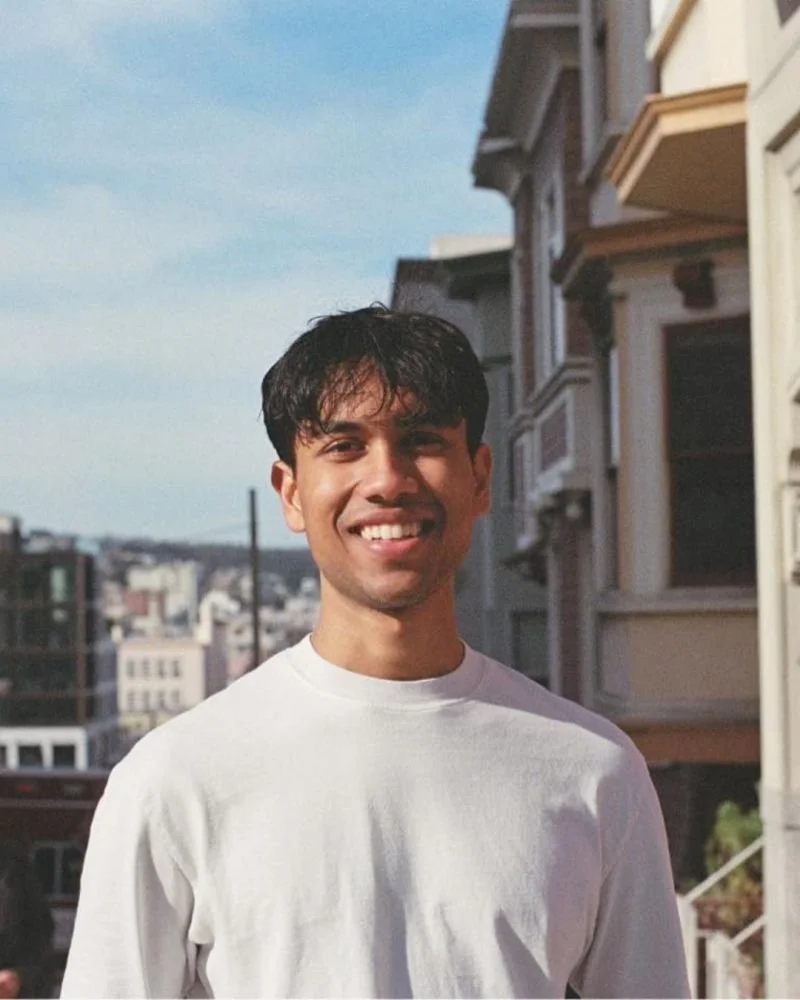

Join us as we journey back to the origins of Manhattan, uncovering the legendary 1626 land transaction between Peter Minuit and the Lenape people under the shade of a mysterious, long-lost tree. As we wander through the storied landscapes of Inwood Hill Park and Central Park, we explore the intricate history of this iconic city and the enduring interplay between nature and urban development. Marvel at the majestic American elms of Central Park's Mall and Literary Walk, and discover how these natural wonders have become emblematic of resilience amidst the bustling metropolis.
Discover how New York City earned its iconic nickname, "The Big Apple," and trace its evolution from 19th-century slang to its association with horse racing and jazz in the early 20th century. We reflect on the city's cultural evolution, touching on significant landmarks like the Tree of Hope in Harlem and the Survivor Tree at the September 11th Memorial. With insights from Mayank Mardia, we also explore the transformative efforts of the Mulch project, a community-driven initiative that seeks to reimagine urban spaces and foster ecological restoration through collective action.
In an engaging conversation with founder Mayank Mardia, we learn about MULCH, his innovative initiative aimed at reconnecting New Yorkers with nature. Listen as we explore the potential of transforming neglected tree beds into vibrant mini gardens, sparking a movement that emphasizes community involvement and the power of small, collective efforts. With a vision of turning underutilized urban spaces into thriving natural habitats, we celebrate the resilience of both plants and people, encouraging listeners to pursue their passions and find joy in the greening of their city.
This week’s episode was written and recorded in New York City on the native lands of the Lenapee tribes.
This episode was produced, written and edited by Jonathan Zautner.
To learn more about our podcast and episodes, please visit treespeechpodcast.com and consider supporting us through our Patreon — every contribution supports our production, and we offer gifts of gratitude to patrons at every level. If you liked this episode, please rate and review us on Apple Podcasts or share it with a friend. Every kind word helps this forest grow.
EPISODE TRANSCRIPT
00:01 - Jonathan (Host)
Before the towering structures, before the traffic, before the grit and glamour and grid, there was a forest. Come with me to the year 1626, beneath the shade of a towering tulip poplar. Some actually say it was a sycamore, though no one knows for sure. A moment is unfolding that will echo through centuries. Peter Minuit, the first director-general of the Dutch colony of New Netherland, is said to be negotiating the so-called purchase of the land of Manahatta from the Lenape people, of the land of Manahatta from the Lenape people. The trade Goods reportedly worth about 60 Dutch guilders, or what would be about $1,000 today. Nearly 400 years later, that land is known as Inwood Hill Park in upper Manhattan, new York City, and a solitary boulder stands there, marked with a plaque that commemorates this exchange, one of the most mythologized transactions in history. The original tree, long gone, has become a symbol of that moment, though the truth about the tree, the exact location and even the nature of the deal is lost to time. The story, like the city itself that I call home, is layered and complicated. The so-called purchase raises enduring questions about land legacy and justice, particularly for the Lenape people. It also invites us to reflect on the long tug-of-war between capitalism and nature, and between the forest that once stood and the concrete jungle that rose in its place.
I'm Jonathan Zautner, and this is Tree Speech. In today's episode, we listen for the whispers of nature beneath the hum of the city, exploring the quiet, rooted presence of trees in the heart of the Big Apple and, honestly, if a tree can make it here, it can make it anywhere. We will examine some of the most historic and interesting trees in the city, and I speak with Mayank Mardia, who created an organization named Mulch with the goal to rewild New York City, one home to more than 7 million trees, and the New York City Parks Department cares for nearly 5.7 million, or 81% of them. In 2024, the department planted a record-breaking 18,000 trees, a significant step toward the goal of achieving 30% canopy cover citywide.
03:31
it is one of the most majestic and recognizable tree spots in the city is the double row of towering American elms that form a vast wooden cathedral over the Mall and Literary Walk in Central Park. This promenade is home to one of the largest and last remaining stands of American elms in the world and has become an iconic feature of the park, both visually and culturally. These trees have appeared in countless films and TV shows, including Kramer vs Kramer, Elf, Sex and the City, Succession and, my personal favorite, Maid in Manhattan starring Jennifer Lopez. Designed by Frederick Law Olmsted as the only straight path in all of Central Park, the mall was meant to provide a formal promenade, a place to stroll, see and be seen. According to the Central Park Conservancy, this deliberate linear design contrasts with the park's naturalistic curves and winding trails. Walking beneath the elms feels like stepping into a green tunnel that shifts with the light and the seasons. Often described as cathedral-like, the mall invites quiet reflection. There's something meditative about walking its length, passing beneath the gnarled trunks and eldritch arms, or simply sitting on a bench to watch the filtered sunlight ripple through the canopy.
05:04
But this iconic grove is not immune to threats. Dutch elm disease, a devastating fungus spread by elm bark beetles, has wiped out vast populations of elms across the globe and remains a persistent danger. The trees along the mall are carefully monitored by the Central Park Conservancy, but disease isn't the only threat. In heavily trafficked areas like this one. Soil compaction from foot traffic can choke tree roots. In fact, the elms currently standing are the third generation to grow in this location. The first two plantings likely died from root damage when this collection was planted in the 1920s, arborists took care to protect the trees with rough fencing and set boundaries to limit foot traffic under the canopy-a quiet but essential act of stewardship to preserve this living cathedral for generations to come.
06:11
Now let's take a moment to explore how New York City came to be known as the Big Apple, a nickname that's surprisingly tree-adjacent and rooted in some fascinating history. Before it became synonymous with yellow cabs and overpriced bagels well, overpriced everything Big Apple had an entirely different meaning. Throughout the 19th century, it was slang for something highly desirable or the biggest prize, something worth chasing. The Oxford English Dictionary even notes that to bet a big apple meant making a bold claim with total confidence. The first known connection between this phrase and New York City dates all the way back to 1909. But why apples? Why not pears or bananas? But why apples? Why not pears or bananas?
07:05
In the 1800s, apples were more than just lunchbox filler, as linguist Gerald Cohen explains. They held real cultural prestige, symbols of admiration and status. Think of that shiny apple left on a teacher's desk a gesture of flattery, and there was hype. According to the Brooklyn Botanic Garden, the 19th century was the golden age of the apple. Americans were obsessed markets overflowing with bigger, juicier varieties. Farmers were basically influencers. Farmers were basically influencers Fruitfluencers anyone Debuting apples with names like Northern Spy and Esopus Spitzenberg, which, let's be honest, sounds like a Marvel villain.
07:55
So when someone said the Big Apple, they were talking about something bold and irresistible. And when that phrase got linked to New York, it clicked. The nickname took hold in the 1920s thanks to horse racing. John J Fitzgerald, a reporter for the New York Morning Telegraph, picked it up from black stable hands in New Orleans. They used it to describe the most coveted circuit the New York racetracks. Fitzgerald started using the Big Apple in his columns and the term took off from there. It moved into the jazz world. In the 1920s and 30s, musicians used the Big Apple to describe New York as the gig After playing the small town venues. Getting to New York meant you made it as the saying went, there are many apples on the tree, but when you pick New York City, you pick the Big Apple. But the phrase really blossomed in the 1970s.
09:02
New York was struggling crime, financial crisis, people fleeing to the suburbs and then Charles Gillette stepped in. As president of the New York Convention and Visitors Bureau and a jazz lover himself, he resurrected the nickname for a bold new tourism campaign. He plastered it everywhere Buttons, bumper stickers and billboards. This Big Apple branding worked hand-in-hand with the I Love New York campaign by William Doyle and Milton Glaser, and the name stuck. And here's a little twist for you Long before New York was the Big Apple, it was briefly known as New Orange. In 1673, the Dutch recaptured the city from the English and renamed it in honor of William III of Orange. It lasted just a year. By 1674, the English were back and New York reclaimed its name.
10:12
The Tree of Hope once stood on the bustling corner of 131st Street and 7th Avenue, now Adam Clayton Powell Jr Boulevard, in the heart of Harlem. During the Harlem Renaissance, this modest tree became a sacred landmark for Black performers, who believed that touching it before a show would bring luck, success and artistic brilliance. Actors, dancers, musicians and comedians would line up to place a hopeful hand on its bark before performing at legendary venues like the Lafayette Theater or the Cotton Club. Its reputation grew alongside Harlem's golden age of Black art, literature and performance. The Encyclopedia of New York City describes the tree as a symbol of the promise that many Black artists found in Harlem tree. As a symbol of the promise that many Black artists found in Harlem a beacon in a neighborhood alive with possibility, despite the systematic racism that kept many doors closed elsewhere.
11:14
When the tree was cut down in 1934 as part of a city urban renewal project, it was seen by many as a tragic loss not just of a physical object but of a cultural touchstone. Thankfully, a section of the tree's trunk was saved by entertainer Ralph Cooper, creator and host of Amateur Night at the Apollo. He had the foresight to preserve a part of this living legend. That chunk of wood now stands on the stage of the Apollo Theater, where performers still touch it for good luck before stepping into the spotlight. To this day, the Tree of Hope remains a quiet witness to Black creativity, resilience and magic. It's more than a relic, it's a living legacy. And magic. It's more than a relic, it's a living legacy.
12:14
The trees we covered in this episode represent just a small, tiny sample of the remarkable and storied trees that grow throughout New York City. Each one holds a unique place in the city's landscape and its history, and I have to admit we didn't even touch on one of my personal favorites, the survivor tree. At the September 11th memorial, this calorie pear tree was pulled from the rubble at Ground Zero, nursed back to health and now stands tall as a living symbol of resilience and rebirth. In a past episode, we had the privilege of speaking with the man responsible for rescuing and reviving it, Ron Vega a conversation well worth revisiting. I encourage you to go back and listen to that story in full for a deeper look at one of New York's most quietly powerful symbols of hope.
13:02
The survivor tree at the September 11th memorial reminds us how much meaning can be rooted in even the smallest piece of urban nature. It's a powerful symbol of resilience and it got me thinking about the ways we continue to connect with land, memory and regeneration in a city like New York. That's why I was so excited to speak with Mayank Mardia, the founder of Mulch, a community-driven project that's reimagining how New Yorkers engage with their surroundings. Through Mulch, Mayank and a growing network of volunteers are transforming overlooked tree beds and forgotten corners of the city into small, thriving habitats, using native seeds, neighborhood collaboration and a big vision for ecological restoration.
13:53
In the conversation ahead, we explore how mulch began with a single tree bed, the challenges of rewilding within an urban system and what it means to build a movement rooted in care, curiosity and quiet transformation. It's a different kind of city planning, one that starts with a seed. Let's listen.
Hello Mayank, we're so glad that you're here today to join us on Tree Speech and tell us about your life and project. Let's jump right in. Would you share a bit about your background and what led you to start Mulch?
14:33 Mayank
Yeah, I'm from Kenner, Louisiana. That's where I was born and raised and mostly I had kind of like normal childhood. I did a lot of gardening with my grandpa. He would come down from India and he would do a lot of gardening. He didn't really know how to garden, neither did I, and I would say about at 11 years old, in the summers he would kind of come over and we would spend a lot of time gardening and so that was something that I always just had in my experience. I went to college, I studied finance, I studied computer science. I kind of like went on that path and I worked at like a nature finance sort of company.
15:08
I wanted to garden in the city. Honestly, that was just like a long standing desire that I had. That was always kind of like a side thing, and when I moved here I felt like it was really hard to kind of feel grounded at all. I'd go to Central Park, I would love going to Rockways and I'd surf, honestly, occasionally on the beach, but that like doing that in any sort of consistent way was out of the question. My best hope, which was like kind of community gardens, which I think are wonderful, they just ended up being really sparse or having wait lists or sometimes occasionally, were unresponsive, and so I was kind of just like really missing the tiny rituals I had back home in Louisiana, like going to the backyard and taking walks underneath the open sky in the neighborhood. All that made me feel really calm and good.
16:00
And you know, moving to the city, I immediately loved New York, but I felt like there's just like a background stress level that was just kind of increased, and so I was just looking for something to do and so, and then for like the first time ever, I saw this tree bed right in front of my apartment building and I probably passed a thousand times, you know. I thought like this is someone else's domain, I can't touch it .On a whim. I kind of went online and was like what's the deal with these tree beds? Who owns them? Who maintains them? It turns out they're all under the jurisdiction of NYC Parks. You can actually plant them as long as you follow kind of NYC Parks guidelines.
16:41
And that's kind of when the floodgates opened, you know, I was like I made this kind of tiny tree plot like my personal mini garden. It wasn't anything big, you know, like I I just planted seeds there, gave it a water and just waited, honestly not expecting much, and it's kind of on the way to work. I'd see it every time I stepped out of the house and little by little, I saw things sprout and I think there's just like something so exciting about seeing something grow. I think anyone who, like, loves plants can tell you that optimism of life and buoyancy and it was just awesome. And so that kind of just happened, naturally, and I had a lot of extra seeds so I thought, if other people want to do this, maybe, maybe. But I put a little sign up by my plot says like, hey, this is your sign to start gardening with the QR code and then link to a webpage. I was just like, hey, I have extra seeds. If you want them for your for a tree bed, go ahead and claim it. And surprisingly, people did, and it wasn't, like you know, in droves, but little by little people claim seeds and I started seeing plots around the neighborhood start to bloom and that was so exciting.
17:53
And then I kind of started to think bigger. I was like, hey, wait a minute, we have so much extra space. Actually it wasn't just in my neighborhood where I saw empty tree beds or balconies that were bare rooftops, turns out there's like over 50 central parks of space and so, for anyone like for context, that's like across the five boroughs are, imagine, three completely blank manhattans just like sitting there and we kind of have this idea that, like you know, city's ossified, it's going to be a concrete jungle. It has to be that way and for the first time ever I kind of looked at it in different light. It's like it's not impossible. We just have to flip the script a little bit. Like right now, the MO is like you have a few people doing a Herculean amount of effort.
18:39
This whole experiment mulch, is kind of a question of what happens if you flip the script and try to get a ton of people to do something really, really tiny. I saw last year for the closure of Elizabeth Street Gardens. We have like a million people, and not just in the city, but a million people signing a petition to protect this one garden. My kind of mind went to how do we activate all this latent energy? How do you, how do you break the dam and kind of release all of this and get it to flow where it already wants to go? You know you probably don't have to do that much right now. For a lot of people there's like a there's an educational gap right where it's like I don't even know that this is possible. There's a motivational gap too. It's like, ok, if I do it for mine, who cares? What does that really roll up to? It's like kind of that psychological piece, but those are actually all solvable things, and so that's kind of how Mulch came to be, and I will add one note that was kind of as a parallel story At my last job awesome company called Ethic.
19:46
So they're doing something really cool which is like they're trying to get people to voice their values and their investments. So they're doing something really cool which is like they're trying to get people to voice their values and their investments. So they're creating technology that makes that really really easy. One of the things that I felt like I noticed not at Ethic but just through my time there is that when it comes to like climate and climate change and biodiversity loss and how people talk about it, a lot of it is really good reasons to be afraid of these things, and I think that's fear is a great motivator.
20:18
But also for a lot of the people that I deeply respected.
20:22
They were moved more from care like hey, like we have to do something, not for like in a self serving way way, but more just like extending, kind of like a compassionate thing.
20:33
And when you trace that back up, you know that starts with light-hearted connection and just seeing your surroundings in a little bit of a different light.
20:43
And so when we talk about climate change and we talk about changing behavior and I feel like there's a lot of work to be done upstream as well of just like first getting people to participate because it's fun and it feels good to feel connected, like that that's how I feel and what is honestly my biggest motivator isn't even climate and all these things which I do care about, but it's mostly just like I want to feel good in the city and plants make me feel good.
21:12
And just this morning, you know, I had a watering can and I was like outside watering the trees and it's like I felt how I felt in Kenner. I just step outside in the morning and check up on my plants, I go right back inside and do my stuff, but it's just like a nice little ritual and there's something about my tree bed. There's something about this big ambition of like what if you could rewild New York City? That kind of keeps me engaged and there's something about doing it with a bunch of other lighthearted, optimistic people, and so that's kind of where this whole thing started and kind of where it's headed.
21:52 - Jonathan
There is something ritualistic, there's something nature-oriented and connective that I think many people feel, especially in cities like New York. The thing that makes you different, as you talk about harnessing that energy, is that you were the one to do that, to take that energy and that want and I'll say need and channel it towards something productive and, as you said, is fun. So you started this group Mulch, and can you tell me what does the word or the name Mulch mean to you, both literally and symbolically?
22:29 - Mayank
For me, Mulch is almost kind of like a dirty word, you know, like when you think about mulch, sometimes it stinks, it smells bad and there's a whole different types of mulch. But when I had in mind I kind of like wood chips individually, a piece of mulch doesn't really do anything. But all these little pieces they come together, they can do something really amazing. They can hold moisture in, they can prevent weeds from going. It's something that can protect and bolster tree life, for example, and that's kind of how I think about this organization too. It can lead to some pretty amazing benefits. And I also like it's like you know, every piece of mulch is shaped a little differently, but at the end of the day it's the same thing, it's all the same, and that's how I kind of think about people to people and plants, and so that's why the name Mulch.
23:22 - Jonathan
Yeah, it's a great name, it's catchy, it's nurturing and protective, you know, as well as connective and perfectly encompasses what you're trying to do. So I was fortunate enough to go to a kickoff event that you had for MULCH a few weeks ago. Can you tell us if people want in New York City want to be involved with MULCH? What does that look like? What does that entail? What information or resources or things are you giving to people?
23:57 - Mayank
What does Mulch look like today? Yeah so, and it's a great question, it's evolving. So, at a high level, it's meant to be the feeling that you get at a community garden, but in a distributed way so that you don't have to commute to a place, and so there are really three big components. The first one is a physical spot in the city which you're kind of charged with stewarding, and so right now, that's kind of a tree bed, and so what you get as a part of mulch is you get this tree bed that you are responsible for. We send you a custom stake which you kind of say this is what the name of your tree bed is, and also native seeds to plant there, as well as being part of the community that is figuring out what works and what doesn't, because, frankly, while there have been some experiments that I've done before, there hasn't been something on this scale, and it's that journey and adventure of figuring out how to steward your tree beds. The second thing that you get is you're connected to this broader rewilding mission. Right, it's not just your tree bed, it's this unabashed ambition to rewild the city's underused spaces, and so what that involves is what we released today is this new mulch map, which is a map of almost every single one of the street trees in new york city, which ones are being stewarded, which ones are not, by who, what species. And in the future we're going to add sun exposure, hyper-local recommendations for seeds, and on and on and on. We're also going to add one-click tree guard permitting. You know, right now you can go on to NYC Parks site to request a tree guard.
25:47
The third component is the community, which is, I think, like my favorite part of this whole thing is the prospect of getting to meet other people in this space. They self-select to be very grounded, very optimistic and also action oriented, you know, and it's so. It's just like a very buoyant group. The way that this community will meet is like a we have a group chat, so that's you'll be added to that, but also meeting in person in a kind of a steady cadence every single month. That's kind of what being a part of this community garden means right now. It feeling connected to this land and the people in it in a way that's bite-sized and easy and light-hearted.
26:31 - Jonathan
One of my favorite parts of Mulch is the community is at that kickoff event, looking around and seeing so many people who felt the same way about bringing the outdoors and nature into their daily lives. Even in a very large city where you wouldn't except for, as you said, Central Park or a community garden, you wouldn't necessarily believe that your life experience encompasses nature regularly. And this is a way to do that and to meet other people who have those same cares and interests as well. And also, to be clear, I love that you have mapped out all of these tree beds, because a person can pick a particular tree bed that might be on their way to the grocery store or onto the subway and can daily tend to their little plot, but also to see the growth and the changes that happen within it. And that's really remarkable.
27:25
And I love being in the chat group as well and seeing people's stories and questions, and it really brings a personal side to a group that's citywide as well. Let's look into the future. What do you hope that New York looks like? What's next for mulch? And what do you hope? That mulch is starting as a seed Now? Let's say what do you hope that it grows into in the coming future?
27:50 - Mayank
I hope that a large portion of that, all of the city's underused space, can start having that value of being rewilded and people feeling connected in their day to day life. I want to feel like how I felt in Louisiana and my backyard every single day. That's what I want, and I want everyone in the city to be able to feel that way, and so that's the kind of vision that we're marching towards, and the thing is, I think it's possible. I actually do. I think that, for whatever reason, we think it's way harder than it's going to be, and it's like everyone wants this, everyone. It doesn't even matter anything who you voted for this. It's like, across the board, people want this. It just feels good.
28:32 - Jonathan
Yeah, you're well on your way. If you could plant one idea like a seed in every listener's mind today, what would it be?
28:40 - Mayank
I think follow your fun. There's just so much worry and just like heaviness Sometimes. I would guess like this for me isn't coming out of that, it's just me following my fun. If it fails, it's completely okay, I'll have had fun. I hear people on the train saying like I hate my job, I hate this, that Not everyone has the kind of opportunity and privilege to pursue these sorts of things. But I think following your fun it sounds corny. Honestly, I was scratching my head. I was like what if I say it? But I believe it. I think do what feels good to you. You don't have to have a reason for it, just go for it. That's kind of what I would say. You know, it's like nothing is stopping you, just like get up, start, start doing something and enjoy.
29:26 - Jonathan
Yeah, that, I don't think that's corny at all. I think that's most important and something we we learn from plants. Plants have challenges too, but they, they do what they need to do, they survive. They've been through many things and there is a joy, there's a fun in getting your hands in the soil or the mulch or, if that's not your thing, in feeding that inspiration and passion, and it has far reaching effects. And so, with that in mind, how can people find you?
29:53 - Mayank
Joinmulch.com, J-O-I-N. Mulch.com. That's the best place. We also have an Instagram it's mulchnyc where we post updates there. So those are the two places that I would say.
30:05 - Jonathan
Well, I hope people go and check it out. If you're in New York City, please join. We need all the rewilding that we can get. So, thank you, mayank, that we can get. So thank you, mayank. It was such a pleasure to have you today. I'm so excited by this project. I'm a part of it. I'm gonna be watching my tree bed, taking pictures, sharing with the group and following Mulch along the way, as we have this dream to rewild New York, and we'll see it one seed at a time. So thank you so much.
30:32 - Mayank
Thanks, Jonathan.
30:36 - Jonathan
In our conversation, Mayank mentioned the Elizabeth Street Garden, a one-acre sculpture-filled green space in Nolita, which was created in 1991 and stood at the center of a contentious development fight for over a decade. In 2012, the city quietly transferred ownership of the garden and announced plans for a 123-unit affordable senior housing project. The garden's non-profit operators, backed by community groups and high-profile supporters like Robert De Niro, patti Smith and others, launched sustained legal challenges and advocacy campaigns. Though courts initially sided with the city, legal injunctions paused eviction efforts, preserving the garden's existence through much of 2024 and early 2025. Eventually, in February 2025, elizabeth Street Garden sued, claiming its status as an artistic landmark, inflaming the final stages of the dispute. And just last month, in June of 2025, after over 10 years of legal battles and disputes, mayor Eric Adams brokered a historic deal where the city officially canceled plans to develop the garden, and the garden will be preserved as a permanent public space for the city to enjoy. So whether it's the survivor tree standing tall at the September 11th memorial, a handful of native seeds planted in a sidewalk tree bed, or the community-powered victory to save the Elizabeth Street Garden, one thing is clear New Yorkers do care about nature. We may live in one of the most densely built cities in the world, but we still find ways to make space for life, for beauty and restoration and for growth.
Talking with Mayank and learning about mulch reminded me that even the smallest acts planting a seed, reclaiming a patch of soil or advocating for a garden can be part of something much bigger. It's all connected. These efforts are all about more than just plants. They're about people, about rooting ourselves in a place, in a community and in a shared sense of care. And maybe, just maybe, that's what it means to rewild New York, not just with greenery but with hope, because from the very beginning, since that complicated moment in 1626 when the Dutch laid claim to this land, people have projected dreams and desires onto the city. Hope has always been part of New York's story, tangled up with struggle and ambition, with displacement and reinvention. We've built it into the skyline, put it on stages, carried it across oceans and planted it, quite literally, in the ground, and somehow, against all odds, it keeps growing.
This week's episode was written and recorded in New York City on the land of the Lenape tribes Tree Speech is co-written, edited and produced by Jonathan Zautner with Dori Robinson, and we thank Alight Theater Guild for their support.
34:19
To learn more about our podcast and episodes, please visit treespeechpodcast.com and consider supporting us through our Patreon. Every contribution supports our production. Also, please consider passing the word and rate and review us on Apple Podcasts. Every kind word helps. Special thank you to Mayak for our conversation.
Until next time, thank you for listening to Tree Speech today.